
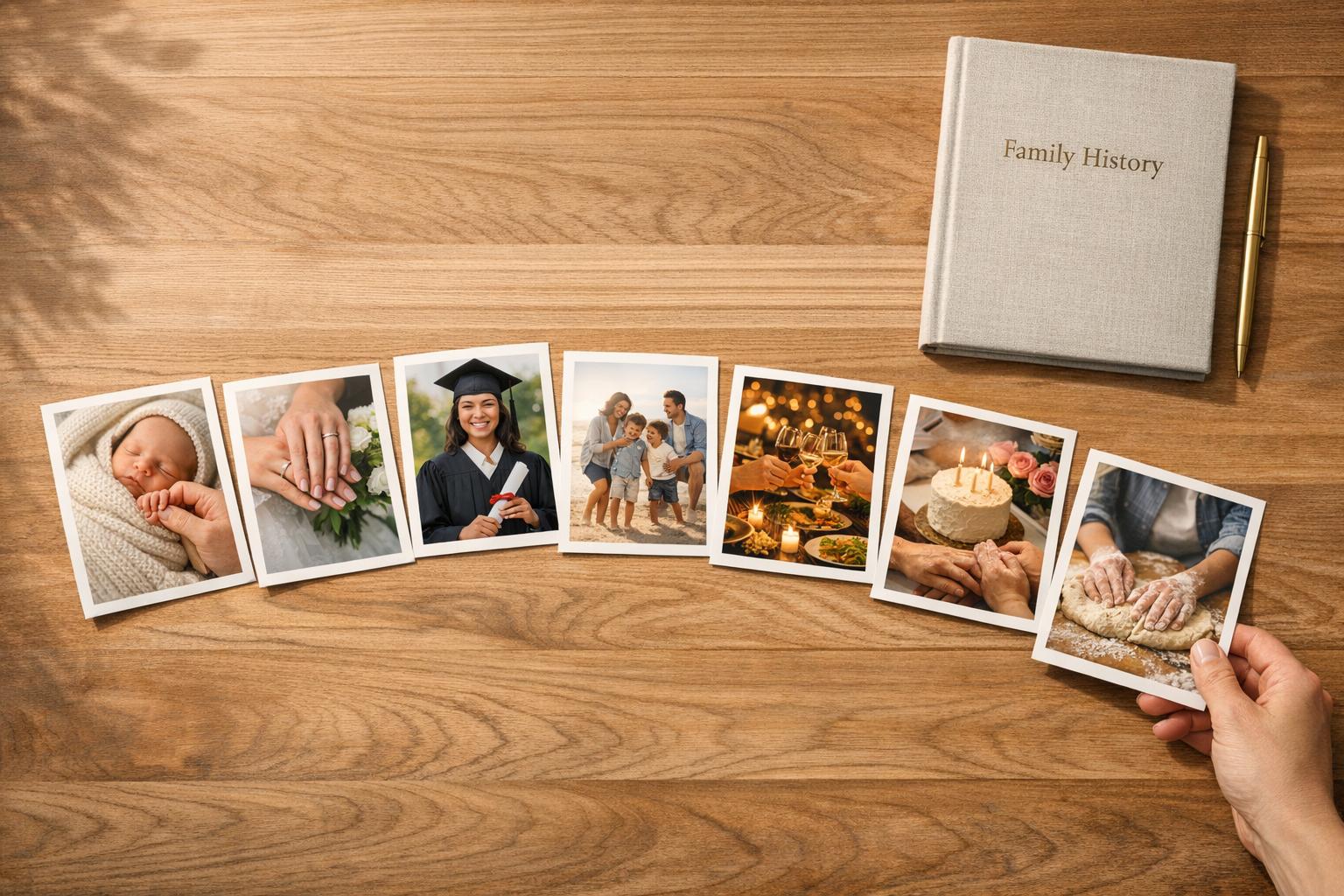
La historia familiar es más que fechas y nombres: se trata de preservar las historias, emociones y conexiones que nos definen. Desde nacimientos hasta reuniones familiares, estos momentos forjan nuestro legado y fortalecen los lazos entre generaciones. Investigaciones demuestran que el 72% de las personas que exploran su historia familiar se sienten más cerca de sus mayores, mientras que los niños que conocen el pasado de su familia a menudo desarrollan una mayor autoestima y resiliencia. A continuación, siete hitos clave que vale la pena documentar para asegurar que estos recuerdos perduren:
- Nacimientos y Adopciones: Registra nombres, fechas, lugares e historias personales ligadas a estos momentos que cambian la vida.
- Bodas y Matrimonios: Captura no solo los detalles oficiales, sino también las historias de amor y las tradiciones que los rodean.
- Graduaciones y Logros Académicos: Destaca títulos, premios y los desafíos superados durante estos hitos.
- Cumpleaños y Aniversarios: Celebra el crecimiento personal y las relaciones duraderas con historias y tradiciones significativas.
- Vacaciones y Aventuras Familiares: Conserva las risas, los chistes internos y las experiencias únicas de los viajes compartidos.
- Fiestas y Celebraciones: Documenta los olores, sonidos y rituales que conectan generaciones a través de tradiciones compartidas.
- Reuniones familiares y vida cotidiana: Sumérgete en los recuerdos cotidianos, desde viejos álbumes de fotos hasta preciadas reliquias, para una narrativa familiar más rica.
Cada historia que documentas hoy se convierte en un regalo para las futuras generaciones. Empieza con una conversación o un recuerdo y deja que se convierta en un legado que perdure para siempre.
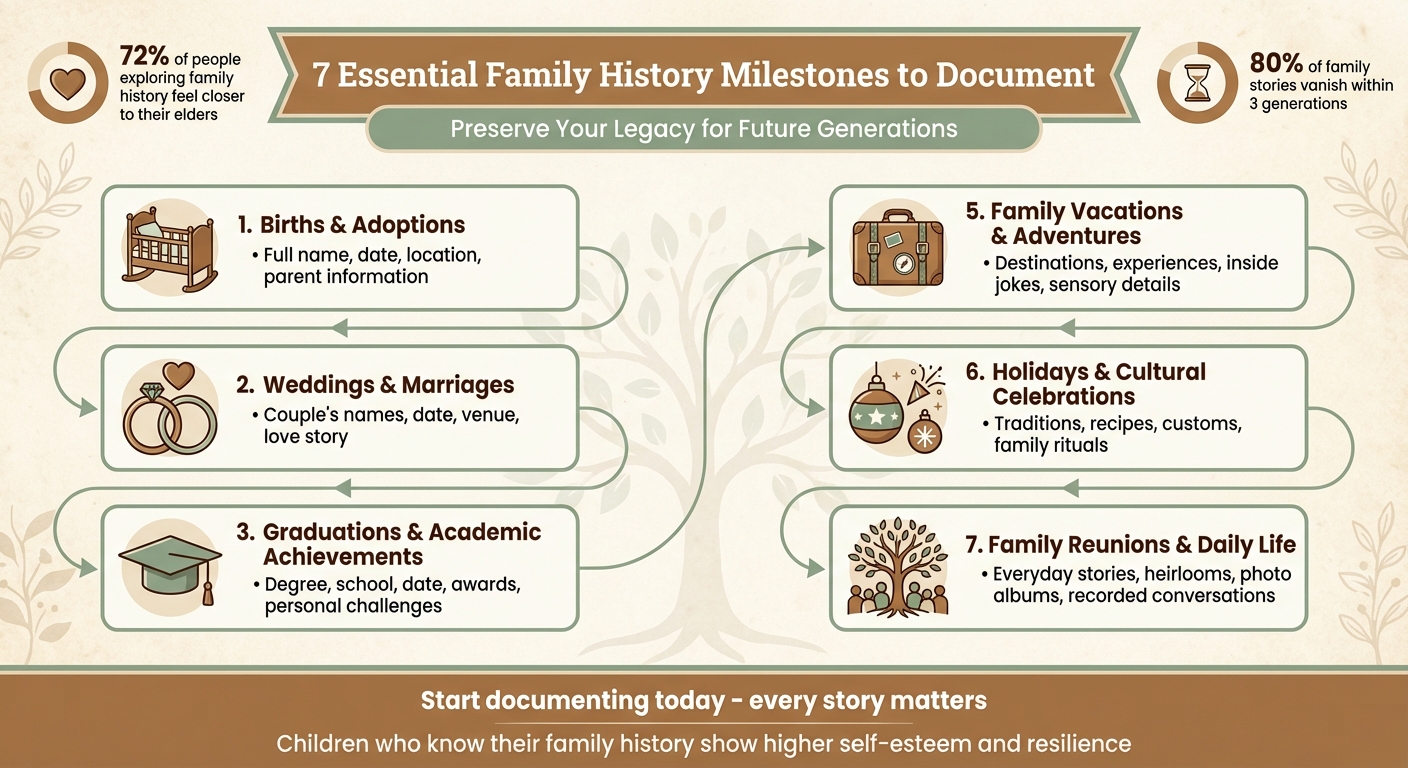
7 hitos esenciales de la historia familiar para documentar y preservar
Ponlo por escrito: Consejos para registrar la historia familiar | Ancestry
1. Nacimientos y adopciones
Dar la bienvenida a un nuevo miembro de la familia es un hito que vale la pena documentar. Los registros de nacimiento y adopción son la base de tu árbol genealógico, uniendo una generación con la siguiente. Estos registros hacen más que marcar una fecha: cuentan la historia de una nueva vida y la continuación del viaje de tu familia.
Al documentar un nacimiento, incluye el nombre completo, fecha de nacimiento, y lugar de nacimiento (como el hospital, la ciudad, el condado y el estado). No olvides capturar detalles sobre los padres, como sus nombres completos, edades, lugares de nacimiento, ocupaciones e incluso el orden de los hermanos. Estos datos pueden revelar conexiones familiares más profundas y proporcionar una imagen más completa de tu historia familiar.
Los registros de adopción requieren el mismo cuidado. Más allá de la documentación legal, incluye los aspectos personales de la historia de la adopción. Registra el fecha de adopción, detalles de documentos legales y los nombres de todos los involucrados. Si es posible, preserve las narrativas personales entrevistando a los padres adoptivos, a los padres biológicos (cuando sea apropiado) e incluso al adoptado más adelante en la vida. Guarde los certificados de nacimiento modificados y cualquier otra documentación relevante para asegurar que la historia esté completa.
Añadir toques personales, como recuerdos o fuentes secundarias, puede dar vida a estos registros. Si faltan registros oficiales, considere buscar certificados de nacimiento tardíos. Muchos de estos se presentaron después de 1937, cuando la gente necesitaba documentación para las tarjetas de la Seguridad Social.
El mejor momento para recopilar estos detalles es ahora, mientras los recuerdos aún están frescos y accesibles.
2. Bodas y matrimonios
Los registros matrimoniales hacen más que solo listar una fecha: entrelazan dos linajes familiares y crean las raíces para las futuras generaciones. Al documentar una boda, comience con lo esencial: los nombres completos de la novia y el novio, incluyendo el apellido de soltera de la novia. Asegúrese de anotar la fecha exacta y ubicación específica de la ceremonia, incluyendo la ciudad, el condado, el estado y el lugar. Estos detalles clave son la base de cualquier árbol genealógico.
Pero no se detenga ahí. Añada profundidad incluyendo las edades de la pareja en el momento del matrimonio, sus residencias, ocupaciones y lugares de nacimiento. Registre los nombres y lugares de nacimiento de ambos padres, ya que estos detalles ayudan a conectar generaciones. No pase por alto al oficiante —ya sea un ministro, sacerdote, rabino o juez de paz— y a los testigos, que a menudo son hermanos o parientes cercanos. Estos nombres pueden proporcionar pistas valiosas sobre otras ramas de su árbol genealógico. Estos datos oficiales son esenciales, pero son solo una parte de la historia.
"Los registros matrimoniales unen a dos familias, a menudo proporcionando detalles cruciales y verificando conexiones familiares." - Leslie Albrecht Huber, Autora
Dé vida a la historia capturando los momentos personales. ¿Cómo se conocieron los novios? ¿Cuándo se enamoraron? ¿Cuáles fueron los detalles de la propuesta? Añadir estas narrativas convierte un simple registro en un vívido retrato de dos vidas que se unen. Hable con los parientes vivos mientras sus recuerdos aún están frescos; las generaciones futuras atesorarán estos relatos de primera mano.
Para obtener aún más detalles, explore fuentes menos obvias como las fianzas matrimoniales o los anuncios de periódicos. Anuncios de boda en periódicos del siglo XX a menudo incluyen descripciones detalladas, como los nombres de las damas de honor y los pormenores de la ceremonia. Si faltan registros oficiales, no dude en consultar los condados vecinos en busca de pistas. Estas piezas pueden ayudar a completar la imagen de la historia de una familia.
3. Graduaciones y logros académicos
Los hitos académicos, al igual que otros logros familiares, añaden capas de perseverancia y crecimiento a la historia de su familia. Al documentar una graduación, comience con lo esencial: el título o diploma obtenido, el nombre de la escuela o universidad, el campo de estudio y la fecha de graduación. Estos detalles proporcionan una base sólida, pero hay mucho más por descubrir.
Para añadir riqueza, incluya reconocimientos académicos como el promedio de calificaciones (GPA), la clasificación en la clase (por ejemplo, el 10% superior) o el reconocimiento en el Cuadro de Honor. Destaque los premios y las becas, y para aquellos que quizás no sean ampliamente reconocidos, explique su significado, como "El orador más seguro en la clase de chino". Estos detalles aseguran que las generaciones futuras comprendan plenamente su importancia. Las investigaciones demuestran que los niños que entienden su historia familiar, incluyendo tanto los éxitos como las dificultades, a menudo exhiben una mayor autoestima y resiliencia. Estos registros transforman una simple línea de tiempo en una celebración de victorias personales.
"Los registros genealógicos son esenciales para rastrear el linaje, pero solo las historias revelan la riqueza completa de la vida de una persona." - StoriedLife
Para capturar verdaderamente el momento, vaya más allá de los hechos. Pregunte a los graduados sobre sus logros más orgullosos, los obstáculos que enfrentaron y el consejo que más resonó durante su trayectoria. Estas reflexiones convierten un diploma en una historia de crecimiento y determinación. Registre estos recuerdos ahora, antes de que se desvanezcan, ya que más del 90% de las historias familiares a menudo se pierden en tres generaciones.
4. Cumpleaños y aniversarios
Los cumpleaños y aniversarios son más que simples fechas en un calendario: son hitos que cuentan la historia del viaje de su familia. Si bien las fechas de nacimiento y matrimonio son esenciales para identificar a las personas en un árbol genealógico, el verdadero valor reside en las historias y tradiciones que hacen que estos eventos sean significativos.
Celebrar cumpleaños importantes —como el primer cumpleaños de un niño, el 50.º de un padre o el 90.º de un abuelo— no solo marca el paso del tiempo, sino que también destaca el crecimiento y el cambio personal. De manera similar, los aniversarios de boda honran los lazos duraderos de amor y compañerismo, ofreciendo la oportunidad de reflexionar sobre experiencias compartidas. Capturar detalles como quién asistió, el clima o cómo se celebró el evento añade riqueza a estos recuerdos.
"Las tradiciones familiares pueden perdurar, como las celebraciones tradicionales, las festividades y los aniversarios, y eventos únicos como acampar, las vacaciones o las celebraciones de un acontecimiento histórico familiar."
- FamilySearch Wiki
Una idea para hacer los cumpleaños aún más especiales es realizar entrevistas anuales. Preguntas sencillas y constantes como «¿Qué te hace feliz?» pueden revelar cómo evolucionan las personalidades con el tiempo. Estos pequeños y reflexivos rituales ayudan a tejer estas celebraciones en el tejido de la historia de tu familia.
No olvides conservar recuerdos físicos —anuncios de boda, tarjetas de cumpleaños o incluso recortes de periódico. Cuando hables con parientes mayores, pregúntales sobre sus cumpleaños de la infancia o cómo se comprometieron. Estas historias personales van más allá de lo que los registros oficiales pueden ofrecer, añadiendo color y profundidad al legado de tu familia. Las celebraciones anuales, al igual que otros hitos, son una forma poderosa de mantener viva la historia de tu familia.
sbb-itb-ce27d7a
5. Vacaciones y aventuras familiares
Los viajes familiares son más que una simple escapada —son la base de historias y recuerdos que duran toda la vida. Ya sea un viaje por carretera a través del país, un fin de semana de acampada bajo las estrellas o un desvío imprevisto que se convierte en lo más destacado del viaje, estos momentos merecen más que unas cuantas fotos olvidadas en tu teléfono. ¿El secreto para conservarlos? Captura los detalles mientras están frescos, antes de que el tiempo borre las pequeñas cosas que los hacen especiales.
Captura los momentos tal como suceden. Tomar notas sobre la marcha ayuda a asegurar que esos detalles fugaces no se pierdan. Usa tu smartphone para anotar rápidamente, grabar sonidos ambientales como risas o músicos callejeros, o incluso tomar fotos con subtítulos que cuenten la historia detrás de la imagen. Una simple nota de voz que describa los eventos del día puede revivir emociones de maneras que una foto por sí sola quizás no logre.
Ve más allá de los recuerdos superficiales incluyendo detalles precisos con los que las futuras generaciones puedan conectar.
«Rastrear estos eventos y dejarlos para que las futuras generaciones los recreen te permite crear un vínculo más fuerte que el que surgiría de alguien que simplemente leyera tus palabras.» - Matt Misbach, ponente de RootsTech
Para aventuras al aire libre como caminatas o paseos en bicicleta, considera el geo-diario para guardar rutas exactas. Combina estos recuerdos digitales con objetos físicos —talones de entradas, pases de transporte o incluso una flor prensada del sendero— para hacer los recuerdos más tangibles.
Lo que realmente destaca es documentar cómo se desarrolló el viaje y, lo más importante, cómo impactó a tu familia. ¿Qué hizo que la experiencia fuera inolvidable? Los estudios demuestran que las generaciones más jóvenes valoran mucho las experiencias compartidas. Incluir detalles sensoriales —como el aroma de un plato local, la sensación del clima o las bromas internas compartidas durante el camino— puede dar a los futuros miembros de la familia una conexión vívida, casi tangible, con tus aventuras.
6. Fiestas y celebraciones culturales
Holiday gatherings are more than just festive meals - they're a bridge between generations, filled with shared memories and traditions. These occasions offer a unique opportunity to delve into the customs that shape your family's identity. Ever wonder why your family serves a particular dish every Thanksgiving or how that quirky Christmas morning ritual began? These stories carry the essence of your heritage, offering insights that photos alone can't capture.
To uncover these stories, try asking open-ended questions like, "What did the house smell like on Christmas morning?" or "How did our favorite family traditions begin?" Baylor University's Institute for Oral History illustrates this beautifully with "Nana's banana pudding", where even the omission of an ingredient tells its own tale. By exploring such details, you can add depth and meaning to your holiday memories.
"The holiday season brings about the opportunity to spend time with family members... This presents the perfect opportunity to conduct oral histories to capture the stories and experiences of your family and loved ones, to learn more about them, the history of your family, traditions that have been passed down from generation to generation and more." - Adrienne Cain Darough, Assistant Director and Senior Lecturer, Baylor University Institute for Oral History
Beyond conversations, consider capturing the atmosphere of your celebrations. Use your smartphone to record the sounds of the holiday - your uncle's unmistakable laugh, the chatter of children playing, or the hum of voices around the dinner table. Even old photo albums or cherished decorations can spark memories, helping older relatives recall details they might not have thought about in years.
Interestingly, family members often remember the same event in different ways. Comparing these varied accounts can add layers to your family's history. As Anne Toohey, Reference Librarian at the Library of Congress, explains:
"Sometimes different branches of the family know different versions of the same story, and comparison adds details and veracity to the story itself".
These differing perspectives don't dilute your family history - they make it richer. By preserving these diverse recollections, you're ensuring that your family's celebrations and traditions remain a cherished part of its legacy for generations to come.
7. Family Reunions and Daily Life
Family reunions are more than just big events - they’re opportunities to dive into the everyday stories that define your family’s history. While these gatherings often highlight major milestones, they also offer a chance to uncover the small, intimate details that truly bring your relatives to life. Take time to explore old photo albums together, identifying the people, places, and events captured in those images. These shared moments of discovery can deepen your connection to your family’s past.
Sometimes, the most vivid memories come from the sounds and gestures of daily life. Record a loved one’s unique laugh or the lively conversations around the dinner table. These audio snapshots preserve the essence of your family in ways that photos cannot.
Ask about cherished belongings - like a first car, a favorite childhood toy, or a family heirloom - and document the stories behind them. These personal anecdotes paint a more complete picture of your relatives, revealing their personalities in ways that formal events often miss. Megan Harris, a Research Specialist at the Library of Congress, captures this sentiment perfectly:
"People have entire worlds contained within their lives. Listening, engaging, and really trying to understand someone's perspective and what they've been through is an experience like no other".
When conducting interviews, embrace moments of silence. These pauses can be powerful, as Yowei Shaw, Host and Producer of NPR's Invisibilia, explains:
"Something electric is happening. They are turning something over in their head, having an emotional reaction, or might be trying to access a memory they haven't thought about in decades. Don't step on the silence. That's where magic can happen".
If a relative struggles to recall a memory, old photographs or letters can serve as prompts, helping to unlock stories that might otherwise remain hidden.
For families separated by distance, tools like Storii offer a modern solution. With automated phone calls and over 1,000 life story prompts, it’s easier than ever to capture these everyday moments and preserve them for future generations. These recordings bridge the gap between major milestones and the daily experiences that make up your family’s unique legacy.
Conclusion
Your family's story is more than just a collection of dates and events - it's the heartbeat of your identity. Capturing these seven milestones offers a bridge between generations, allowing your descendants to understand not just what happened, but why it mattered and how their ancestors truly lived. Dina Gachman, an author who knows the pain of missed opportunities, puts it perfectly:
"When somebody's gone, their stories are gone, right? Why did I not ask a million questions when they were here".
The urgency is real. Research shows that nearly 80% of family stories vanish within three generations unless they’re deliberately preserved. Memories fade quickly, and every day that passes is a chance for these connections to slip away. Yet, children who grow up knowing their family history are shown to have higher self-esteem and greater resilience.
Don’t wait for the perfect moment - start now. Whether it’s recording a quick voice memo, sitting down for an interview, or using tools like Storii, which offers a simple way to document memories for $9.99/month or $99.99/year, every effort counts.
Each memory you save today strengthens the foundation for tomorrow. Begin with one of these milestones - a single conversation or a cherished story - and keep your family’s history alive for generations to come.
FAQs
Why is it important to record family milestones for future generations?
Recording family milestones plays an important role in preserving your family's story and creating a legacy for future generations. Moments like weddings, births, and anniversaries reflect your family’s journey, offering future members a way to connect with their roots and gain a deeper understanding of their heritage.
When you document these milestones, you’re creating a record that ensures cherished stories, traditions, and memories are passed down rather than forgotten. These records help build a sense of identity and belonging, while also highlighting the struggles and victories that shaped your family’s path. It’s a heartfelt way to honor your family’s history and keep it alive for generations to come.
What’s the best way to capture family stories during reunions?
Preserving family stories can be one of the most meaningful ways to connect with loved ones during reunions. To start, create a relaxed and welcoming environment where storytelling feels natural. Choose a quiet spot for one-on-one chats, and have tools like a smartphone or audio recorder handy to document these precious moments. Don’t forget to back up your recordings to ensure they’re safe for the long term.
It’s helpful to prepare a few open-ended questions ahead of time to spark meaningful conversations. Ask about family traditions, unforgettable events, or treasured keepsakes - these topics often lead to heartfelt and engaging stories. You can also use platforms like Storii to record and preserve these memories, making it easy to share them with family members and create digital keepsakes that can be cherished for generations.
Most importantly, focus on active listening and showing genuine curiosity. This encourages relatives to open up and share their most valued memories and experiences, creating a deeper connection for everyone involved.
What are some fun and meaningful ways to preserve memories from family vacations?
Saving memories from family vacations can be both fun and meaningful. One great option is creating a photo book filled with highlights from the trip. Include key moments, candid shots, and even some funny or unexpected photos - it’s a fantastic way to relive the adventure.
Another idea? Record audio or video interviews with family members. Ask them about their favorite stories, funny moments, or even what surprised them most during the trip. These recordings add a personal touch and become treasures for future generations.
You can also start a travel journal that the whole family contributes to. Each person can write about their favorite activities, meals, or unexpected surprises. Add photos, quotes, and small mementos like tickets or postcards to make it even more special. These keepsakes turn a vacation into a lasting family legacy.
Related Blog Posts
{"@context":"https://schema.org","@type":"FAQPage","mainEntity":[{"@type":"Question","name":"Why is it important to record family milestones for future generations?","acceptedAnswer":{"@type":"Answer","text":"<p>Recording family milestones plays an important role in preserving your family's story and creating a legacy for future generations. Moments like weddings, births, and anniversaries reflect your family’s journey, offering future members a way to connect with their roots and gain a deeper understanding of their heritage.</p> <p>When you document these milestones, you’re creating a record that ensures cherished stories, traditions, and memories are passed down rather than forgotten. These records help build a sense of identity and belonging, while also highlighting the struggles and victories that shaped your family’s path. It’s a heartfelt way to honor your family’s history and keep it alive for generations to come.</p>"}},{"@type":"Question","name":"What’s the best way to capture family stories during reunions?","acceptedAnswer":{"@type":"Answer","text":"<p>Preserving family stories can be one of the most meaningful ways to connect with loved ones during reunions. To start, create a relaxed and welcoming environment where storytelling feels natural. Choose a quiet spot for one-on-one chats, and have tools like a smartphone or audio recorder handy to document these precious moments. Don’t forget to back up your recordings to ensure they’re safe for the long term.</p> <p>It’s helpful to prepare a few open-ended questions ahead of time to spark meaningful conversations. Ask about family traditions, unforgettable events, or treasured keepsakes - these topics often lead to heartfelt and engaging stories. You can also use platforms like <strong><a href=\"https://storii.com/\">Storii</a></strong> to record and preserve these memories, making it easy to share them with family members and create digital keepsakes that can be cherished for generations.</p> <p>Most importantly, focus on <em>active listening</em> and showing genuine curiosity. This encourages relatives to open up and share their most valued memories and experiences, creating a deeper connection for everyone involved.</p>"}},{"@type":"Question","name":"What are some fun and meaningful ways to preserve memories from family vacations?","acceptedAnswer":{"@type":"Answer","text":"<p>Saving memories from family vacations can be both fun and meaningful. One great option is creating a <strong>photo book</strong> filled with highlights from the trip. Include key moments, candid shots, and even some funny or unexpected photos - it’s a fantastic way to relive the adventure.</p> <p>Another idea? Record <strong>audio or video interviews</strong> with family members. Ask them about their favorite stories, funny moments, or even what surprised them most during the trip. These recordings add a personal touch and become treasures for future generations.</p> <p>You can also start a <strong>travel journal</strong> that the whole family contributes to. Each person can write about their favorite activities, meals, or unexpected surprises. Add photos, quotes, and small mementos like tickets or postcards to make it even more special. These keepsakes turn a vacation into a lasting family legacy.</p>"}}]}
Caja de regalo Storii
Ideal para ocasiones especiales como el Día de la Madre, el Día del Padre, los cumpleaños y las fiestas.

