
.png)
お母様の人生は豊かな経験の積み重ねですが、尋ねる人がいないために語られることのない話がたくさんあります。心遣いのある質問を投げかけることで、思い出、教訓、家族の歴史を紐解き、絆を深め、後世に残る財産を築くことができます。このガイドでは、質問を「子供時代」「母親になる前の自分」「母親としての経験」「長年にわたって得た知恵」という4つの人生の段階に分けています。主な内容は以下の通りです。
- 子供時代: 彼女の幼い頃の思い出、家族の伝統、子供の頃の夢について尋ねてみましょう。
- 母親になる前の自分: 母親になる前の彼女の野心、趣味、そして人生の転機となった出来事を探ってみましょう。
- 母親としての経験: 彼女の希望や不安、そして子育てを通して人間関係がどのように変化したかについて学びましょう。
- 知恵: 彼女の人生の教訓、価値観、そして次世代へのアドバイスについて深く掘り下げてみましょう。
これらの会話を記録することは、例えば次のようなツールを使って Storii - 彼女の声と物語を何年にもわたって保存することにつながります。今日から一つの質問を始めて、会話を自然に広げていきましょう。
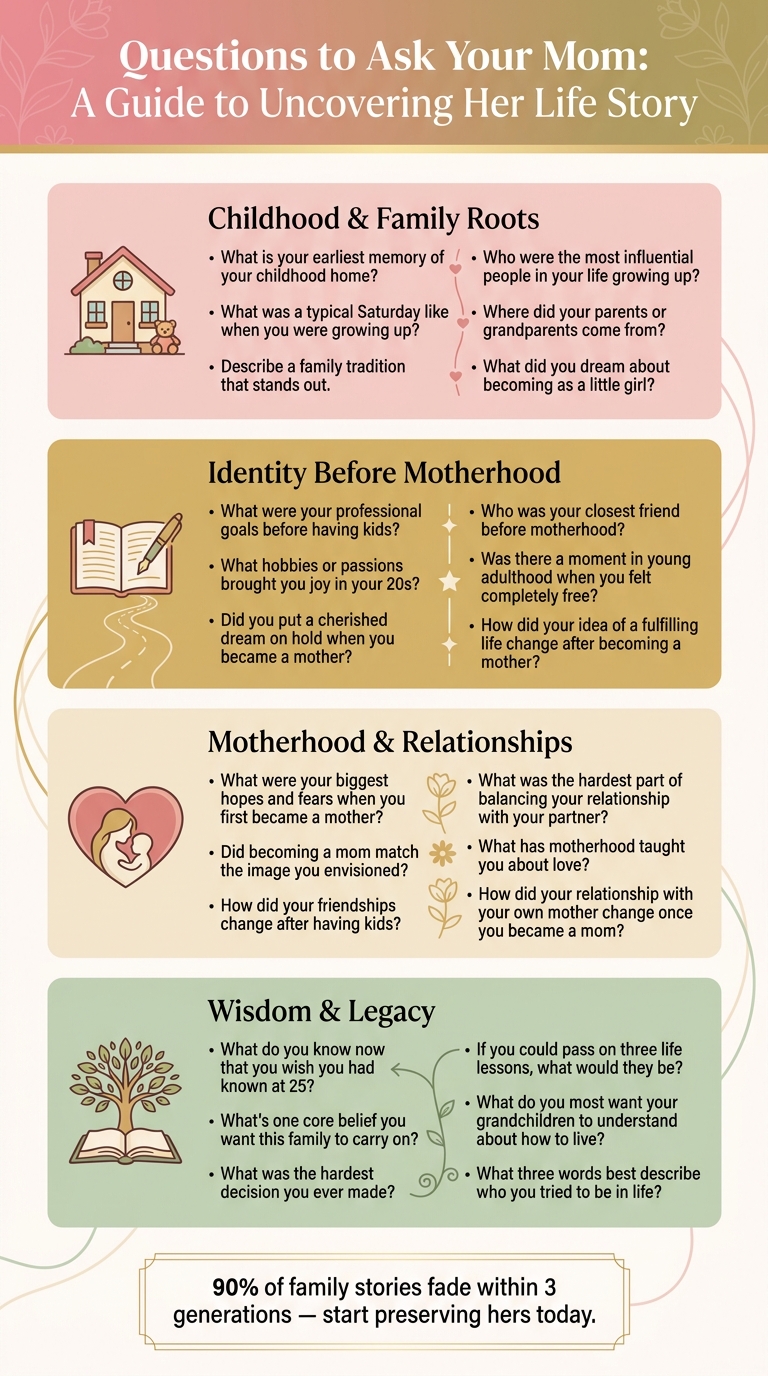
お母さんに聞くべき質問:彼女の人生の物語を紐解くガイド
お母さんに聞きたい5つの質問 ❤️
1. 子供時代と家族のルーツ
彼女の幼少期には、適切な質問によって引き出されるのを待っている記憶の宝庫があります。これらの瞬間を鮮やかに蘇らせるには、五感を刺激する、自由回答形式の質問に焦点を当てましょう。と、 MyLifeLedger は述べています。
「人生を語る上で最高の質問とは、具体的で、五感を刺激し、自由回答形式のものです。それらは意見を尋ねるのではなく、記憶を呼び起こします。」
この種の質問は、彼女の経験を鮮やかで具体的な細部に結びつけるのに役立ちます。まずは小さく始めましょう。会話中に1つか2つの質問を投げかけ、「他に誰がいましたか?」あるいは「次に何が起こりましたか?」のような促しでフォローアップし、彼女の返答を優しく導いてください。
- 子供時代の家に関するあなたの最も古い記憶は何ですか? その家の光景、匂い、手触りを描写するように促しましょう。キッチンには特別な匂いがありましたか?彼女が最もくつろげたお気に入りの場所はありましたか?これらの五感に訴える詳細は、しばしば鮮明な記憶を呼び覚まします。
- あなたが育った頃の典型的な土曜日はどのようなものでしたか? 日常のルーティンは、驚くほど多くのことを明らかにする可能性があります。それらは、家族の関係性、価値観、そして大人になる前の生活のリズムを垣間見せてくれます。
- 印象に残っている家族の伝統について教えてください。 伝統は、遺産とのつながりや、世代を超えて語り継がれる物語を明らかにすることができます。
- 幼い頃、あなたの人生で最も影響を受けた人は誰でしたか? 両親以外にも、兄弟、祖父母、近所の人、あるいは忘れられない足跡を残した先生を思い出すかもしれません。
- 両親や祖父母はどこから来ましたか?彼らの物語について、あなたはどんなことを知っていますか? 家族の歴史は、しばしば一世代を超えて広がります。移住、レジリエンス、あるいは犠牲の物語は、彼女のルーツの全体像をより鮮明に描き出すでしょう。
- 小さな女の子だった頃、何になることを夢見ていましたか? 子供の頃の夢は、人生が独自の道を歩む前に彼女が抱いていた性格特性や願望を明らかにするでしょう。
2. 母親になる前のアイデンティティ
母親になる前、彼女には自身の野心、友情、そして決定的な経験がありました。人生のこれらの章は、見過ごされがちですが、貴重な洞察を含んでいます。ベス・ファラーが的確に述べているように:
「過去のあなたが今のあなたを形作ったのです。今のあなたは全く別の人間だと信じているかもしれませんが、そうではありません。」
母親になる前の彼女のアイデンティティを探ることは、それらの初期の経験が、どのように彼女の母親としての道のりを形作ったかを明らかにするでしょう。考慮すべきいくつかの意味のある質問を以下に示します。
- 子供を持つ前、あなたの仕事上の目標は何でしたか? 彼女のキャリアの願望と功績を深く掘り下げてみましょう。自分の野心を追求することと、家庭を築くことの間で板挟みになったことはありましたか?
- 20代の頃、どんな趣味や情熱があなたに喜びをもたらしましたか? その頃の彼女を特徴づけていた創造的な活動や趣味について尋ねてみましょう。絵を描くこと、文章を書くこと、地元のイベントに参加することなど、これらの興味は彼女の意外な一面を明らかにするかもしれません。
- お母さんになってから、大切にしていた夢を一時中断しましたか? いくつかの目標は中断されるだけで、忘れ去られるわけではありません。例えば、登録看護師のジェシカ・ペインは、娘さんが生後4ヶ月の時に最初の本を書き始め、やがて出版作家になりました。彼女が今も心に抱いている夢があるかどうか尋ねてみましょう。
- お母さんになる前の親友は誰でしたか?その人はあなたの人生でどのような役割を果たしていましたか? 若い頃の友情は、人生の大きな責任を負う前の私たちがどんな人物だったかを映し出すことがよくあります。彼女の答えは、母親としての役割に持ち込んだ価値観や特性を明らかにするかもしれません。
- 若い頃、完全に自由だと感じた瞬間はありましたか? 彼女に自立した時の思い出を話してもらいましょう。例えば、ジェン・ザグは19歳の誕生日にシアトルへ引っ越しましたが、その決断は36年以上にわたって彼女の人生を形作りました。
- お母さんになってから、充実した人生という考え方はどのように変わりましたか? 個人的な願望から家族中心の生活へと、彼女の優先順位がどのように変化したかについて振り返ってもらいましょう。この変化の中で、彼女は何を得て、何を諦め、何が最も驚きでしたか?
これらの物語を保存したい方にとって、Storiiのようなツールは、インターネットやスマートフォンを必要とせず、自動電話を通じて彼女の回答を記録するのに役立ちます。これらの振り返りは、彼女の人生をより深く理解させ、家族の物語に深みを加え、将来の世代に永続的な遺産を残すでしょう。
sbb-itb-ce27d7a
3. 母親であることと人間関係
母親になることは、女性自身だけでなく、彼女を取り巻く人間関係をも変えます。これらの質問は、母親になった後に彼女の人間関係がどのように変化したかを明らかにするのに役立つでしょう。
-
初めて母親になったとき、一番期待していたことと心配だったことは何でしたか? 多くの新米ママにとって、その道のりは、圧倒的な愛情と不安が入り混じった感情から始まります。ジル・アトグウェが語ったように、
「自分自身よりも愛おしい存在に責任を持つことになった今、自分の人生がどうなるのか、期待と不安でいっぱいでした。しかも、その存在をほとんどコントロールできないのですから。」
- 母親になることは、思い描いていたイメージ通りでしたか? 母親であることへの期待は、しばしば現実と衝突します。彼女の経験が、かつて抱いていたイメージとどのように異なっていたか尋ねてみましょう。
- 子どもができてから、友情はどのように変わりましたか? 子育ては友情の形を変えるものです。ある関係は薄れるかもしれませんが、他の関係は深まります。例えば、子どもがいない友人が名誉おばさんのように振る舞い、彼女が自分らしくいられる場所を与えてくれる、といったように。
- 子育て初期に、パートナーとの関係を両立させる上で最も大変だったことは何ですか? 調査によると、カップルの67%が親になってから最初の3年以内に夫婦関係の満足度が低下すると報告されています。彼女とパートナーは、この困難な時期をどのように乗り越えたのでしょうか?
-
母親になったことで、愛について何を学びましたか? ダイアナ・キーオはかつて、示唆に富む問いを投げかけました。
「母親であること…は、もう一つの問いを突きつけます。注目されることなく愛することができますか?」
彼女の答えは、驚くべき洞察を明らかにするかもしれません。 - 母親になってから、ご自身の母親との関係はどのように変化しましたか? 親になることは、自身の母親に対する新たな共感と、潜在的な緊張の両方をもたらすことがよくあります。境界線を設けたり、求められていないアドバイスに対処したりすることは、この関係をより複雑にする可能性があります。
これらの考察に共感されたなら、Storiiのようなツールを使って、心温まる物語を記録し、次世代のために保存することを検討してみてください。
4. 知恵と遺産
お母様の人生は、その経験と決断によって形作られた教訓の宝庫です。彼女が持つ物語や洞察は、お母様自身の道のりだけでなく、あなたの人生にも影響を与えてきました。しかし、これらの記憶を保存しなければ、失われる危険性があります。調査によると、家族の物語の90%は3世代以内に薄れ、個人の詳細の80%は記録されなければ消えてしまいます。適切な質問をすることで、お母様の知恵を捉え、その遺産を未来の世代に確実に残すことができます。
彼女が人生で学んだ教訓を明らかにする、7つの思慮深い質問をご紹介します。
-
25歳の時に知っておきたかったことで、今だからこそわかることは何ですか?
往々にして、最も深い洞察は後になってから得られるものです。お母様の答えはあなたを驚かせ、新たな視点をもたらすかもしれません。 -
あなたがいなくなった後も、この家族にずっと受け継いでほしいと思う、たった一つの中核となる信念は何ですか?
この質問は、お母様の最も深い価値観に触れ、彼女が最も大切にしているものを垣間見せてくれるでしょう。 -
これまでで最も困難だった決断は何ですか?そして、その決断を乗り越える上で何があなたを導きましたか?
人生の転機は、しばしば強さと人柄を明らかにします。MyLifeLedgerが述べているように、「一つの良い質問は20分間の物語を生み出すことができます」。 -
もし3つの人生の教訓を伝えることができるとしたら、それは何ですか?
これらの教訓は、来るべき世代にとっての指針となるでしょう。 -
お孫さんたちに、生き方について最も伝えたいことは何ですか?
未来に焦点を当てることで、この質問はしばしば心からのアドバイスや抱負を引き出します。 -
やりかけたけれど、結局やらなかったことは何ですか?
「もしも」を掘り下げることで、隠れた優先事項や価値観を明らかにすることができます。 -
人生でどのような自分であろうとしたか、最もよく表す3つの言葉は何ですか?
この質問は、達成したことではなく人柄に焦点を移し、優しさや回復力のように、彼女が最も大切にしている特質を明らかにします。
「あなたの遺産は、あなたが成し遂げたことではなく、あなたがどんな人物であったかを示すものです。」 – メモリアル・メリット
ヒント:これらの会話を録音することを検討してください。音声録音はわずか15分で最大2,500語を記録でき、書き留めたメモよりも、彼女の声のトーンや感情のニュアンスをよりよく保存します。Storiiのようなツールは、彼女に直接電話をかけ、その回答を文字起こし、オーディオブック、またはPDF形式の回想録に変換することさえでき、これにより、彼女の物語を家族全員と簡単に共有できるようになります。
まとめ
お母様の物語、つまり子供時代の冒険から母親としての道のりまで、それらは大切にすべき思い出の宝庫です。この記事で紹介した質問は、単に会話を始めるだけでなく、お母様が経験してきたことすべてに対して、価値を認められ、称賛される機会を生み出します。彼女の幼少期、親になる前の夢、最も誇りに思う瞬間、そして分かち合いたい知恵について尋ねることで、あなたは彼女の人生について学ぶだけでなく、何世代にもわたって大切にされる家族の遺産を守る手助けをしているのです。
「彼女が亡くなる前に、あの物語を録音しておけばよかった。」 – Storii
彼女の最初の記憶から、伝えたいと願う教訓まで、人生のあらゆる部分が記憶されるべき物語を語っています。何気ない瞬間に軽い気持ちで質問を投げかけ、そこから自然と深い会話へと発展させていきましょう。最も大切なのは、最初の一歩を踏み出すことです。
彼女の声と物語を未来に残すために設計されたツールで、今日、これらの貴重な思い出を記録しましょう。Storiiは、彼女の答えを文字起こし、オーディオブック、またはPDF形式の回想録に変換する簡単な方法を提供します。手頃な料金プランと1回限りのギフトオプションで、彼女の遺産を永続的な家族の記念品に変える有意義な方法です。
よくある質問
母が話したがらない場合、どうすれば始められますか?
お母様が話したがらないようでしたら、穏やかで心地よい雰囲気を作るよう努めてください。例えば、朝のコーヒーを飲んだ後や、日中の静かな時間などです。次のような漠然とした質問をするのではなく、 「子供の頃について教えて」 といった質問は、気が重く感じるかもしれません。具体的な詳細に焦点を当てましょう。例えば、子供の頃の寝室のことや、育った頃の日曜日はどんな感じだったかなどを尋ねてみてください。
もし彼女がまだ控えめなままであれば、軽い話題から会話を始めてみましょう。趣味や好きな家族の伝統、共通の思い出について話すことは、彼女がより安心し、信頼感を築くのに役立ちます。
本当の記憶を引き出すのに最適な質問は何ですか?
本当の記憶を引き出すには、「子供の頃はどんな感じでしたか?」のような漠然とした質問は避けましょう。その代わりに、 具体的な、五感を刺激するような質問 例えば、「朝の台所はどんな匂いがしましたか?」や「子供の頃、寝室の窓から何が見えましたか?」といった質問です。また、「典型的な日曜日について教えてください」のように一連の出来事を尋ね、さらに「次に何が起こりましたか?」と続けることで、より鮮明な詳細や感情を引き出すことができます。
彼女の物語を記録し、保存する最も簡単な方法は何ですか?
Storiiを使うと、 Storii 自動電話機能によりプロセスが非常に簡単になります。その仕組みは次のとおりです。あなたが質問をスケジュールすると、Storiiが彼女の固定電話または携帯電話に、1,000以上の選択肢から選ばれた質問で電話をかけます。彼女は電話で直接答えるので、インターネットやアプリは必要ありません。録音は自動的に検索可能なテキストに文字起こしされ、オーディオブックやPDF形式の記念品として保存し、家族と共有することもできます。
関連ブログ記事
{"@context":"https://schema.org","@type":"FAQPage","mainEntity":[{"@type":"Question","name":"母が話したがらない場合、どうすればいいですか?","acceptedAnswer":{"@type":"Answer","text":"<p>お母様が心を開くのをためらっているようでしたら、穏やかで心地よい雰囲気を作るよう努めてください。たとえば、朝のコーヒーを飲んだ後や、日中の静かな時間帯などです。<em>「子供の頃について話して」</em>のような漠然とした質問は、気が重く感じられるかもしれません。そうではなく、具体的な詳細に焦点を当ててください。例えば、子供部屋のことや、彼女が育った頃の日曜日がどのようなものだったか尋ねてみましょう。</p> <p>もし彼女がまだ控えめなままであれば、軽い話題から会話に入りましょう。趣味や好きな家族の伝統、共通の思い出について話すことで、彼女はより安心し、信頼感を築くことができます。</p>"}},{"@type":"Question","name":"どのような質問が、本当の記憶を引き出すのに最も効果的ですか?","acceptedAnswer":{"@type":"Answer","text":"<p>真の記憶を呼び起こすには、「子供の頃はどんな感じでしたか?」のような漠然とした質問は避けましょう。その代わりに、<strong>具体的で感覚に訴えかける質問</strong>に焦点を当ててください。例えば、「朝の台所はどんな匂いがしましたか?」や「子供の頃、寝室の窓から何が見えましたか?」といったものです。また、「典型的な日曜日について教えていただけますか?」のように一連の出来事を尋ね、さらに「次に何が起こりましたか?」と続けることで、より鮮明な詳細や感情を引き出すことができます。</p>"}},{"@type":"Question","name":"彼女の物語を記録し保存する最も簡単な方法は何ですか?","acceptedAnswer":{"@type":"Answer","text":"<p><strong>Storii</strong>の自動電話機能を使えば、このプロセスは驚くほど簡単になります。その仕組みは次のとおりです。あなたが質問をスケジュールすると、Storiiが1,000以上の選択肢から選ばれた質問を使って、彼女の固定電話または携帯電話に電話をかけます。彼女は電話で直接答えます。インターネットやアプリは必要ありません。録音は自動的に検索可能なテキストに書き起こされ、家族と共有するためのオーディオブックやPDFの記念品として保存することもできます。</p>"}}]}
Storii ギフトボックス
母の日、父の日、誕生日、祝日などの特別な日に最適です。

