
.png)
Building strong bonds between grandparents and grandchildren doesn’t have to be complicated. Shared hobbies create natural opportunities for storytelling, skill-sharing, and meaningful conversations. Here’s a quick rundown of seven activities that bring generations closer:
- Gardening: Encourages teamwork and storytelling while nurturing plants together.
- Cooking and Baking: Preserves family recipes and traditions while creating delicious memories.
- Crafting, Sewing, and Knitting: Hands-on projects spark creativity and open the door to personal stories.
- Board Games and Puzzles: Fun, screen-free activities that promote conversation and teamwork.
- Reading and Storytelling: Sharing family history boosts self-esteem and strengthens connections.
- Nature Walks: Simple outdoor activities encourage reflection and shared experiences.
- Music and Art: Collaborative creative outlets that bridge generational gaps.
The key takeaway? It’s not about the activity itself but the time spent together. These moments - filled with laughter, stories, and shared tasks - become lasting family memories. Ready to create new traditions? Start with something you both enjoy!
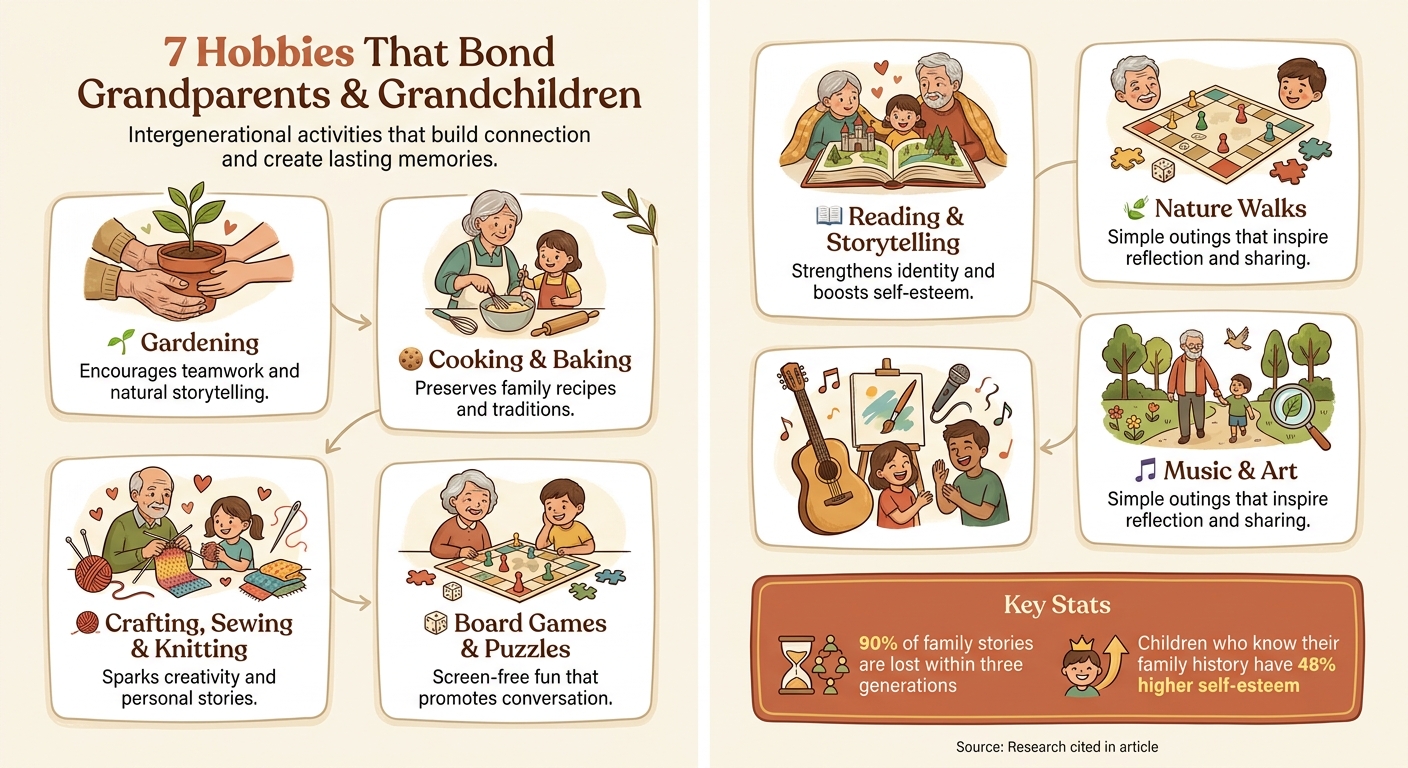
7 Hobbies That Bond Grandparents & Grandchildren
Unleash The Fun: 10 Awesome Activities To Do With Your Grandkids!
1. Gardening Together
A garden's slow and steady rhythm creates the perfect setting for quality time. Working side by side in the soil - without distractions from screens or deadlines - makes it easy for conversations to flow naturally.
"Gardens and nature provide the perfect backdrop for slowing down, sharing stories, and building memories." - Karen, Author at Garden Chick
Gardening is an activity that bridges generations seamlessly. Raised garden beds and container pots make it accessible for grandparents who may have limited mobility. Meanwhile, kids can dive into hands-on tasks like watering plants, sorting seeds, or decorating pots. Even if they’re seated nearby, grandparents can share their gardening knowledge, offer guidance, and tell stories from their past experiences.
Starting with fast-growing plants like radishes, lettuce, or herbs is a great way to keep younger gardeners engaged. These quick results not only hold their attention but also create opportunities for grandparents to share their own gardening tales.
As GreenStalk Garden highlights, "Children don't need rules to engage, they need room to explore."
For an added layer of connection, keep a shared garden journal. Kids can draw pictures and track the progress of their plants, while grandparents contribute their own notes and reflections. Over time, this journal becomes a treasured keepsake, filled with memories of time spent together.
2. Cooking and Baking Family Recipes
The kitchen has an incredible way of bringing generations together. Unlike more structured activities, cooking happens naturally - there’s always a task to share, whether it’s stirring, chopping, or sneaking a taste. It’s an effortless way to create memories, much like gardening, but with the added bonus of delicious results.
This shared time in the kitchen also preserves family traditions that might otherwise fade away. Think about those unwritten techniques - how to knead dough just right or get the seasoning balance spot-on. These are the little secrets passed down through generations.
"A family cookbook is a time machine. It's a way to cook alongside people who are no longer here, to feed future grandchildren the same food that fed you. It connects us across generations." - Pati Jinich, Chef and Author
Food plays a bigger role in family history than many realize. 90% of family stories are lost within three generations, and a lot of those stories revolve around meals and recipes. Kids who grow up learning their family’s history - right down to the dishes that define it - are shown to have 48% higher self-esteem and more resilience during tough times.
To make the most of this time together, match tasks to the kids’ ages. Younger children can measure ingredients or brush on egg wash, while older kids can chop vegetables with a child-safe knife or help stir something on the stovetop (with supervision, of course). Want to make these moments last? Start a Recipe Storybook. Pair each recipe with a photo and a short, handwritten note about a memory tied to the dish. That gravy-stained card? It might just become a family treasure.
3. Crafting, Sewing, and Knitting Projects
Crafting, much like gardening or cooking, creates a wonderful opportunity for grandparents and grandchildren to bond. It’s a chance to pass down skills, share family traditions, and spark creativity. Beyond the projects themselves, crafting preserves techniques that might otherwise fade away while also encouraging personal expression.
"A child may think they are learning how to knead dough, plant basil, fix a hinge, cast a fishing line or sort family photographs. What they are also receiving is a grandparent's voice, patience, humour, habits and way of making sense of life." - Charli Evaheld, Legacy Expert
One of the best parts of crafting is how naturally conversations unfold when hands are busy. Simple, repetitive actions like cutting or sorting can ease the pressure of direct interaction, paving the way for heartfelt stories. A single fabric scrap or a mismatched button might trigger memories that lead to meaningful discussions. As Kim Lima from Bella Vista Senior Living explains, "Crafts can also serve as tactile tools for storytelling - every stitch, bead, or brushstroke has the potential to hold a personal story or memory." This storytelling aspect makes crafting an activity that works beautifully across all ages.
The key is to match the project to the child’s abilities. Toddlers can sort buttons by color or peel foam stickers, while school-age kids might enjoy sewing a button or decorating a picture frame. Teenagers could take on more detailed tasks like scanning old family photos or assembling a scrapbook. For grandparents who struggle with arthritis or limited dexterity, adjustments like using larger beads or thicker materials can make the experience enjoyable without frustration. These shared activities strengthen family bonds in a way that few other hobbies can.
Preparation is essential. Having materials pre-cut, supplies sorted, and a workspace ready ensures the focus stays on the experience rather than logistics. For memory books or handmade cards, encourage grandparents to write by hand. As Garrett Peters of Duncan & Stone Paper Co. notes, "the loops and slants of their script are a part of their unique story and legacy." The goal isn’t perfection - it’s about connection, sharing stories, and creating memories that last a lifetime.
4. Board Games, Card Games, and Puzzles
Spending time with family over board games, card games, or puzzles creates a slower, more intentional pace of life. These activities naturally encourage shared focus and meaningful conversations. Hervé, a grandparent quoted in a 2025 study, put it perfectly:
"At least we're together instead of isolated in our rooms... It [playing board games] allows us to stay together all day." – Hervé, Grandparent
The benefits of such time together are backed by research. In a 2025 study published in Frontiers in Public Health, younger participants reported an increase in closeness with their grandparents - jumping from 4.08 to 5.75 on a 7-point scale. Additionally, all grandparents involved agreed that board games improve intergenerational communication.
Games that mirror real-life experiences often spark natural dialogue. For example, when a game touches on topics like getting a first job or moving into a new home, it opens the door for questions like, "What was your first apartment like?" or "How did you meet Grandpa?"
Storytelling card games take these conversations even further. The Tales Family Card Game ($39.00), designed for ages 9 to 90, includes 150 conversation starters and has sold over 100,000 units. With an impressive 4.81 out of 5 rating from 400 reviews, it’s a favorite for many families. One customer, Colleen S., shared her experience:
"We laughed, we cried.. we laughed till we cried.. we reminisced… but more than anything.. we talked!! No phones, no distractions everyone was engaged and it was wonderful!" – Colleen S., Verified Customer
For younger children, A Little Story Game ($29.99) offers a creative way to build collaborative stories using Character, Place, Object, and Prompt cards. Suitable for ages 4 and up, the game encourages imagination without the pressure of right or wrong answers. As the game itself describes:
"It's easy to lose time to screens. Harder to sit, talk, and imagine something together. This is a small way back to that." – A Little Story Game
Here’s a simple tip to make these moments even more special: bring an old photo or keepsake to the table. Sharing a childhood photo or a small memento adds depth to the experience, making memories even more vivid and the conversations richer. These small touches can turn a game night into something truly unforgettable.
sbb-itb-ce27d7a
5. Reading, Storytelling, and Family History Projects
Spending time reading together or sharing family stories is a meaningful way for grandparents and grandchildren to connect. It’s not just about bonding - it’s about understanding family roots and preserving memories for future generations.
Studies highlight the benefits of storytelling. Children who know their family history tend to have higher self-esteem, a stronger sense of identity, and greater resilience. Another study from Oxford University found that supportive relationships with grandparents are closely tied to better child well-being. These connections leave a lasting impact, shaping how kids view themselves and their place in the world.
"When a child hears, 'Your dad used to be afraid of thunderstorms too, and here's what we did about it,' they learn... they belong to something larger than themselves." – Gramms
One of the best ways to engage is through role reversal. Older grandchildren (around ages 9–16) can take on the role of interviewer, asking grandparents about their childhood, first jobs, or pivotal moments in life. This not only strengthens their communication skills but also gives grandparents a chance to share stories that might otherwise go untold. For younger kids, a simple activity like decorating a memory book while grandparents narrate stories behind old photos can be just as impactful.
For families who want to preserve these precious memories, tools like Storii provide an easy solution. Storii connects with grandparents directly - no internet or smartphone required - and guides them through over 1,000 life story prompts. The recordings are then transcribed and can be saved as audiobooks or PDFs, creating a lasting treasure for the family. As Tom Vander Well, a user of Storii, shared:
"The chance to hear his stories, recorded in his own voice, will be treasured by generations in our family. It's simple and powerful." – Tom Vander Well
The secret to making storytelling a habit is consistency. Setting aside a regular time, like Sunday afternoons, turns it into a ritual that both grandparents and grandchildren can look forward to.
6. Simple Outdoor Activities and Nature Walks
Taking a stroll through a familiar park can spark genuine conversations and create lasting memories. Much like shared hobbies, these walks offer opportunities for storytelling and connection.
"Nature moves at its own pace. Grandparents teach children to slow down, watch carefully, and appreciate small details." – Curious Roots Collective
Opt for flat, easy trails under a mile long, ideally with rest spots along the way. Adding a fun scavenger hunt with prompts like "find something surprising" or "spot something that makes a sound" can encourage meaningful dialogue. Grandparents often weave rich stories into these moments - a gnarled oak tree or a hawk circling overhead might trigger a memory from their own childhood or inspire a new family tale.
To make these outings even more special, consider visiting the same park regularly. Familiar places gain personal significance over time, like "the bench where we always had lunch" or "the tree we measured every year".
"The parks grandkids remember aren't necessarily the most impressive parks. They're the ones you went to regularly enough that the park itself has associations." – Grandkids Guide
7. Music, Art, and Other Creative Outlets
Creative activities offer a way for grandparents and grandchildren to connect beyond words, opening up a shared space for expression. Music, in particular, bridges generational gaps by conveying emotions that words sometimes can't. Studies highlight that music plays a key role in helping teenagers manage their emotions and feel understood. When grandparents show genuine interest in their grandchild's music - without criticism - it can foster a sense of trust and connection.
"The goal isn't agreement but connection." – Sara Leila Sherman, M.M. and Morton Sherman, Ph.D.
A fun way to connect is by creating a shared playlist. The grandchild can add their favorite tracks, while the grandparent contributes classics like Motown hits or songs by The Beatles. Asking questions like, "How does this song make you feel?" can lead to meaningful conversations and a deeper emotional bond.
Visual arts provide another way to share stories and create lasting memories. Working on a memory book together - using printed photos, markers, and keepsakes like postcards or recipe cards - can naturally lead to storytelling. Tangible items spark memories more effectively than direct questions. Research also suggests that children who learn about their family's history tend to have higher self-esteem and resilience.
"The magic happens in small moments: when a grandchild hears about a wartime love story, when pride fills a grandparent's voice remembering their first job, when laughter erupts discovering how different life was in previous generations." – StoriedLife AI
Interactive activities take bonding a step further. Let the grandchild teach the grandparent something new - like a dance move, using a digital drawing app, or recording a voice memo on a smartphone. This role reversal not only strengthens their relationship but also creates moments of mutual learning and joy.
Conclusion
The seven hobbies - gardening, cooking, crafting, games, storytelling, outdoor walks, and creative arts - give grandparents and grandchildren a chance to connect in meaningful ways. What truly matters isn’t the activity itself but the time spent together.
A great starting point is whatever a grandparent already enjoys doing. Legacy expert Charli Evaheld explains it best:
"The best teaching hobby is usually the one they return to without being asked, because their ease around the activity lets stories surface without pressure."
This simple, natural approach shows how everyday moments can turn into cherished traditions. Even with mobility challenges or packed schedules, meaningful connections are possible. Tasks can be adjusted to fit different ages and abilities. A short session - just 5–10 minutes a week - can create memories that last a lifetime.
At the heart of it all is the connection, not perfection. These shared experiences - whether it’s a slightly crooked scarf, a pie that’s a little too crispy, or a song sung off-key - become the foundation of family stories. Research from psychologists Dr. Fivush and Dr. Duke in 2001 revealed that children who know more about their family’s history tend to have better emotional health, stronger self-control, and higher levels of happiness. And there’s something uniquely powerful about hearing a grandparent’s voice - its warmth and personality can convey so much more than words on a page ever could.
That’s where tools like Storii come in. Storii makes it easy to capture these stories by using automated phone calls (up to three times a week) with over 1,000 life story prompts. Each response is transcribed and saved securely in a family profile. No smartphone or Wi-Fi is needed - just a simple phone call. Families can later download these stories as audiobooks or PDF memoirs and share them with loved ones.
What matters most isn’t getting everything “just right.” It’s about preserving the connection. Those little moments - imperfect as they may be - carry the love and meaning that make them truly unforgettable.
FAQs
What are the best hobbies for different ages?
The best hobbies to bond with your grandchildren often depend on their age and interests. For younger kids, stick to simple and fun tasks like sorting through family photos or helping wash vegetables. Older children might enjoy activities that require a bit more skill, such as measuring ingredients for a recipe or cracking eggs. With teenagers, you can take it a step further by sharing personal stories or explaining the traditions behind a craft or activity. To make these moments last, tools like Storii can help you record and share these meaningful life stories, creating memories that can be cherished for years to come.
How can we adapt activities for limited mobility?
Focusing on seated, tabletop activities can be a great way to prioritize both comfort and connection. Set up accessible spaces with proper lighting, cozy armchairs, and supplies that are easy to reach. Shared hobbies like reading, playing board games, or crafting can be enjoyable for everyone, especially if you let the kids take the lead - it keeps them engaged and invested in the activity.
For those looking to preserve memories, Storii offers a wonderful option. This service allows grandparents to share their life stories through automated phone calls, all from the comfort of their home. The best part? It doesn’t require internet access or a smartphone, making it simple and convenient for everyone involved.
How can we capture and save grandparent stories?
Storii makes it simple to capture and preserve cherished stories from grandparents. Through automated phone prompts, grandparents can record their memories using a standard phone - no need for internet access or a smartphone. With a library of over 1,000 guided questions, their responses are transcribed and securely saved. These recordings can then be downloaded as audiobooks or PDFs, creating a timeless family archive to share with future generations.
Related Blog Posts

Storii ギフトボックス
母の日、父の日、誕生日、祝日などの特別な日に最適です。

