
.png)
家族の回顧録を書くことは、自分の物語を共有することですが、同時に他人の詳細を明かすことでもあります。 これは、特にプライバシーに関して、法的、倫理的、実用的な課題につながる可能性があります。知っておくべきことは次のとおりです。
- 法的リスクプライベートな事実を共有したり、個人を特定できる発言をしたりすることは、名誉毀損やプライバシー侵害の訴訟につながる可能性があります。たとえ真実の記述であっても、センシティブな個人情報を開示すれば、法的な問題を引き起こすことがあります。
- 倫理的ジレンマ自分の経験を共有する権利と、他者のプライバシーを尊重することのバランスを取るのは難しいことです。同意、記憶の違い、力関係が大きな役割を果たします。
- 実用的な解決策詳細を匿名化し、免責事項を使用し、家族をレビュープロセスに参加させることは、全員のプライバシーを保護し、対立を減らすのに役立ちます。
回顧録を書くことは、他者の人生の境界線を慎重に探りながら、あなたの真実を語ることです。これらの課題に思慮深く対処することで、責任を持ってあなたの物語を共有できます。
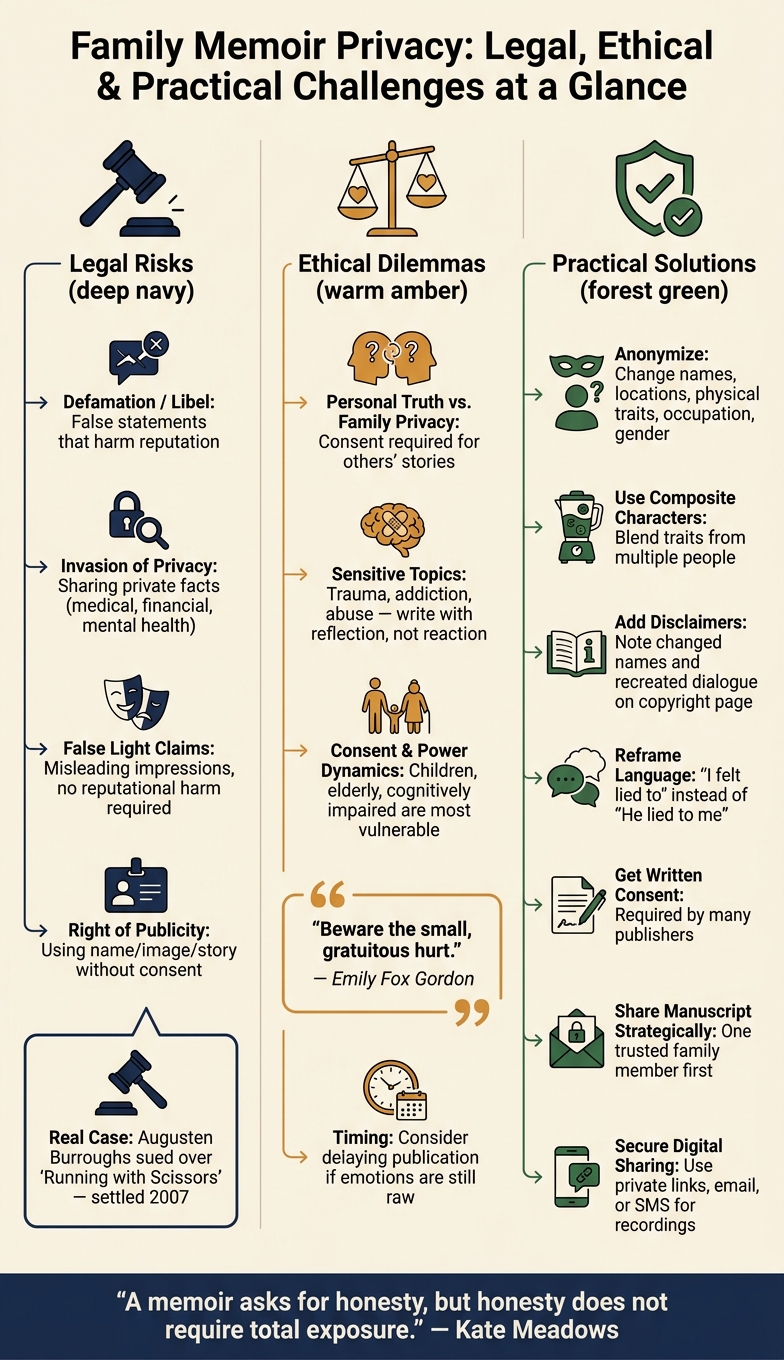
家族の回顧録におけるプライバシー:法的、倫理的、実用的な課題の概要
回顧録で個人を保護する方法:どのような変更を加えるべきか?
これらの記憶を記録する際、役立つのは 世代間の文脈を考慮して物語を記録することです 将来の読者にとって物語が明確であり続けるように。
sbb-itb-ce27d7a
家族の回顧録における法的リスク
家族の回顧録を書く際、名誉毀損、プライバシー侵害、同意なしに家族の身元を使用することなどの法的リスクは、重大な課題を生じさせる可能性があります。物語を語る上で正直さは重要ですが、それが意図しない法的結果につながることもあります。
名誉毀損と評判の損害
書面による名誉毀損は 文書による名誉毀損と呼ばれ、虚偽の事実が公表され、誰かの評判を傷つける場合に発生します。 作家組合 が説明するように:
「名誉毀損とは、特定可能な個人または団体の評判を傷つける虚偽の事実の陳述です。名誉毀損的な陳述が書面で(または印刷物で伝達される形で)行われる場合、それは文書による名誉毀損(リベル)として知られています。」
たとえ誰かの名前を明示的に挙げなかったとしても、文脈から特定可能であれば、訴訟を起こされる可能性があります。一般人(私人)の場合、名誉毀損を立証するには、著者が正確性を確保するための合理的な措置を講じなかったことを示す必要があることがよくあります。
注目すべき例として、オーガスティン・バロウズが彼の回顧録 Running with Scissorsを巡ってターコット家から訴訟を起こされたケースがあります。家族は、自分たちの描写方法を理由に名誉毀損とプライバシー侵害を主張しました。この訴訟は2007年に和解し、バロウズは非公開の金額を支払うことに同意し、本の分類を「回顧録」から「書籍」に変更し、記憶の違いを認める免責事項を含めることになりました。
名誉毀損にとどまらず、デリケートな個人情報を共有することは 多世代にわたる物語共有の課題 およびプライバシー侵害の主張につながる可能性があります。
プライバシーの侵害と私的な事実
たとえ真実の記述であっても、私的な事実を開示すれば法的措置につながる可能性があります。この種の訴えは、合理的な人にとって不快とみなされる私的な情報が、正当な公共の利益なしに公に共有された場合に発生します。例えば、親族の病歴、経済的苦境、精神衛生上の問題などを明かすことが挙げられます。
もう一つの法的懸念は、 虚偽の印象 訴訟であり、開示された情報が誤解を招く、または不快な印象を与えるかどうかに焦点を当てています。名誉毀損とは異なり、虚偽の印象を与える訴訟では、評判への損害の証明は必要ありません。Authors Guildが指摘するように、
「名誉毀損訴訟では、原告は通常、自身の評判への損害の証拠を提出しなければなりません。虚偽の印象を与える訴訟では、共有された情報が合理的な人にとって非常に不快であることのみが求められます。」
家族の身元が本人の同意なしに使用された場合、これらの法的リスクはさらに複雑になります。
親族の身元を無断で使用する
誰かの名前、画像、または個人的な話を許可なく公開することは、 パブリシティ権 を一部の州で主張される可能性があります。
例えば、ケリー・キッテルの2014年の回顧録 Breathe。その中で彼女は、不法死亡事件に関与した家族の名前を挙げました。その出来事は公記録の一部でしたが、この回顧録は彼女の家族のその側との間に永久的な亀裂を生じさせました。別の例では、ある出版社が、ある人物が特定の主張が虚偽であることを証明した後、発売前に書籍の出版を中止しました。これは著者と家族の絆の両方に損害を与えました。
Chronicle Makersの創設者であるデニーズ・アレンが Chronicle Makersと警告するように、
「すべて真実だから法的に守られる」と考える家族史家は多いですが、そうではありません。
これらの例は、真実を語ることと法的リスクの間の微妙な境界線を浮き彫りにし、家族の物語を共有する際の慎重な検討がいかに重要であるかを強調しています。これらの複雑さを乗り越える一つの方法は、 共同での回想録作成であり、これによりすべての声や懸念が確実に聞き入れられます。
家族の物語を語る上での倫理的課題
世代間の文脈を持つ 個人の歴史を共有する際、倫理的な懸念は法的な懸念と同じくらい重くのしかかることがよくあります。回想録が法的に問題なくても、関係者に精神的な苦痛を与える可能性があり、複雑な倫理的ジレンマを提示します。
個人の真実と家族のプライバシー
回想録の執筆は、個人の表現と他者のプライバシー尊重の間で、しばしば微妙なバランスを保つ必要があります。著者リリー・ダンシガーが説明するように、
「主に他の誰かに起こり、間接的に私に影響を与えたことはすべて、その誰かの、十分な情報に基づいた自由な同意を必要とします。」
あなた自身の経験は自由に共有できますが、他者が関わる詳細については、彼らの明確な承認が必要です。タラ・ウェストーバーは、2018年の回想録 『エデュケーション』の中で、親族の証言が自身の記憶と異なる箇所を記すことで、食い違う家族の記憶を乗り越えました。このアプローチにより、彼女は自身の視点を尊重しつつ、他者の視点を否定することなく表現できました。
考慮すべき重要な問いは次のとおりです。 この詳細を含めることで、私の物語はより強固になるのか、それとも、誰かの犠牲の上に成り立っているのか? 回想録作家のエミリー・フォックス・ゴードンは、次のような指針を提示しています。 軽々しい傷つけに注意しましょう。
デリケートな話題を扱う際には、これらの懸念のバランスを取ることがさらに難しくなります。
デリケートな話題について書く
トラウマ、依存症、虐待といった問題を取り上げる際には、関係者だけでなく、物語全体の整合性のためにも、慎重な配慮が必要です。作家であり教授であるトレイシー・シーリーは、この責任を次のように強調しています。
「回顧録は、誰かを屈辱を与えたり、恥をかかせたり、罰したりする場であるべきではありません。それは復讐の道具ではなく、私たちの人生から意味を形作るものなのです。」
感情がまだ生々しい場合は、出版を遅らせるのが賢明かもしれません。例えば、ローリー・ハーツェルは自身の回顧録の出版を延期しました 『ゴースト・オブ・フォース・ストリート』 を10年間、母親の気持ちを考慮して。この延期があったにもかかわらず、母親は弟の死についての随筆を読んだ後、彼女を勘当しました。重要なのは、難しい真実を避けることではなく、感情的な反応ではなく熟考をもって書くことを確実にすることです。
ライティングコーチのケイト・メドウズは、このバランスをうまく捉えています。 「回顧録は正直さを求めますが、正直さがすべてをさらけ出すことを要求するわけではありません。」
同意と力関係
力関係が同意に影響を与える場合、さらなる複雑さが生じます。例えば、対象者が公にされることの意味を完全に理解できない場合、どのように同意を得るのでしょうか?2025年11月、作家のジャクリン・グリーンバーグは、障害があり言葉を話せない12歳の息子について書く際のアプローチを共有しました。息子がその結果を理解できないことを認識し、彼女は息子に関するものを出版する前に、夫と年長の子供に相談しました。
子供、高齢の親族、認知機能に障害のある個人は、こうした状況では特に傷つきやすい立場にあります。作家のアビー・アルテン・シュワルツは、重要な問いを投げかけています。
「子供はいつ、真に同意できるのでしょうか?親は当然のように子供に関する詳細を公表する権利があるのでしょうか?真実性と搾取の境界線はどこにあるのでしょうか?」
これに対処する一つの方法は、弱い立場にある対象者に 「全権」 — 描写された内容を修正する権限 — を与えることです。彼らの立場上、失うものが最も多い場合が多いためです。さらに、出版前に原稿を家族と共有する予定がある場合は、慎重に進めてください。回想録作家のシャロン・ハリガンは、最終原稿を一度に全員に配布したことで、このことを痛いほど学びました。その結果、クリスマス直前に叔母から家族全員に向けた厳しい苦情の手紙が届き、困難な修正作業につながりました。彼女のアドバイスは、まず信頼できる家族の一人に共有し、潜在的な反応を測ることです。
プライバシーを保護するための実践的な方法
法的・倫理的な課題について議論したところで、プライバシーを保護するための実践的なステップを見ていきましょう。これらの戦略は、名誉毀損、プライバシー侵害、同意といった問題に直接対処し、機密性の高い資料を責任を持って扱うことを保証します。
名前、場所、識別子の変更
単に名前を変えるだけでは不十分です。出版者であり作家でもあるブルック・ワーナーは次のように説明しています。
「もし、ある人物が、その容姿、職業、あなたとの関係などによって、あなたの作品の中で自分自身を認識できるのであれば、その人物を特定できないようにする方法を見つける必要があります。」
効果的な匿名化には、身体的特徴、職業、場所、場合によっては性別など、複数の詳細を変更することが含まれます。一部の作家は、複数の人物の特徴を混ぜ合わせて複合的な登場人物を作成し、身元を不明瞭にすることで、さらに一歩進んだ対策を講じています。有用なヒントとしては、執筆をスムーズにするために実名で下書きし、後で特定できる詳細を置き換えるために修正することです。偽名を選ぶ際は、実名とは異なる頭文字と音節数の名前を選ぶと、さらなる分離効果が得られます。
これらの変更を行った上で、明確な免責事項を追加することで、プライバシー保護をさらに強化できます。
免責事項と表現方法の活用
免責事項は、法的にあなたを保護するだけでなく、読者との信頼関係を築く上でも役立ちます。作家のジリアン・バーネットは、著作権ページまたは序文に次のような声明を含めることを提案しています。
「一部の人物の名前および特定可能な特徴は変更されています。一部の会話は再構成されています。」
出来事をどのように表現するかも同様に重要です。例えば、「彼は私に嘘をついた」のような客観的な主張をする代わりに、「私は嘘をつかれたと感じた」のような主観的な表現を試してみてください。このアプローチは、あなたの感情的な真実を保ちつつ、法的リスクを軽減します。同様に、誰かを直接的にレッテル貼りするのを避けてください。例えば、誰かを「アルコール依存症」と呼ぶのではなく、あなたが観察した行動を記述します。メアリー・カーは彼女の回想録でこれをうまく示しています。
「私は両親をアルコール依存症とは決して呼びませんでした。私は、子供の頃の私がウォッカのボトルをシンクにひっくり返す様子を描写しました。」
家族のメンバーがイベントについて異なる記憶を持っている場合は、これらの違いを本文中に直接、または脚注で記すことを検討してください。タラ・ウェストーバーは、この手法を Educated (2018年)で用い、彼女の記憶が家族の記憶とどこで食い違っているかを明確に指摘しています。
これらの戦略は、法的リスクを軽減するだけでなく、協力と理解の機会も生み出します。
家族をレビュープロセスに巻き込む
家族に原稿を共有することはデリケートな問題ですが、この段階のタイミングは非常に重要です。著者であり教授であるトレイシー・シーリーは、次のように助言しています。
「対象者をプロセスに参加させるだけで、将来起こりうる予期せぬ事態を和らげるのに大いに役立ちます。」
初期段階の草稿を共有するのは避けましょう。執筆中に迷いが生じないよう、原稿が完成するまで待ちましょう。準備ができたら、まず信頼できる家族の一人に原稿を共有し、他の人を巻き込む前に潜在的な懸念に対処しましょう。
また、 書面による同意 を、あなたの作品に主要な形で登場する人物から取得することも賢明です。多くの出版社が出版前にこの書類を要求するためです。研究の一環として親族に録音インタビューを行う場合は、必ず事前に許可を得て、その録音を証拠として保管してください。これらの録音は、将来の不正確さや悪意の主張からあなたを守ることができます。
デジタルおよび電話ベースの回想録におけるプライバシー
デジタルおよび電話ベースの録音に関しては、そのフィルタリングされていないリアルタイムな性質のため、プライバシーのリスクはさらに高まります。匿名化、免責事項、家族によるレビューといった戦略は依然として不可欠ですが、これらの形式には、特別な注意を要する独自の課題があります。
電話ベースのストーリーテリングにおけるプライバシーリスク
自分の話を声に出して語ることは、意図せず共有するつもりのなかった個人的な詳細を明らかにしてしまう可能性があります。慎重に修正できる書かれた草稿とは異なり、音声録音はその瞬間のすべてを捉えます。これにより、機密情報が漏れやすくなります。そして、以前議論したように、共有する詳細が真実であっても、同意なしに個人情報を公開することは法的トラブルにつながる可能性があります。だからこそ、録音の即時レビューと編集が非常に重要なのです。
機密性の高いコンテンツの編集と削除
最初の録音は、たたき台だと考えてください。編集プロセスは、何を残し、何を取り除くかを決定する場です。ライティングコーチのケイト・メドウズは、これを完璧に要約しています。
「最初のバージョンでは、すべてを語る必要があるかもしれません。最終バージョンでは、何を残すべきかを知っているべきです。」
レビューの過程では、他者を特定しうる個人的な詳細を特定し、削除することに注力してください。これは特に口頭での録音において重要です。なぜなら、話された言葉は健康、経済状況、人間関係に関する情報をすぐに明らかにしてしまう可能性があるからです。効果的なテクニックの一つに「テレスコーピング」があります。これは複数の類似した出来事を一つにまとめ、特定の時期や個人を特定しにくくするものです。
変革的ノンフィクションを専門とする編集者、ブリエナ・バロウズは、表面的な変更にとどまらないことの重要性を強調しています。
「偽名を使う目的は、単に名前を変えることだけではありません。それは、あなたの物語をすでに知らない人にとって、その人物を特定できないようにすることです。」
コンテンツを整理したら、次のステップは、誰がそれを見るか、あるいは聞くかを管理することです。
安全な共有とアクセス制御
編集後、回顧録をどのように、どこで共有するかの管理が非常に重要になります。家族内であっても広範囲に共有しすぎると、意図しない個人的な詳細の漏洩につながる可能性があります。賢明なアプローチは、段階的に共有することです。まず物語に直接関わる人々と共有し、フィードバックを提供したり懸念を表明したりする機会を与えましょう。ゴーストライターのリチャード・ロウは、的確なアドバイスをしています。
「本を出版する前に、本に登場する人々と話してください。出版後ではありません。原稿が完成した後でもありません。彼らの反応が、あなたが彼らの物語をどのように扱うかに影響を与えるのに十分なほど早く。」
Platforms like Storii は、共有を管理するのに役立つように設計されています。 Storiiのシステムでは、メール、SMS、またはプライベートリンクを通じて録音を安全に共有でき、誰がアクセスできるかを完全に制御できます。これは、複雑なプライバシー設定に慣れていないかもしれない高齢の親族にとって特に便利です。さらに、 Storii スマートフォンやインターネット接続がなくても機能し、関係者全員が利用できるようにします。
まとめ:ストーリーテリングとプライバシーのバランス
家族の回顧録を書くことは、単に出来事を語るだけではありません。何を共有し、その選択がどのような影響を与えるかを理解することです。作家でありMFAインストラクターであるローリー・ヘルツェルは次のように説明しています。
「回顧録の目的は、自分がどのように不当な扱いを受けたり、苦しめられたりしたか、また他人がいかにひどい振る舞いをしたかを示すことではありません。その目的は、人生における重要な時期を、できる限り正直に検証することです。」
正直であることは、すべてを明かすことではありません。法的リスクは、その限界を理解することで対処できます。一方、デリケートなテーマの扱い、同意の確認、力関係の尊重といった倫理的な課題には、慎重な検討と配慮が必要です。
特定可能な詳細の変更、免責事項の使用、プロセスの初期段階での家族の関与、録音の慎重な管理といった実践的な手順は、あなたの物語と登場人物の両方を保護するのに役立ちます。小さな調整でも、物語に忠実でありながら人間関係を維持することができます。
このアプローチは デジタル回顧録 にも当てはまります。録音を通じて物語を記録することを好む人には、 Storii は、思い出を安全に共有する方法を提供します。プライベートリンク、メール、SMS共有などの機能があり、スマートフォンは不要です。Storiiは、プライバシーを管理しながら家族が物語を記録する方法を提供します。
目標は完璧な回顧録ではなく、正直な回顧録を作ることです。あなたが自信を持って提示でき、愛する人たちが受け入れられるようなものです。開放性と配慮のバランスを取ることで、あなたの回顧録は家族の境界を尊重しながら、あなたの真実を反映することができます。
よくある質問
家族の書面による同意はいつ必要ですか?
法的な義務ではありませんが、回顧録を出版する前に家族から書面による同意を得ることは、潜在的なプライバシー問題を回避するための賢明な手段です。出版社は、特に物語に登場する人物と連絡を取っている場合、著者が承諾を得ることを好む傾向があります。倫理的な観点からは、草稿を共有したりフィードバックを求めたりすることで、誤解が生じる前に解消することができます。回顧録に未成年者や同意能力のない個人が含まれる場合は、他の家族に相談し、対象者の快適さと幸福が最優先されるようにすることが賢明です。
回顧録の中で、ある人物を完全に特定できないようにするにはどうすればよいですか?
回顧録の中で誰かを完全に認識できないようにするには、名前を変えるだけでなく、さらに踏み込むことが不可欠です。その人の 外見、 職業、 性別、 所在地、あるいは出生地です。仮名を選ぶ際は、 本名の頭文字 と 音節数 の両方が異なるものを選びましょう。
さらに、客観的な記述や非難ではなく、ご自身の経験や感情を中心に文章を構成してください。例えば、相手の行動を直接的に決めつけるのではなく、その行動によってご自身がどう感じたかを描写しましょう。このアプローチは、相手の身元を保護するだけでなく、物語をご自身の視点に集中させることにも繋がります。
電話での回想録を安全に記録し、共有するにはどうすればよいですか?
電話での回想録を安全に記録・共有するには、まず、関係者全員から同意を得ることが不可欠です。例えば、 Storii は、自動電話通話による安全な録音と共有を提供することで、このプロセスを容易にします。プライバシーを保護するため、特にデリケートな話の場合は、名前、職業、所在地などの個人を特定できる詳細を変更することを検討してください。作品を公開または共有する前に、登場人物に原稿を確認してもらい、懸念事項に対処し、信頼が維持されるようにしましょう。
関連ブログ記事
{"@context":"https://schema.org","@type":"FAQPage","mainEntity":[{"@type":"Question","name":"家族の書面による同意はいつ必要ですか?","acceptedAnswer":{"@type":"Answer","text":"<p>法的義務ではありませんが、回顧録を出版する前に家族から書面による同意を得ることは、潜在的なプライバシー問題を回避するための賢明な手段です。出版社は、特に物語に登場する人物と連絡を取っている場合、著者が同意書を確保することを好むことがよくあります。倫理的な観点から見ると、草稿を共有したりフィードバックを求めたりすることは、誤解が生じる前に解消するのに役立ちます。回顧録に未成年者や同意能力のない人物が登場する場合は、他の家族に相談し、対象者の快適さと幸福が最優先されるようにすることが賢明です。</p>"}},{"@type":"Question","name":"回顧録で登場人物を完全に特定できないようにするにはどうすればよいですか?","acceptedAnswer":{"@type":"Answer","text":"<p>回顧録で登場人物を完全に特定できないようにするには、名前を変えるだけでは不十分です。<strong>外見</strong>、<strong>職業</strong>、<strong>性別</strong>、<strong>場所</strong>、さらには出生地などの重要な詳細を変更してください。仮名を選ぶ際は、本名と<strong>頭文字</strong>および<strong>音節数</strong>の両方が異なるものを選びましょう。</p> <p>さらに、客観的な記述や非難ではなく、自身の経験や感情を中心に記述してください。例えば、彼らの行動を直接的に非難するのではなく、その行動があなたにどのような感情を抱かせたかを記述します。このアプローチは、彼らの身元を保護するだけでなく、物語をあなたの視点に集中させます。</p>"}},{"@type":"Question","name":"電話で語られた回顧録を安全に記録・共有するにはどうすればよいですか?","acceptedAnswer":{"@type":"Answer","text":"<p>電話で語られた回顧録を安全に記録・共有するには、必ず関係者全員から同意を得ることから始めてください。<em>Storii</em>のようなツールは、自動電話通話による安全な録音と共有を提供することで、このプロセスを容易にします。プライバシーを保護するため、特にデリケートな話の場合は、名前、職業、場所などの特定可能な詳細を変更することを検討してください。作品を公開または共有する前に、登場人物に原稿を確認してもらい、懸念事項に対処し、信頼が維持されるようにしてください。</p>"}}]}
Storii ギフトボックス
母の日、父の日、誕生日、祝日などの特別な日に最適です。

