
.png)
La respuesta corta: si quiero mejores historias de vida, necesito hacer preguntas abiertas, empezar con disparadores de recuerdos sencillos, mantener las sesiones en 20-30 minutos, y pasar de la infancia a los puntos de inflexión, los valoresy el legado.
Este artículo muestra una forma sencilla de hacerlo. Explica:
- por qué las preguntas de sí/no no funcionan
- cómo los estímulos sensoriales conducen a recuerdos más ricos
- qué preguntas funcionan mejor en cada etapa de la vida
- cómo formular preguntas para personas tímidas, prácticas o reflexivas
- por qué las sesiones cortas y regulares funcionan mejor que las entrevistas largas
- cómo Storii utiliza llamadas telefónicas programadas, transcripción y preguntas personalizadas para ayudar a las familias a conservar estas historias
Cabe destacar algunos datos: Storii afirma tener más de 1.000 preguntas, permite hasta 3 llamadas por semana, y el artículo recomienda hacer solo 1 o 2 preguntas al día. Esto me dice que el objetivo no es apresurarse. Es obtener un recuerdo claro a la vez.
Si tuviera que resumir todo el artículo en una sola idea, sería esta: Las preguntas específicas generan mejores historias que las generales.
En otras palabras: pregunta menos, pregunta mejor y graba a menudo.
Entrevista de historia de vida 👪💛☎️ Cómo preparar una entrevista + consejos para entrevistas familiares
sbb-itb-ce27d7a
Cómo elegir preguntas que generen mejores historias
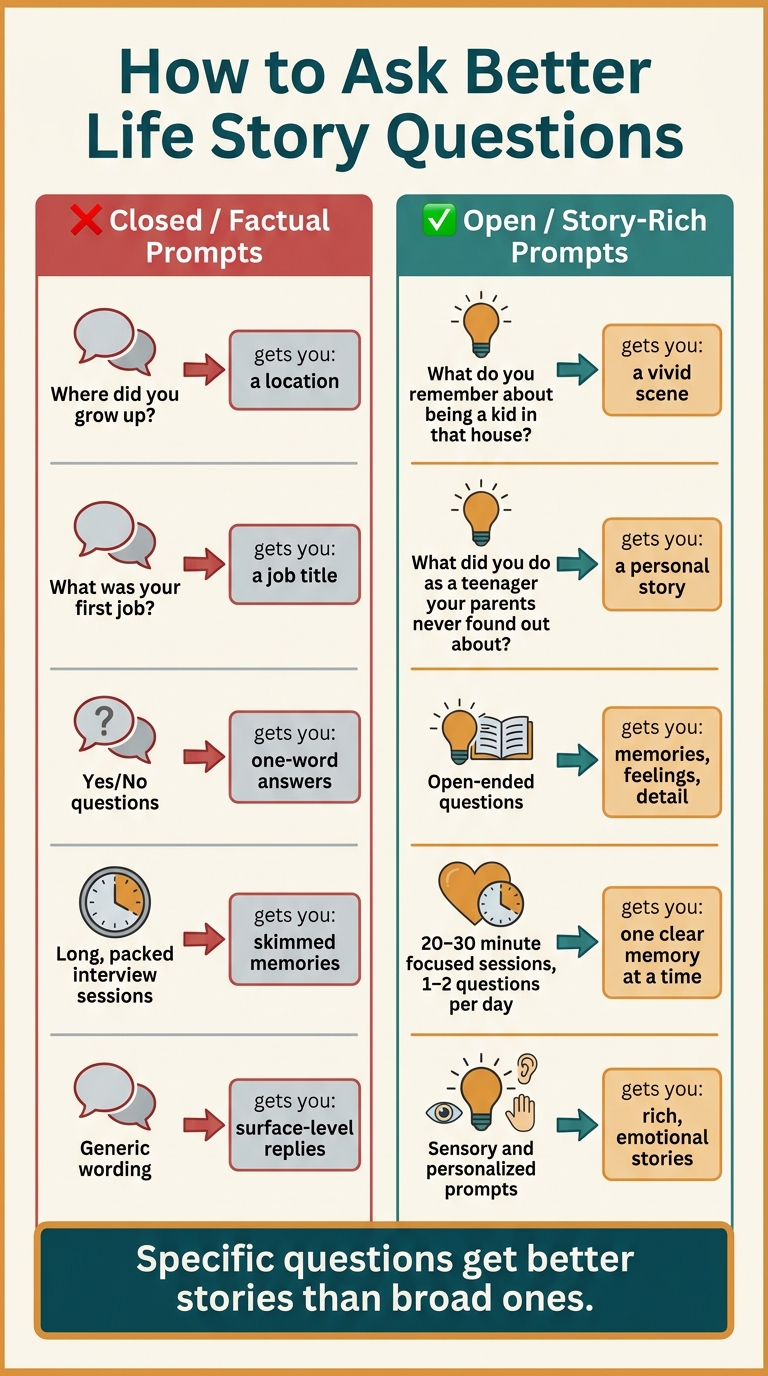
Cómo hacer mejores preguntas para historias de vida: Preguntas que funcionan y las que no
Usa preguntas abiertas en lugar de preguntas fácticas
Una vez que una pregunta es relevante para la persona que la responde, el siguiente paso es simple: haz que sea fácil de responder. La formulación importa más de lo que la mayoría de la gente cree. Una pregunta cerrada generalmente te da un hecho. Una pregunta abierta le da a la persona espacio para revivir un momento, un sentimiento o una escena. Ahí es donde reside la historia.
Pequeños cambios en la formulación pueden alterar toda la respuesta. En lugar de buscar un dato, las mejores preguntas evocan recuerdos.
Estos ejemplos muestran el paso del hecho al recuerdo. Las preguntas más potentes suelen pedir un momento, un sentimiento o un punto de vista en lugar de una respuesta corta de una sola línea.
Empieza con recuerdos sencillos antes de pasar a una reflexión más profunda.
Ayuda empezar con recuerdos sensoriales y sencillos antes de adentrarse en una reflexión más profunda. Pregunta cómo era, a qué olía o cómo sonaba la casa de la infancia. Ese tipo de pregunta resulta natural y ayuda a la gente a sentirse cómoda en la conversación.
Un buen flujo sigue una secuencia de preguntas sobre la historia de vida a través de la vida por etapas: infancia y primeros años de vida primero, luego adolescencia y mayoría de edad, luego educación y carrera, luego relaciones y paternidad, luego creencias, valores y vida interior, luego arrepentimientos, resiliencia y sabiduría, y finalmente legado. Una etapa abre la puerta a la siguiente.
"Los primeros diez minutos marcan el tono emocional. Empieza con preguntas que sean agradables de responder y que no requieran vulnerabilidad."
Mantén cada sesión de grabación enfocada y breve
Amy Potter recomienda hacer una o dos preguntas al día para que cada una reciba una reflexión profunda. Ese consejo tiene sentido. Si acumulas demasiadas preguntas en una sola sesión, la gente tiende a repasar sus recuerdos superficialmente en lugar de profundizar en ellos.
Mantén cada sesión entre 20 y 30 minutos y limítate a unas pocas preguntas. Luego, adapta esas preguntas a la etapa de vida de la persona para que la conversación sea clara y fácil de seguir.
Preguntas para hacer según la etapa de vida
Cada etapa revela una parte diferente de la historia: dónde comenzó la identidad, qué cambió su rumbo y qué sigue siendo importante ahora. Estas preguntas te ayudan a pasar de la identidad a los puntos de inflexión y al legado.
Raíces familiares e identidad temprana
Comienza con los primeros recuerdos y hábitos familiares, utilizando consejos para una entrevista de historia de vida para establecer el tono adecuado. A menudo, es ahí donde la historia comienza a revelarse.
- "¿Cuál es la historia familiar más antigua que recuerdas?"
- "¿Qué tradición familiar dio forma a tu hogar?"
Estas preguntas pueden sacar a la luz historias de migración, leyendas antiguas y costumbres transmitidas a lo largo del tiempo. Otra pregunta potente es: "¿Qué recuerdo temprano familiar o comunitario dio forma a quien eres?" Preguntas como estas suelen suscitar historias sobre herencia, costumbres e identidad.
Una vez que esas primeras raíces están claras, puedes pasar a los momentos que cambiaron el rumbo.
Puntos de inflexión en la infancia, el trabajo, el amor y las dificultades
Las preguntas vinculadas a un momento claro suelen dar lugar a historias más ricas. Le dan a la persona algo sólido a lo que recurrir, en lugar de pedir un resumen general.
- "¿Qué decisión tomaste cuando eras joven que lo cambió todo?" - Esto puede abrir la puerta a historias sobre la escuela, el trabajo o el amor.
- "¿Cuál ha sido la etapa más difícil de tu vida y qué te ayudó a superarla?" - Esto ayuda a sacar a la luz tanto la lucha como el apoyo.
- "¿Hubo algún maestro, extraño o jefe que dijo algo que se te quedó grabado durante décadas?" - Esto puede revelar una influencia duradera.
Los recuerdos específicos tienden a evocar sentimientos, detalles y el ambiente. No solo obtienes el hecho de lo que sucedió, sino que se recrea la escena.
A partir de ahí, pasa a las lecciones y a lo que quieren que la gente recuerde.
Valores, lecciones y lo que quieren que se recuerde
"¿Qué aprendiste por las malas que le dirías a tu yo más joven?" suele dar lugar a una historia, no solo a una lección concisa.
Para preguntas sobre el legado, prueba ¿Qué de tu vida la mayoría de la gente no sabe, pero debería? Preguntas como esas a menudo llevan a historias más personales sobre lo que más les importó, lo que los cambió y lo que esperan que su familia recuerde.
Si alguien da una respuesta corta, pregunta por el momento que la originó. ¿Dónde estaban? ¿Quién estaba allí? ¿Qué se sintió? Las preguntas de seguimiento sensoriales pueden agudizar la memoria y añadir detalles.
Cómo personalizar preguntas para diferentes narradores
Una vez que hayas elegido la etapa de la vida, el siguiente paso es adaptar la formulación a la persona. La gente no cuenta historias de la misma manera. Algunos se lanzan de inmediato. Otros necesitan un comienzo más suave o algo concreto a lo que aferrarse. Cuando la pregunta se ajusta a la persona, las respuestas cortas a menudo se convierten en historias con detalles y sentimiento.
Adapta las preguntas para personas tímidas, prácticas o reflexivas
Personas prácticas suelen responder mejor a preguntas concretas y sensoriales. En lugar de preguntar sobre su filosofía de vida, pídeles que describan la casa donde crecieron: cómo era, a qué olía o cómo sonaba. Eso les da algo claro de lo que partir.
Personas reflexivas a menudo piensan en términos de significado, valores y lecciones. Pueden abrirse más con preguntas como "¿Qué principio ha guiado tus decisiones más importantes?" Ese tipo de pregunta encaja con cómo ya procesan su vida.
Narradores tímidos a menudo responden mejor cuando empiezas con otras personas a su alrededor: un mentor, un profesor favorito o lo que un amigo de la infancia podría recordar de ellos.
Adapta la formulación para adultos mayores, problemas de memoria y lagunas en la historia familiar
Para adultos mayores o cualquier persona con lagunas de memoria, usa pistas que puedan visualizar. Los anclajes sensoriales a menudo funcionan mejor que las preguntas amplias. Pregunta por el olor de la cocina de una abuela, una habitación favorita o la música que marcó su adolescencia. Esos detalles suelen ser más fáciles de recordar que las grandes preguntas cronológicas.
También ayuda mantener las sesiones cortas y limitarse a unas pocas preguntas, especialmente con adultos mayores. Y si un tema resulta incómodo, sáltalo de inmediato para proteger la confianza. Pueden volver a él más tarde cuando se sientan más cómodos.
El mismo tema puede sonar muy diferente dependiendo de con quién estés hablando. Así que mantén el tema, pero cambia la formulación para que se ajuste al estilo de la persona.
Usa detalles específicos de la familia para que las preguntas sean más fáciles de responder
Una pregunta específica suele ser más fácil de responder que una genérica. Vincula la pregunta a algo concreto: un apodo de la infancia, una reliquia familiar, un primer trabajo o una tradición navideña. Los pequeños detalles dan a la gente un punto de partida.
Y aquí está lo bueno: una vez que alguien recuerda un detalle claro, el siguiente recuerdo a menudo surge con más facilidad. Eso hace que la historia sea más fácil de contar y más fácil de grabar.
Usar Storii para grabar y preservar estas historias
Las buenas preguntas son solo la mitad del trabajo. La otra mitad es asegurarse de que las respuestas se graben, y de que el proceso sea lo suficientemente fácil como para repetirlo. Ahí es donde entra Storii. Convierte las preguntas en llamadas telefónicas grabadas, para que las historias no se queden atrapadas en la memoria de alguien.
Combina preguntas preestablecidas con tus propias preguntas familiares
Storii permite a las familias añadir preguntas personalizadas, lo que facilita mucho el uso de esas preguntas personales. También incluye una biblioteca de más de 1.000 preguntas guiadas para historias de vida seleccionadas que cubren temas como recuerdos de la infancia, hitos profesionales y valores personales.
Lo ideal es usar ambos. La biblioteca integrada ayuda con las grandes etapas de la vida, mientras que las preguntas personalizadas te permiten indagar en los detalles importantes para tu familia, como la historia de inmigración de un abuelo, un primer negocio o una tradición familiar de larga data.
Facilita la narración de historias con llamadas telefónicas programadas y un intercambio sencillo
Storii graba historias a través de llamadas telefónicas automatizadas, así que no se necesita un smartphone ni conexión a internet. El narrador solo tiene que contestar una llamada telefónica normal. Puedes programar hasta tres llamadas a la semana a la hora que mejor les convenga.
Después de cada llamada, Storii transcribe la grabación automáticamente y la añade al perfil de la historia en cuestión de minutos. Las grabaciones también se pueden descargar como audiolibro o PDF, y luego compartirse por correo electrónico, mensaje de texto o enlace.
"La oportunidad de escuchar sus historias, grabadas con su propia voz, será atesorada por generaciones en nuestra familia. Es tan simple y tan fácil, pero a la vez tan poderoso." - Tom Vander Well
Una vez que las historias son capturadas, están listas para guardar, revisar y transmitir.
Conclusión: Haz Preguntas Específicas, Graba con Frecuencia y Preserva lo que Importa
Toda buena historia comienza con la pregunta correcta. Preguntas específicas y abiertas extraen el tipo de detalle que las preguntas generales suelen pasar por alto.
Las mejores preguntas también deben adaptarse a la persona que las responde. Un narrador tímido puede abrirse más si empiezas preguntando por otra persona. Un pensador práctico a menudo te dará más si le preguntas sobre un momento concreto en lugar de una gran idea abstracta.
Una vez que la pregunta se adapta al narrador, la constancia hace la mayor parte del trabajo. Una historia está bien. Un hábito constante convierte esas historias en un archivo familiar. Sesiones cortas y regulares facilitan la grabación de recuerdos y también su conservación.
Storii facilita mantener ese ritmo. Mantiene el proceso sencillo con llamadas telefónicas programadas, transcripción y preguntas que puedes adaptar a la persona que comparte sus historias.
Las preguntas adecuadas, hechas con regularidad, ayudan a que esas historias salgan a la luz.
Preguntas frecuentes
¿Cómo evito que alguien dé respuestas cortas?
Haz abiertas preguntas que den a la gente espacio para pensar, reflexionar y contar una historia en lugar de dar una respuesta simple de sí o no.
Las preguntas sobre hábitos diarios, qué les mantiene con los pies en la tierra cuando la vida se siente caótica, o momentos que significaron algo para ellos, a menudo conducen a respuestas más profundas.
También ayuda mostrar curiosidad genuina y hacer que la conversación se sienta segura. Cuando la gente se siente a gusto, suele estar más dispuesta a abrirse y compartir más profundamente.
¿Qué debo preguntar primero si alguien es tímido?
Empieza con una pregunta suave sobre lo que disfrutan o cómo se relajan. Eso puede hacer que la conversación sea un poco más fácil y cómoda.
Por ejemplo, pregunta: "¿Qué te gusta hacer para divertirte?" o "¿Cómo te relajas después de un día estresante?"
¿Con qué frecuencia debo grabar historias de vida?
Normalmente es mejor grabar historias de vida a lo largo de más de una sesión en lugar de intentar hacerlo todo de una sola vez.
¿Por qué? Porque la memoria a menudo funciona por capas. Una conversación puede remover detalles que no vuelven hasta más tarde. Una pausa entre entrevistas da tiempo a esos recuerdos para asentarse, conectarse y resurgir.
El resultado suele ser una narración más rica, con más detalles, más textura y momentos que podrían haber permanecido ocultos si toda la historia se hubiera apresurado en una sola sesión larga.
Entradas de blog relacionadas
{"@context":"https://schema.org","@type":"FAQPage","mainEntity":[{"@type":"Question","name":"¿Cómo evito que alguien dé respuestas cortas?","acceptedAnswer":{"@type":"Answer","text":"<p>Haz preguntas <strong>abiertas</strong> que den a la gente espacio para pensar, reflexionar y contar una historia en lugar de dar una respuesta simple de sí o no.</p> <p>Las preguntas sobre hábitos diarios, lo que les mantiene con los pies en la tierra cuando la vida se siente caótica, o los momentos que significaron algo para ellos, a menudo conducen a respuestas más ricas.</p> <p>También ayuda mostrar una curiosidad genuina y hacer que la conversación se sienta segura. Cuando la gente se siente cómoda, suele estar más dispuesta a abrirse y compartir más profundamente.</p>"}},{"@type":"Question","name":"¿Qué debo preguntar primero si alguien es tímido?","acceptedAnswer":{"@type":"Answer","text":"<p>Empieza con una pregunta suave sobre lo que disfrutan o cómo se relajan. Eso puede hacer que la conversación sea un poco más fácil y cómoda.</p> <p>Por ejemplo, pregunta: "¿Qué te gusta hacer para divertirte?" o "¿Cómo te relajas después de un día estresante?"</p>"}},{"@type":"Question","name":"¿Con qué frecuencia debo grabar historias de vida?","acceptedAnswer":{"@type":"Answer","text":"<p>Normalmente es mejor grabar historias de vida en <strong>más de una sesión</strong> en lugar de intentar hacerlo todo de una sola vez.</p> <p>¿Por qué? Porque la memoria a menudo funciona por capas. Una conversación puede remover detalles que no vuelven hasta más tarde. Una pausa entre entrevistas da tiempo a esos recuerdos para asentarse, conectarse y resurgir.</p> <p>El resultado suele ser una <strong>narración más rica</strong>, con más detalles, más textura y momentos que podrían haber permanecido ocultos si toda la historia se hubiera apresurado en una sola sesión larga.</p>"}}]}
Caja de regalo Storii
Ideal para ocasiones especiales como el Día de la Madre, el Día del Padre, los cumpleaños y las fiestas.

