
.png)
記憶の喪失によって物語を語ることが難しくなったときでも、適切なきっかけがあれば、高齢者が意味のある思い出を共有する手助けとなります。漠然とした質問ではなく、「お母さんの台所はどんな匂いがしましたか?」のように、感覚に焦点を当てたきっかけを使うことで、感情的なつながりを呼び起こすことができます。このアプローチは、正確さよりも感情を優先し、喜びの瞬間を生み出し、 個人の物語を残す 将来の世代へ。
主なポイント:

記憶喪失時のストーリーテリングにおけるベストプラクティス:6ステップガイド
クリエイティブケア:認知症介護における想像力の力
sbb-itb-ce27d7a
記憶喪失が語りに与える影響
記憶の喪失は、自然で楽しい交流であるはずのストーリーテリングを、困難で、時には苛立たしい経験に変えてしまうことがあります。認知機能の低下に伴う障害を理解することで、アプローチを調整し、 語りを魅力的で意義深いものに。
高齢者が物語を語る際に直面する共通の課題
記憶が薄れるにつれて、ストーリーテリングはしばしば断片的で予測不能になります。 話の筋が通らなくなり、出来事や時間軸の間を突然行き来します。結婚式の日の話を始めたかと思えば、無意識のうちに幼少期の思い出に話が飛んでしまうこともあります。
もう一つ頻繁に見られる問題は 語想起困難、語り手が適切な言葉を見つけるのに苦労することです。これにより、沈黙、苛立ち、あるいは引きこもりにつながることもあります。その上、 時系列や事実の混同 よくあることです。日付がごちゃ混ぜになったり、家族の名前が入れ替わったり、場所が混同されたりすることがあります。例えば、新婚旅行の時期を間違えたり、兄弟と従兄弟を混同したりするかもしれません。
広範で漠然とした質問 「子供の頃について教えてください」のような質問は、負担に感じられることがあります。こうした質問は、認知機能の低下に直面している人にとって、精神的な労力を過度に要求します。 疲労もすぐに蓄積します、なぜなら、長時間集中することがますます困難になるからです。ウィスコンシン大学ミルウォーキー校エイジ・アンド・コミュニティセンター所長であるアン・バスティング氏は、正確さを追求することが逆効果になりうると指摘しています。
「記憶喪失に苦しむ人が、損なわれた認識能力を回復するのを手助けしようとすることは、逆効果になる可能性があり、失敗感を抱かせ、認知症の人がコミュニケーションを閉ざしてしまうことにつながるかもしれません。」
これらの課題を考えると、完璧な記憶を追求するよりも、感情的なつながりに焦点を当てることの方がはるかに重要になります。
正確さよりもつながりを優先する
これらの課題を克服する鍵は、正確さを追求することではなく、焦点を完全に変えることです。 最も重要なのは、物語の感情的な響きであり、事実の正確さではありません。 日付が混同されたり、家族の名前が間違っていたりしても、それらの間違いを訂正することは、不必要なストレスを与え、つながりを損なう可能性があります。 LifeEcho LifeEcho 編集チームは説明しています。
「あなたは歴史の事実確認をしているのではありません。彼らの経験と声を捉えているのです。彼らが真実だと信じていることが、ここでは重要なのです。」
この感情的な真実は、語り手の個性や視点を知る手がかりとなります。物語は、誰かの声の喜び、笑い声の温かさ、母親の台所を語るときの輝きを捉えるために、完璧な時系列に従う必要はありません。 TimeSlips創設者であるアン・バスティング氏は、 TimeSlipsこのアプローチの美しさを強調しています。
「認知症の人は、想像力によって非常に美しく自分自身を表現することができます。」
快適な語りの環境を整える
適切な物理的空間は、記憶を呼び覚ますのに役立ちます。環境に配慮した調整を行うことで、集中でき、感情的に支えとなる語りのための完璧な場を作り出すことができます。
静かで集中できる空間づくり
騒音や散らかりは、 家族の物語を記録する上で妨げとなることがあります。。背景の騒音や活動は、簡単に集中を妨げます。リラックスして心を開ける雰囲気を作るため、静かで座り心地の良い部屋を選びましょう。
場所と同じくらい、タイミングも重要です。朝の方が頭が冴えている人もいれば、午後の遅い時間の方が話しやすいと感じる人もいます。大切な人が最も集中しているように見える時間帯に注意を払い、その時間に物語を語ってもらうセッションを計画しましょう。初期段階のセッションでは30~45分、中期段階のセッションでは15~20分程度と短めに設定しましょう。目をそらしたり、落ち着きがなくなったりする疲労の兆候に注意し、まだ話せる、前向きな気持ちでいられるうちに切り上げましょう。
気が散る要素が最小限になったら、記憶の引き金となるものを導入することで、物語を語ることがさらに有意義になります。
記憶の引き金を活用する
写真、音楽、大切な品物といった記憶の引き金は、強力な記憶を呼び起こすことがあります。ここでの焦点は、完璧な正確さではなく、感情的なつながりです。例えば、お気に入りの写真を近くに置くことで、特定の記憶を呼び起こすきっかけになります。古い写真は、中期認知症の方にとって特に役立ちます。見慣れた顔を認識し、それらの画像に関連する出来事を思い出すことができるからです。
音楽はさらに強力なツールです。LifeEcho編集チームは次のように述べています。
「音楽は言語とは異なる脳の部位で処理され、病気のかなり進行した段階でも、その機能が保たれていることが多いのです。」
賛美歌、民謡、ヒット曲など、若かりし頃の歌は鮮やかな記憶を呼び起こします。同様に、お気に入りの宝飾品、子供の頃のおもちゃ、古い手紙といった個人的な品々は、明晰な瞬間や感情的な反応を引き出すことがあります。漠然としたり抽象的な質問をするのではなく、これらの品々に会話を自然に導かせましょう。と、 Wipster コンテンツチームは説明しています。
「彼女が持っている何十枚ものアルバム、彼女が行った試合や出会った人々の何十年分の写真を見せるために、場所を使うことができます…それらの場所を使うことで、私たちは聴衆に私たちの登場人物をより深く体験させることができます。」
これらの引き金は、正確な事実を思い出すことの困難さを回避し、代わりに感情やイメージに基づいた反応を促します。正確な詳細よりも感情的なつながりを優先することで、このアプローチは、誰かの物語の核心を保つのに役立ちます。
質問の調整に関する主要な原則
質問の仕方一つで、大きな違いが生まれます。記憶力の課題により詳細を思い出すのが難しい場合でも、質問の仕方を少し工夫するだけで、高齢の語り手は安心し、より積極的に話してくれるようになります。
自由回答形式の質問と感覚に訴える質問
自由回答形式の質問は、 詳細な回答を促すのに非常に効果的です。。例えば、次のようなフレーズを使うと、 「〜だった時のことを話してください」 、あるいは 「〜するのはどんな感じでしたか?」 語り手は自分の言葉で経験を共有できます。
感覚的な手がかりは、感情に強く結びついた記憶に直接働きかけ、認知的な障壁を迂回するため、特に効果的です。「あなたの過去について教えてください」のような漠然とした質問をする代わりに、次のようなより具体的な質問を試してみてください。 「おばあちゃんの台所はどんな匂いがしましたか?」 、あるいは 「お気に入りの夏を思い出す曲は何ですか?」 [5,10]。匂い、味、音、触覚に焦点を当てたこれらの感覚的な質問は、鮮やかで詳細な記憶を呼び起こすことがよくあります。USCの心理学専門家であるマーガレット・ガッツ博士は、 USC、次のように説明しています。
「記憶を検索し整理する行為は、複数の脳領域を活性化させ、神経経路を強化します。」
これらのテクニックは、ポジティブで身近な話題について、自然と有意義な会話へと導きます。
ポジティブで一般的な話題を選ぶ
語りの扉を開いたら、楽しく身近な記憶へと会話を導きましょう。軽くて一般的な話題から始めることは「ウォーミングアップ」となり、語り手がより複雑なテーマに踏み込む前に安心感を与えるのに役立ちます [5,10]。長期記憶、特に幼少期や青年期の記憶は、短期記憶が損なわれていても鮮明に残っている傾向があります。例えば、次のような節目について尋ねてみましょう。 初めての仕事、 子供の頃のペット、あるいは 季節の伝統。その他の質問としては、 子供の頃好きだった食べ物、 これまで見た中で一番きれいだった場所、または いつもみんなが笑ってしまう家族の話 は、リラックスして楽しい雰囲気を作り出します [3,10]。
その人が生涯にわたって繰り返してきた経験、例えばガーデニング、楽器の演奏、手芸などに焦点を当てましょう。これらの「習熟した」活動は親しみやすく、より抽象的または感情的に重い話題よりも思い出しやすいものです。
質問の繰り返しと問い直し
明確で適切に表現された質問は、始まりに過ぎません。質問をより単純な単一の問いに分解することで、語り手が話についていき、答えやすくなります。もし誰かが答えるのに苦労している場合、感覚的または具体的な視点から質問を言い換えることで、圧倒されることなく記憶とつながる手助けとなります [5,10]。
例えば、「 学校はどんな感じでしたか? 」と尋ねても反応がない場合は、もっと焦点を絞った質問を試してみましょう。 学校で覚えている歌は何ですか?。もし会話が本筋から外れても、自然な流れに任せましょう。元の質問には後でいつでも戻ることができます。
質問のカスタマイズ方法
語り手にはそれぞれ独自のリズムとスタイルがあるため、相手の快適なレベルや反応に合わせてアプローチを調整することが重要です。
複雑な質問の分解
時には、広範な質問や複数の要素を含む質問は、特に記憶に課題がある人にとって、負担に感じられることがあります。「子供時代について、そして大人になったら何になりたかったか教えてください」といった質問をする代わりに、より小さく焦点を絞った部分に分解してみましょう。まずは「子供の頃の家は何色でしたか?」といった簡単なことから始めます。次に「誰と一緒に住んでいましたか?」と続けます。この段階的な方法は、会話を管理しやすくします。「学校はどんな感じでしたか?」のような質問が広すぎると感じたら、それを絞り込んで 人生を語るための具体的な質問 - 「学校の建物はどんな様子でしたか?」「学校の給食はいつも何でしたか?」といった的を絞った質問は、語り手が話に集中しやすくなります。
質問と写真や音楽を組み合わせる
見慣れた光景や聞き慣れた音は、強烈な記憶を呼び起こすことがあります。古い写真、音楽、大切な品々を質問と一緒に使うことで、話に命を吹き込むことができます。例えば、写真アルバムをめくりながら「これは誰ですか?」「この日のことを覚えていますか?」と尋ねることで、一般的な質問よりも深い会話につながることがあります。同様に、賛美歌、民謡、ヒット曲など、彼らの若い頃の歌を流すことは、強い感情的な反応を引き出すことができます。古い手紙、宝飾品、子供の頃のおもちゃのような物でさえ、明確な記憶や繋がりを呼び起こし、自然と会話を導くことができます。
短く、導くような会話の構成
短く集中したセッションが最も効果的です。特に、穏やかで前向きな環境を作りたい場合には。まず、語り手が安心できるよう、軽くて楽しい話題から始め、その後、より感情的な内容へと移りましょう。疲労の兆候に注意し、語り手がまだ意欲的で明るいうちに、良い雰囲気でセッションを終えるようにしましょう。物事をシンプルにするために、使用するのは 録音ツール 語り手が機器を操作する必要がなく、技術的な邪魔が入らずに会話に完全に集中できるようなものを選びましょう。
さまざまなテーマの質問例
先ほど述べた戦略を用いて、感覚的な詳細や特定の瞬間を引き出すように設計された質問例をいくつかご紹介します。これらの質問は、優しく、引き込みやすく、感情的に高揚させるように工夫されています。特に記憶に課題を抱える高齢の語り手にとって非常に役立ち、重要な 高齢者ケアにおける語りのメリット。目標は、大切な思い出を保存しつつ、快適で楽しい語りの体験を作り出すことです。
家族の思い出に関する質問
家族について話すときは、大まかな年表ではなく、特定の感覚的な瞬間に焦点を当てる方が効果的です。例えば、次のように尋ねることができます。 「おばあ様の台所からどんな香りを覚えていますか?」 鮮やかな感覚的記憶を呼び起こすために。他のアイデアとしては、次のものがあります。 「配偶者やパートナーとはどのように出会いましたか?」 または 「ご家族に代々伝わるレシピはありますか?」
家族の家宝を一緒に見ているなら、次のように尋ねてみてください。 これがどのようにしてご家族の物語の一部になったのか、お聞かせいただけますか? 休暇の思い出については、焦点を絞って尋ねてみましょう。 「あるクリスマスの日について具体的に教えていただけますか?その年、どんな匂いがして、どんな味がして、どんな音が聞こえましたか?」 これらの問いかけは、語り手が感情的に意味のある、豊かで詳細な瞬間に深く入り込むきっかけとなります。
日常の喜びに関する問いかけ
ときには、ささやかな瞬間が最高の喜びをもたらします。最近の記憶が薄れても、こうしたささやかな幸せの断片は心に残ることがよくあります。例えば、次のように尋ねてみてもいいでしょう。 「今日、あなたを幸せにしたささやかなことは何ですか?」 または 「いつも笑顔にしてくれる音は何ですか?」
五感に訴えかける質問は、とりわけ効果的です。 「どんな食べ物の香りが、すぐに幸せな時間を思い出させますか?」 または 「雨や鳥のさえずりのような自然の音で、心が安らぐのはどんな音ですか?」 次のように尋ねることもできます。 「柔らかいウールや温かい砂のような、どんな手触りに心地よさを感じますか?」 または 「大好きだったいつもの朝のルーティンは何でしたか?」 これらの問いかけは、会話を軽快に保ちながら、温かく前向きな振り返りを促します。
子供の頃の思い出に関する問いかけ
子供の頃の思い出は、最近の記憶が思い出しにくい場合でも、しばしば鮮明に残っています。例えば、シンプルで視覚的な質問から始めてみましょう。 「あなたの学校はどんな様子でしたか?」 または 「子供の頃、どんな遊びが好きでしたか?」
日常の習慣も、会話のきっかけとして最適です。 「学校では、お昼ご飯に何を食べていましたか?」 または 「子供の頃住んでいた家は、何色でしたか?」 これらの記憶を鮮明にするために、次のように尋ねてみても良いでしょう。 「子供の頃住んでいた近所で、どんな音が思い出されますか?」 または 「一番好きだった遊び場はどこで、どんな場所でしたか?」 これらの質問は、正確な日付や複雑な詳細にこだわることなく、物語を語ることを促し、楽しくストレスのない体験を提供します。
を利用する Storii 調整された質問のために
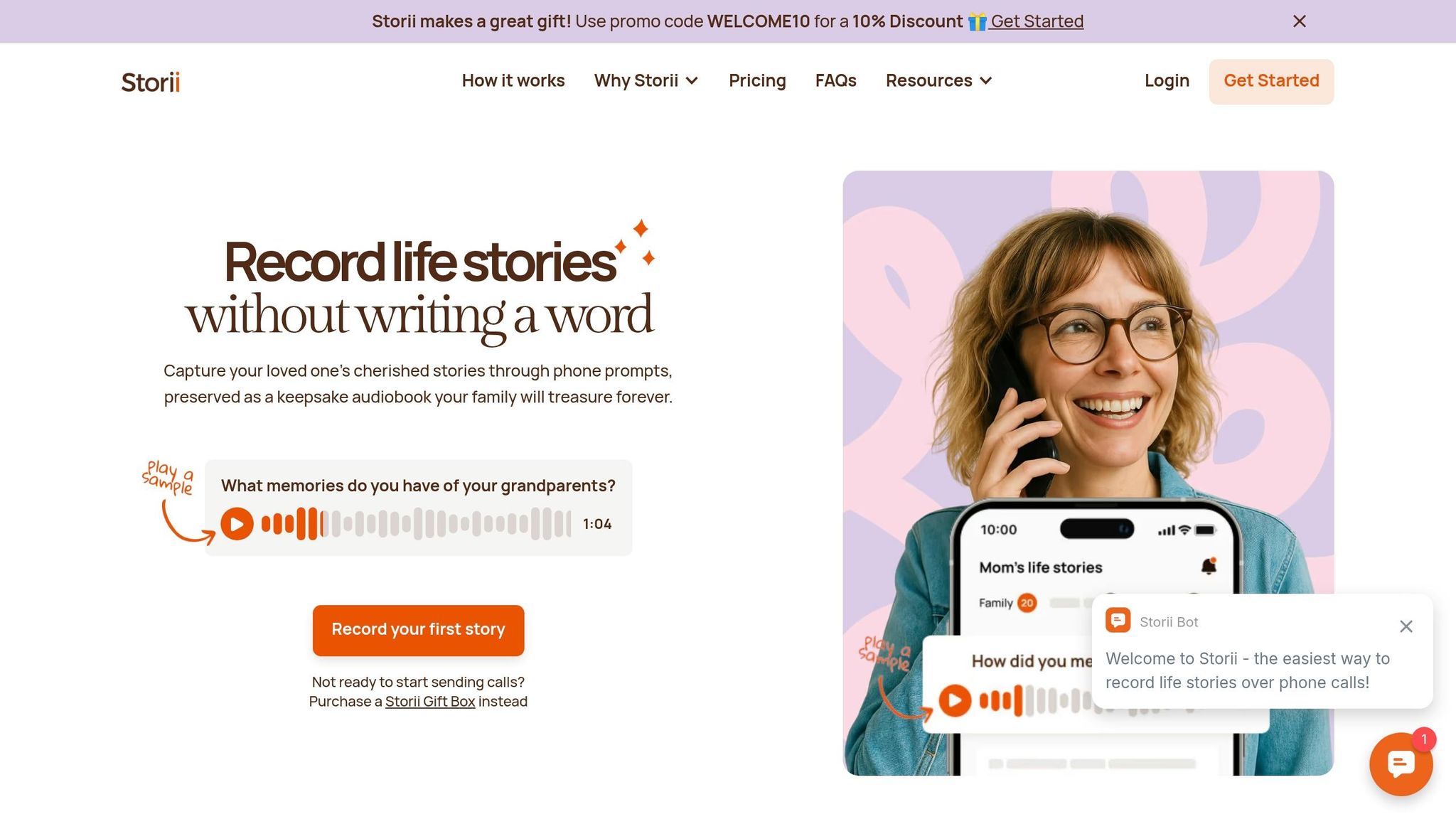
Storiiは、最新テクノロジーの障壁を取り除くことで、記憶力低下のある高齢者にとって物語を語ることを身近なものにします。定期的な電話を通じて機能するため、インターネット接続やコンピューターのスキルは不要です。このアプローチは、デジタル機器に圧倒されると感じるかもしれないが、会話形式には慣れている高齢者に最適です。この慣れた方法は、安心感と 物語を語る過程でのつながりを促します。。
Storiiのライブラリから質問を選択・修正する
Storiiは1,000以上の 厳選されたライフストーリーの質問。これらの質問を閲覧して、大切な人の興味や能力に合ったものを見つけることができます。記憶に課題がある方には、正確な日付や詳細な時系列を必要とするものよりも、感覚に基づいた質問や幅広いテーマに焦点を当てる方が良い場合がよくあります。質問が複雑すぎると感じたら、簡略化したり、独自の質問を作成したりして、会話が楽しく、心地よいものになるように調整できます。
質問の準備ができたら、Storiiを使えば録音は簡単です。
自動電話通話によるストーリーの記録
質問を選んだら、大切な人が最も元気な時間帯に、週に最大3回まで電話をスケジュールできます。Storiiは相手が希望する電話番号に電話をかけ、相手は電話に出て、自分の言葉で物語を話すだけです。ヘレン・ティーガン氏が説明したように:
「自宅の電話に直接かかってくるという点が、大きな違いを生みました。彼女はテクノロジーの操作があまり得意ではないので。」
このシンプルなプロセスはリラックスした雰囲気を作り出し、物語を語ることに集中できるようにします。柔軟性を好む方のために、Storiiではスケジュールされたセッション以外でいつでも電話をかけて物語を録音することもできます。
録音された物語の保存と共有
Storiiは、これらの貴重な思い出が保存され、簡単に共有できるようにします。各通話後、プラットフォームは音声を自動的に録音し、テキストに書き起こし、両方を語り手のデジタルプロフィールに保存します。これらの録音は、オーディオブックやPDFとしてダウンロードでき、大切な人の声で語られた物語を、永続的な回想録に変えます。これらの思い出の共有は簡単です。メール、SMS、または共有可能なリンクで送信でき、家族がどこにいてもつながりを保つことができます。
家族の楽しみだけでなく、これらの録音は実用的な目的も果たします。医療専門家に、大切な人の背景、好み、性格に関する貴重な洞察を提供します。トム・ヴァンダー・ウェル氏がその価値を完璧に表現しました:
「彼の物語を、彼自身の声で録音されたものを聞く機会は、私たちの家族の世代を超えて大切にされるでしょう。とてもシンプルで簡単なのに、これほど強力なものはありません。」
まとめ
感覚的な質問、ポジティブなテーマ、記憶の引き金となるような質問を使うことで、物語を語ることは、ストレスの多い記憶の訓練ではなく、つながりの瞬間となります。厳密な正確さから創造的な表現へと焦点を移すことは、そうでなければ高齢者が会話を避けてしまうかもしれないような、失敗への恐れを軽減するのに役立ちます。
研究は、創造的な物語の語り方が、参加意欲と喜びを高めるだけでなく、 高齢者とその介護者の両方にとって生活の質を向上させることを強調しています。自由回答形式で感覚に訴えかける質問をし、すべての回答を肯定することで、大切な人が見過ごされていると感じる状態から、物語の語り手としての役割を受け入れるように助けます。
Storiiは、シンプルな電話通話の質問、1,000以上のライフストーリー質問集、自動録音と文字起こしといった機能で、このプロセスをより簡単にします。録音はオーディオブックやPDFとして保存でき、家族の絆を深めながら思い出を保存します。このテクノロジーは障害を取り除き、想像力を刺激し、アイデンティティを強化し、つながりを育むという、本当に大切なことに集中できるようにします。
完璧な歴史的記録を作成することが目的ではありません。たとえ一文や鮮やかなフレーズであっても、将来の世代にとって計り知れない価値があります。それはアイデンティティの保存と 家族の思い出の保存に貢献します 心のこもった物語を語ることを通じて。ウィリアム・ジンサーが痛切に私たちに思い出させたように:
私が知っている最も悲しい言葉の一つは、「母にあのことを聞いておけばよかった」です。
よくある質問
大切な人が名前や日付を混同してしまったらどうすればいいですか?
大切な人が名前や日付を混同してしまった場合、忍耐と優しさをもって対応することが重要です。間違いを指摘するのではなく、質問の仕方を変えたり、さりげないヒントを与えたりして、詳細を思い出せるよう手助けしてみてください。慣れ親しんだ話題や手がかりを使って、優しく記憶を促しましょう。直接的な訂正や異議申し立ては、フラストレーションにつながる可能性があるため、避けるのが最善です。目標は、温かく協力的な雰囲気を作り出し、安心感を与え、彼らが安心して話を共有できるようにすることです。
記憶喪失にはどのような感覚刺激が最適ですか?
様々な布に触れたり、花の香りを嗅いだり、心を落ち着かせる音楽を聴いたりするような感覚的な活動は、記憶喪失に悩む方々にとって非常に役立ちます。これらの慣れ親しんだ感覚は、しばしば記憶を呼び起こし、特に記憶関連の課題を抱える高齢者にとって、安心感をもたらします。
ストーリーテリングのセッションはどのくらいの長さが適切ですか?
記憶に困難を抱える高齢者の場合、ストーリーテリングのセッションは 30分から45分が最適です。この時間枠は、有意義な共有を促すのに十分な長さでありながら、疲労や混乱を引き起こさない程度の短さというバランスが取れています。特に、認知症の初期段階で、まだ詳細を思い出し、明確に自分を表現できる個人にとっては非常に有益です。セッションを短く保つことで、快適で楽しい体験を作り出すことができます。
関連ブログ記事
{"@context":"https://schema.org","@type":"FAQPage","mainEntity":[{"@type":"Question","name":"大切な人が名前や日付を混同してしまったらどうすればいいですか?","acceptedAnswer":{"@type":"Answer","text":"<p>大切な人が名前や日付を混同してしまった場合、忍耐と優しさをもって対応することが重要です。間違いを指摘するのではなく、質問の仕方を変えたり、さりげないヒントを与えたりして、詳細を思い出せるよう手助けしてみてください。慣れ親しんだ話題や手がかりを使って、優しく記憶を促しましょう。直接的な訂正や異議申し立ては、フラストレーションにつながる可能性があるため、避けるのが最善です。目標は、温かく協力的な雰囲気を作り出し、安心感を与え、彼らが安心して話を共有できるようにすることです。</p>"}},{"@type":"Question","name":"記憶喪失にはどのような感覚刺激が最適ですか?","acceptedAnswer":{"@type":"Answer","text":"<p>様々な布に触れたり、花の香りを嗅いだり、心を落ち着かせる音楽を聴いたりするような感覚的な活動は、記憶喪失に悩む方々にとって非常に役立ちます。これらの慣れ親しんだ感覚は、しばしば記憶を呼び起こし、特に記憶関連の課題を抱える高齢者にとって、安心感をもたらします。</p>"}},{"@type":"Question","name":"ストーリーテリングのセッションはどのくらいの長さが適切ですか?","acceptedAnswer":{"@type":"Answer","text":"<p>記憶に困難を抱える高齢者の場合、ストーリーテリングのセッションは<strong>30分から45分</strong>が最適です。この時間枠は、有意義な共有を促すのに十分な長さでありながら、疲労や混乱を引き起こさない程度の短さというバランスが取れています。特に、認知症の初期段階で、まだ詳細を思い出し、明確に自分を表現できる個人にとっては非常に有益です。セッションを短く保つことで、快適で楽しい体験を作り出すことができます。</p>"}}]}

Storii ギフトボックス
母の日、父の日、誕生日、祝日などの特別な日に最適です。

