
.png)
祖父母の物語は、分かち合うべき記憶の宝庫です。 子供時代の冒険からキャリアの節目まで、彼らの経験は家族の歴史や価値観への洞察を与え、あなたのアイデンティティを育むでしょう。家族の物語を知っている子供は、自信を持ち、困難に立ち向かう力が強い傾向があることが研究で示されています。
祖父母と心温まる会話を始めるためのヒントをご紹介します。
- 子供時代の思い出: 彼らの家、日課、お気に入りの子供時代の匂いについて尋ねてみましょう。
- 10代から青年期: 彼らに影響を与えた重要な人物や、人生初期の転機となった瞬間について聞いてみましょう。
- 恋愛と家族生活: パートナーとの出会い、家族の伝統、そして受け継がれてきた価値観について尋ねてみましょう。
- 仕事と人生の変化: 彼らの仕事の道のり、初めての仕事、そして乗り越えた課題について探ってみましょう。
- 苦難と誇り高き瞬間: 困難な時期や、最も誇りに思う功績について聞いてみましょう。
- 知恵と遺産: 将来の世代に覚えていてほしい教訓や価値観について尋ねてみましょう。
ヒント: オープンエンドな質問や、「次に何が起こったの?」のような掘り下げた質問を使って、より深い話を引き出しましょう。以下の ライフストーリーインタビューのヒント と これらの会話を記録すること は、彼らの遺産を後世に伝えることができます。
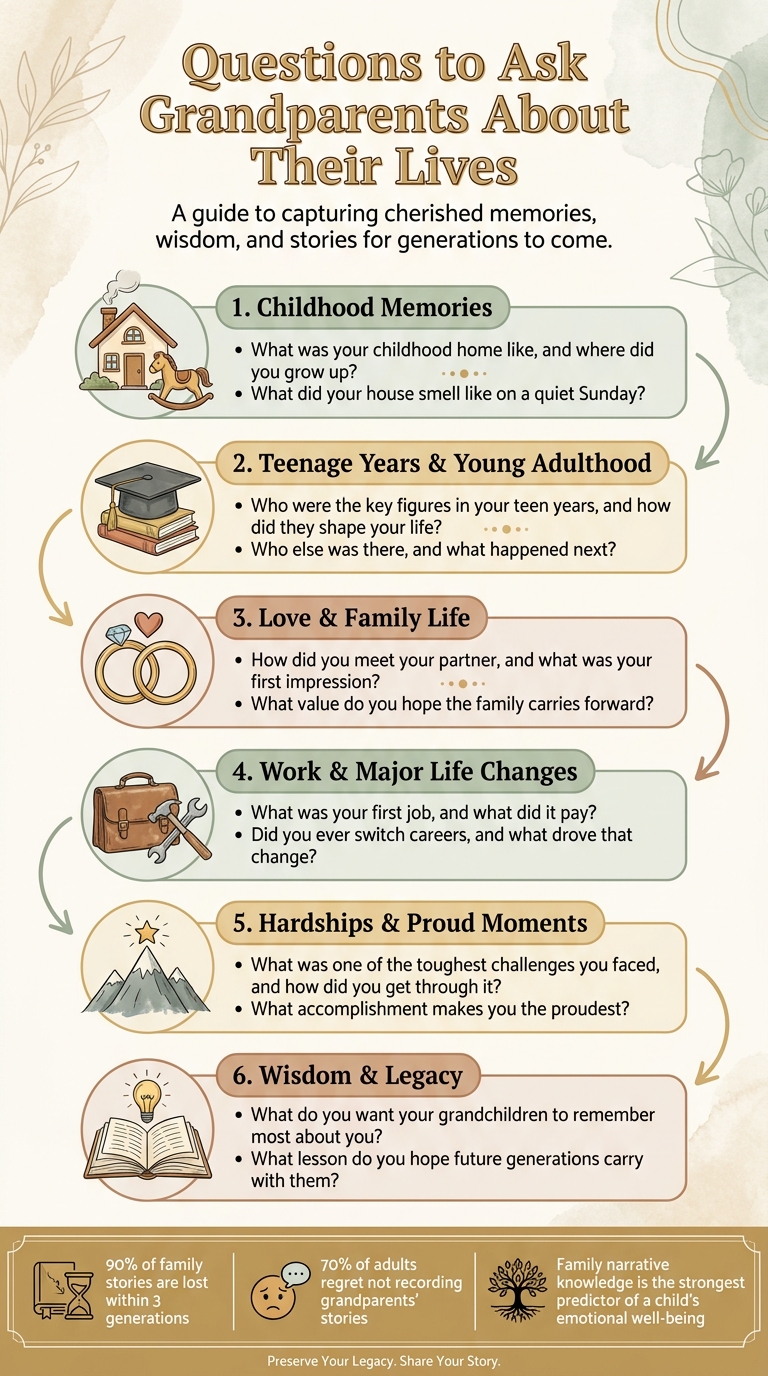
祖父母への質問:人生の6つの重要なテーマ
祖父母に聞くべきインタビュー質問
始める前に、 成功するインタビューの進め方 を知っておくと良いでしょう。彼らの話が明確に記録されるようにするためです。
sbb-itb-ce27d7a
1. 子供時代の思い出
「子供の頃の家はどんな感じでしたか?どこで育ちましたか?」と尋ねることで、たくさんの大切な思い出を引き出すことができます。
漠然とした質問に留まらず、具体的な詳細に踏み込んでみましょう。例えば、家の中で一番好きだった部屋や、静かな日曜日に家中に漂っていた香りのことなどを尋ねてみてください。 感覚的な手がかり — 音、手触り、匂いなど — は、鮮明な記憶を呼び起こすのに役立ちます。これらの小さな詳細は、彼らの幼少期の日常の営みをより深く理解することに自然につながるでしょう。
「日々の習慣について、シンプルで具体的な質問から始めましょう…そして感覚的な詳細(『家はどんな匂いがしましたか?』など)についても尋ねてみてください。これらの具体的な手がかりは、祖父母が鮮明な詳細を思い出すのに役立ち、自然とより深い物語へとつながります。」 - Family Stories Team, MyStoryFlow
一度記憶が流れ始めたら、彼らの育ちの現実的な側面を探ってみましょう。兄弟姉妹との相部屋のことや、洗濯や入浴といった家事がどのように行われていたか尋ねてみてください。このような質問は、彼らが育った環境や直面した課題を明らかにするでしょう。
日課や家事に関する話に注意を払ってください。これらの話は、彼らの幼少期を形作った家族の価値観や伝統をしばしば明らかにします。これらの 世代間の文脈を持つ物語 を理解することは、完全な家族の遺産を保存するのに役立ちます。
2. 10代と若年成人期
幼少期の記憶を探った後、次の章では思春期と若年成人期に深く踏み込みます。
10代から若年成人期にかけて、あなたの人生における主要な人物は誰でしたか?そして、彼らはあなたの人生をどのように形作りましたか? この質問は、これらの重要な時期に永続的な足跡を残した極めて重要な人々を明らかにすることができます。多くの場合、この時期の指導者、教師、友人たちは、祖父母の性格や選択を形成する上で深い影響を与えました。
祖父母に、コーチ、教師、指導者など、特定の人物を思い出してもらい、その人物が彼らの視点や決断にどのように影響を与えたかを話してもらいましょう。これらの話は、率直な瞬間と鮮やかな詳細に満ちた彼らの世界を垣間見せてくれるでしょう。
「最高の物語は、『次に何が起こった?』や『他に誰がいた?』といった掘り下げから生まれるものであり、次の質問に移ることからは生まれません。」 - MyLifeLedger
最初の答えで立ち止まらないでください。「他に誰がいた?」のような掘り下げの質問は、彼らの親しい人々についてさらに多くのことを明らかにすることができます。もしかしたら、いつも味方でいてくれた親友、より良くあろうと奮起させてくれたライバル、あるいは予期せぬ形で導いてくれた静かな指導者がいたかもしれません。
次のように尋ねてみましょう。 「若年成人期において最も重要な人物は誰でしたか?そして、彼らはあなたの人生にどのような影響を与えましたか?」 この 自分だけのストーリーの問いかけ その転換期に最も意味深かった人間関係について、深く振り返るきっかけとなるでしょう。
これらの初期の影響は、愛、家族、個人の成長など、その後の人生の土台となることがよくあります。さらにヒントを得るには、以下の網羅的なリストをご覧ください 祖父母へのインタビュー質問。
3. 恋愛と家庭生活
若い頃の影響が薄れるにつれて、個人の選択や人間関係が中心となり、家族を形作る価値観や絆が育まれていきます。
まず、祖父母にパートナーとの出会いや第一印象について尋ねてみましょう。これらの話は、驚きに満ちていたり、ユーモラスだったり、心温まるものだったりします。そして、その瞬間を追体験するたびに、彼らの目に特別な輝きをもたらすでしょう。この質問は、これまで聞いたことのない家族の物語を明らかにし、つながりを深め、そして 家族の物語を記録する 世代を超えて。
そこから、さらに深く掘り下げてみましょう。親として彼らを導いた価値観や伝統について尋ねてみてください。
「自分の親とは違うことをすると誓ったことは何ですか?そして、それを守り通しましたか?」 - MyLifeLedger
この種の質問は、表面的な詳細を超え、彼らが下した選択や学んだ教訓についての洞察を与えます。家族の集まりの雰囲気についても描写してもらうことができます。例えば、家の匂い、部屋に満ちた音、あるいはその瞬間を特別なものにしたささやかな儀式などです。これらの鮮やかな詳細は、大まかな質問では引き出せない方法で記憶を蘇らせることがよくあります。
最後に、家族に受け継いでほしい核となる信念や価値観は何ですかと尋ねてみましょう。この質問は、彼らの個人的なアイデンティティだけでなく、残したいと願う遺産も明らかにします。これらの大切な振り返りは、過去を保存するだけでなく、家族の未来の物語を形作るのに役立ちます。
4. 仕事と人生の大きな変化
個人的な瞬間や家族の出来事を深く掘り下げた後は、祖父母の人生を形作った職業上の道のりを探る時です。
キャリアは、その人の性格、回復力、価値観について多くを明らかにします。彼らが就いた仕事、冒したリスク、そして行った犠牲は、普段の会話では出てこない物語を語ることがよくあります。
彼らの最初の仕事から始めましょう。 質問する 詳細に関する主な質問 — 給料はいくらだったか、どんな服を着ていたか、上司は誰だったか。こうしたささやかな逸話は、現代とはかけ離れた時代を鮮やかに描き出してくれます。さらに深く掘り下げてみましょう。キャリアを変えたことはありましたか?そのような大きな変化を起こすきっかけは何でしたか?
「母の子供時代や、私が生まれる前の生活について、たくさんのことを知ることができました。家族とのつながりを深めたい方や、よく知っていると思っていた人たちの素晴らしい話やちょっとした情報を発見したい方には、心からお勧めします!」 - クレイトン・ボーインク
これらのキャリアに関する話は、あなたが生まれるずっと前から祖父母が送っていた人生を垣間見せてくれます。例えば、 Storii のようなサービスは、 これらの瞬間を記録することをより簡単にします。思慮深いプロンプトによる自動電話を通じて、祖父母の声でこれらの記憶を記録する手助けをし、それらが今後何年にもわたって大切にされることを保証します。
「彼の話を、彼自身の声で録音されたものを聞く機会は、私たちの家族の何世代にもわたって大切にされるでしょう。」 - トム・ヴァンダー・ウェル
5. 苦難と誇らしい瞬間
キャリアに関する話は、しばしば外部からの課題に焦点を当てがちですが、個人的な苦難や誇らしい瞬間は、内なる強さを明らかにします。
まず、祖父母に人生における決定的な課題について尋ねてみましょう。 次のような質問は、 「これまで直面した最も困難な課題の一つは何でしたか?それをどのように乗り越えましたか?そして、どのような功績が最も誇らしいですか?」 回復力と勝利の力強い物語を明らかにすることができます。
これらの物語は、ご家族にとって計り知れない意味を持ちます。研究によると、家族の歴史を知る子どもは、精神的な回復力と自制心をより高める傾向があります。これらの瞬間について学ぶことで、あなたは 家族の絆を深め 彼らが歩んできた人生への理解を深めることができます。
「研究によると、家族の歴史をより多く知るほど、精神的な健康、自制心、そして家族単位での幸福感が高まります。」 - Storii
Storiiの共同創設者兼CEOであるキャメロン・グラハム氏は、この重要性を強調し、次のように述べています。 「彼らの人生における特定の瞬間について学ぶことは、あなたの伝統、遺産、そして家族を形作るものを理解するのに役立つでしょう。」
困難や功績に関するこれらの個人的な物語を記録することは、家族の遺産が将来の世代にインスピレーションを与え続けることを保証します。 を活用することを検討してください。 レガシーフィルム これらの力強い物語を記録するために。
6. 知恵と遺産
生涯にわたる経験から、祖父母は将来の世代のために保存されるべき知恵の宝庫を持っています。
彼らが将来の世代に何を覚えていてほしいか尋ねる
尋ねることができる最も意味のある質問の一つは次のとおりです。 「孫やひ孫に、あなた自身とあなたの人生の物語について、最も覚えていてほしいことは何ですか?」
彼らの答えは、しばしば功績よりも資質や価値観に焦点を当てています。ある情報源が指摘しているように、
「答えは常に人柄に関するものです。『私は公平だった』とか、『いつも門戸を開いていた』といったように。この質問は、孫たちに一生心に残る言葉を与えます。」 - Tell Me Your Story
驚くべき事実があります。 家族の物語の90%は、わずか3世代で失われてしまいます。そして、大人の70%が、手遅れになる前に祖父母の物語を記録しなかったことを後悔していると認めています。さらに、研究では、家族の物語に関する知識が 子どもの心の健康の最も強力な予測因子である。
彼らの遺産を真に保存するためには、彼らが話す言葉をそのまま記録することが重要です。彼らが使う具体的な言葉や口調は、他の何にも代えがたい方法で彼らの物語に命を吹き込みます。これらの会話を簡単に記録する方法として、ツールとしては Storii は、自動電話通話機能と、1,000以上の人生の物語のプロンプトのライブラリを提供しており、その中には 高齢者に尋ねるべき最高の質問 も含まれています。インターネットやスマートフォンは不要です。
まとめ
あなたの祖父母は、生涯にわたる歴史と変革を経験してきました。閉じた質問から オープンエンドの質問に変えることで、短い答えを意味のある物語に変えることができます。 実際、2010年の デューク大学 の研究では、家族の歴史についてより多く知っている子どもたちは、自尊心が高く、自己をよりコントロールできていると感じ、不安が少ないことが明らかになりました。
この記事からいくつかの質問を選び、穏やかな日曜の午後などに少し時間を取って電話をかけ、会話を始めてみましょう。特別なスキルは何も必要ありません。好奇心と耳を傾ける気持ちがあれば十分です。もし話題がデリケートすぎると感じたら、祖父母に別の方向に話を導いてもらいましょう。
行動を起こす準備ができたら、これらの貴重な思い出をどのように保存するかを考えてみてください。 録音は家族にとってかけがえのない宝物になります. 大切な人たちとすぐに共有しましょう。グループメッセージや休日の集まりで。感謝祭で物語を再生したり、古い家族写真と同じくらい慎重に音声をバックアップしたりしてください。より整理された方法としては、 Storii は、1,000以上の人生の物語に関する質問集からプロンプトを提示する自動音声通話を提供しており、その回答を共有可能なオーディオブックやPDFに変換できます。
よくある質問
祖父母に心を開いてもらうにはどうすればよいですか?
子供時代の家や思い出深い人生経験など、特定の思い出についてオープンな質問をすることで、祖父母に話してもらうよう促しましょう。相手がリラックスできるように、軽やかで会話調のトーンを保ちましょう。注意深く耳を傾け、急かさず、自然な間を大切にしましょう。さらに役立つツールとして、 Storii は非常に役立ちます。電話を通じて自動で質問を提示するため、高齢者が思い出を語りやすくなります。これらの会話は文字起こしされ、保存され、家族が大切にする宝物となります。
話題がデリケートすぎると感じたらどうすればよいですか?
話題がデリケートだと感じたら、敬意を払い、忍耐強く接することで、祖父母の気持ちを優先しましょう。感情的になったとしても、急いで話題を変えないでください。そうした瞬間には、深く個人的な意味が込められていることがよくあります。まず自分の経験を話したり、プレッシャーを感じさせずに正直な気持ちを引き出すようなオープンな質問をしたりすることで、協力的な環境を作ることができます。Storiiを使えば、祖父母は自分のペースで質問に答えることができ、リラックスして話を共有できます。
彼らの話を記録し、保存する最善の方法は何ですか?
のようなプラットフォームのおかげで、人生の物語を記録することはかつてないほど簡単になりました。 Storii. このツールは、自動音声通話を利用することで手間を省き、インターネットやスマートフォンを利用できない祖父母にも最適です。
仕組みは次のとおりです。Storiiは、1,000以上の厳選された人生の物語に関する質問を提供します。祖父母は通話中にこれらの質問に答えることができ、その回答は録音され、自動的に文字起こしされます。これらの録音は、オーディオブックやPDFなどの形式でダウンロードでき、彼らの思い出を何世代にもわたって大切にされる宝物に変えます。
関連ブログ記事
{"@context":"https://schema.org","@type":"FAQPage","mainEntity":[{"@type":"Question","name":"祖父母に心を開いて話してもらうには?","acceptedAnswer":{"@type":"Answer","text":"<p>祖父母に、子供時代の家や思い出深い人生経験など、具体的な記憶についてオープンな質問を投げかけ、話してもらうよう促しましょう。彼らが安心して話せるよう、軽やかで会話的なトーンを心がけてください。注意深く耳を傾け、急かさず、自然な間を大切にしましょう。さらに役立つツールとして、<em>Storii</em>のようなサービスは非常に有効です。電話を通じて自動で質問を投げかけるため、高齢者の方々が記憶を語りやすくなります。これらの会話は文字起こしされて保存され、ご家族にとってかけがえのない宝物となるでしょう。</p>"}},{"@type":"Question","name":"もし話題がデリケートだと感じたら?","acceptedAnswer":{"@type":"Answer","text":"<p>もし話題がデリケートだと感じたら、祖父母の気持ちを尊重し、忍耐強く接することで、彼らが安心して話せる環境を優先しましょう。感情的になったとしても、急いで話題を変える必要はありません。そうした瞬間には、しばしば深く個人的な意味が込められています。まずご自身の経験を少し話したり、プレッシャーを感じさせずに正直な気持ちを引き出すようなオープンな質問をしたりすることで、協力的な雰囲気を作り出すことができます。Storiiを使えば、祖父母は自分のペースで質問に答えることができるため、リラックスして話を共有できます。</p>"}},{"@type":"Question","name":"祖父母の物語を記録・保存する一番良い方法は?","acceptedAnswer":{"@type":"Answer","text":"<p><strong>Storii</strong>のようなプラットフォームのおかげで、人生の物語を記録することがかつてないほど簡単になりました。このツールは、自動電話通話を利用することで、インターネットやスマートフォンにアクセスできない祖父母にとっても手間なく利用できます。</p> <p>仕組みは次のとおりです。Storiiは、1,000以上の丁寧に作成された人生の物語の質問(プロンプト)を提供します。祖父母は通話中にこれらの質問に答えることができ、その回答は録音され、自動的に文字起こしされます。これらの録音は、オーディオブックやPDFなどの形式でダウンロードでき、彼らの記憶を何世代にもわたって大切にされる思い出の品に変えます。</p>"}}]}
Storii ギフトボックス
母の日、父の日、誕生日、祝日などの特別な日に最適です。

