
.png)
Lacunas na memória são uma parte natural da vida, mas não precisam impedi-lo de criar uma narrativa pessoal significativa. Veja como você pode abordar essas lacunas de forma eficaz:
- Comece com o que você sabe: Anote as partes da sua história que você se lembra claramente e deixe espaços reservados para detalhes ausentes.
- Use gatilhos sensoriais: Fotos, cheiros, sons e objetos podem ajudar a trazer memórias esquecidas à tona.
- Faça perguntas específicas: Em vez de perguntas amplas, concentre-se em estímulos sensoriais ou situacionais para desvendar detalhes ocultos.
- Converse com familiares: Entrevistas informais podem fornecer peças que faltam e diferentes perspectivas.
- Pesquise o contexto histórico: Combine memórias pessoais com registros, fotos e documentos para preencher as lacunas de forma responsável.
- Concentre-se nas emoções: Não se preocupe com detalhes exatos - priorize os sentimentos ligados às suas memórias para uma história mais envolvente.
Com ferramentas como gatilhos de memória, entrevistas e pistas sensoriais, você pode reconstruir a história da sua vida enquanto abraça as incertezas da memória. O objetivo não é a perfeição - é preservar o que mais importa para você e para as futuras gerações.

Processo de 5 Passos para Preencher Lacunas de Memória em Histórias de Vida
Passo 1: Identifique e Registre o Que Você Não Se Lembra
Comece anotando as partes da sua história de vida que parecem incompletas. Pense nisso como criar um mapa das suas memórias - reconhecendo as lacunas em vez de tentar preenchê-las com suposições. Não se trata de acertar todos os nomes ou datas; trata-se de lançar as bases para uma exploração mais profunda.
Comece com o Que Você Sabe
Comece documentando os fragmentos de que você se lembra. A autora Mary Karr capta essa abordagem lindamente em suas memórias O Clube dos Mentirosos, onde ela reconhece abertamente uma lacuna em sua memória de infância: "Não me lembro para quem fomos enviados ou por quanto tempo... mas os rostos dos meus anfitriões se recusam a ser evocados". Ao admitir o que não se lembra, ela mantém sua narrativa honesta e envolvente.
Quando você encontrar um ponto em branco, use marcadores de posição. Por exemplo, se você se lembra de ter entrado na cozinha da sua avó, mas não consegue recordar os cheiros ou quem mais estava lá, descreva o que você se lembra e deixe espaço para os detalhes que faltam. Essa técnica não só mantém sua história fluindo, mas também cria um guia para futuras pesquisas, como revisar fotos ou conversar com membros da família. Ao percorrer mentalmente espaços antigos, anote tanto as memórias vívidas quanto as nebulosas - esses detalhes físicos podem ajudar a identificar onde é preciso investigar mais.
Depois de expor o que você sabe, é hora de aprofundar com perguntas focadas.
Use Perguntas para Desencadear Memórias
Com base nos seus fragmentos de memória, fazer perguntas específicas pode ajudar a trazer à tona detalhes esquecidos. Perguntas gerais como "Como foi sua infância?" podem levar a respostas amplas, mas gatilhos de história de vida pode evocar lembranças vívidas. Por exemplo, em vez de refletir sobre seus anos de adolescência de forma geral, tente perguntar: "Qual era o cheiro do meu armário do ensino médio?" ou "Que sons preenchiam o ar durante minhas caminhadas noturnas no bairro?"
Se você não sabe por onde começar, ferramentas como a biblioteca de mais de 1.000 sugestões de histórias de vida da Storii podem fornecer estrutura. Essas sugestões guiam você por diferentes fases da vida — infância, adolescência, carreira e família — facilitando a identificação de áreas ricas em detalhes em comparação com aquelas que precisam de mais exploração. Ao gravar suas respostas, faça uma pausa de alguns segundos depois de falar. Às vezes, esses momentos de silêncio permitem que memórias inesperadas venham à tona.
sbb-itb-ce27d7a
Passo 2: Use Fotos e Pistas Sensoriais para Recordar Detalhes
Depois de identificar as lacunas em suas memórias, objetos e experiências sensoriais podem ajudar a preencher essas lacunas. Essas pistas tangíveis e sensoriais, quando combinadas com as memórias que você já registrou, podem criar uma narrativa mais rica e completa. Ao contrário de perguntas amplas, essas pistas frequentemente desbloqueiam detalhes vívidos e específicos. Vamos nos aprofundar em como fotos e gatilhos sensoriais podem aprimorar a sua recordação de memórias.
Observe Fotos e Itens Pessoais
Fotos são mais do que meros instantâneos do passado — elas podem transportá-lo de volta a momentos específicos. Por exemplo, uma foto da sua casa de infância não mostra apenas quem estava lá; ela pode reacender memórias de como era estar lá. Este conceito, conhecido como "ancoragem física", destaca como lugares ou objetos podem servir como gatilhos para detalhes esquecidos.
Ao olhar para uma foto, vá além da superfície. Pergunte a si mesmo: Quem mais estava lá naquele dia? Esta simples pergunta pode lembrá-lo de pessoas ou momentos em que você não pensava há anos. Em vez de focar em fatos como a data ou o nome do evento, mergulhe na própria experiência. Perguntas como, O que eu estava pensando naquele momento? ou Como era estar lá? podem proporcionar percepções mais profundas. Da mesma forma, itens como cartas antigas, roupas ou heranças podem transportá-lo para um tempo específico, ajudando você a recordar não apenas eventos, mas as emoções a eles ligadas.
Mas a recordação de memórias não se trata apenas do que você vê — seus outros sentidos também desempenham um grande papel.
Explore Seus Sentidos
O olfato, em particular, tem uma capacidade única de fazer as memórias voltarem à tona rapidamente. Isso porque ele está diretamente conectado aos centros de memória e emoção do cérebro, a amígdala e o hipocampo. A neurocientista Rachel Herz explica:
Nenhum outro sistema sensorial está ligado ao centro neural da emoção, aprendizado e memória da mesma forma que o olfato.
Pense em como um cheiro familiar – como o perfume da sua avó ou o cheiro de grama recém-cortada – pode transportá-lo instantaneamente para um momento específico no tempo.
Ao refletir sobre uma foto ou uma memória, tente perguntar a si mesmo: Que cheiro tinha o ar? ou Que sons enchiam o ambiente? Perguntas como estas podem ajudá-lo a reviver o momento com mais detalhes. Embora as pistas visuais forneçam contexto, gatilhos sensoriais como cheiros ou sons criam uma memória mais vívida e em camadas, ao envolver diferentes partes do cérebro. Mesmo que não possa revisitar fisicamente um local da infância, ver fotos de lugares semelhantes ou ouvir música daquela época pode despertar essas mesmas memórias.
Usar pistas sensoriais juntamente com ferramentas visuais pode levar a sua recuperação de memória a um nível totalmente novo, tornando a sua história pessoal mais viva e imediata.
Passo 3: Entreviste Membros da Família e Pesquise Registros
Quando as memórias pessoais não são suficientes para completar o quebra-cabeça, recorrer à família e amigos pode preencher as lacunas. Ao misturar as suas recordações com registros históricos, pode transformar detalhes dispersos numa narrativa rica e coesa para gravações de histórias de vida.
Entreviste Família e Amigos
Mantenha a conversa informal ao falar com parentes. Como diz o Tell My Life Story, "No momento em que parece uma obrigação, obterá respostas mais curtas e cautelosas". Escolha um ambiente descontraído – o meio da manhã geralmente funciona melhor para membros idosos da família.
Comece com perguntas leves e focadas nos sentidos para construir sobre memórias anteriores, em vez de mergulhar diretamente em tópicos sérios. Por exemplo, em vez de perguntar sobre experiências difíceis, tente algo como: "Que cheiro tinha a cozinha quando você era criança?" Rever álbuns de fotos antigos de antemão pode despertar memórias e fazer a conversa fluir mais naturalmente.
Durante a entrevista, o silêncio pode ser poderoso. Siga a "regra dos dez segundos" – quando houver uma pausa, conte até dez antes de falar novamente. Yowei Shaw, coapresentadora do programa da NPR Invisibilia, explica:
Algo elétrico está a acontecer [no silêncio]. Eles estão a pensar em algo... Não interrompa o silêncio. É aí que a magia pode acontecer.
Por exemplo, em novembro de 2021, Kim Hawley entrevistou o pai e soube que ele tinha sido hospitalizado por ansiedade pós-parto após o nascimento do irmão dela. Esta revelação ajudou-a a compreender os conselhos que ele lhe deu mais tarde durante as suas próprias lutas contra a depressão. Ao permitir espaço para a reflexão, este tipo de insights inesperados muitas vezes surge. Depois de reunir estas recordações, corrobore-as com documentos históricos para criar uma imagem mais completa.
Consulte Documentos e Registros Históricos
As entrevistas trazem profundidade emocional, mas os registos históricos fornecem a base factual. As árvores genealógicas, por exemplo, podem confirmar detalhes importantes como datas, locais e ocupações. Os registos genealógicos podem verificar histórias de migração ou descobrir as razões por trás das mudanças familiares. Enquanto isso, cartas pessoais e arquivos podem adicionar uma camada de intimidade que os documentos oficiais muitas vezes não possuem.
Comece por explorar álbuns de fotos antigos e caixas de recordações, especialmente aqueles guardados pelos membros mais velhos da família. Para contexto adicional, use recursos online para esclarecer eventos históricos ou resolver mistérios familiares persistentes. Quando encontrar algo importante, rotule-o com detalhes como "Entrevista com a Avó Ruth, história da família, [data]" e faça uma cópia de segurança digital para evitar a perda de informações valiosas. Levar estes materiais para as entrevistas também pode atuar como gatilhos visuais, ajudando os parentes a recordar detalhes mais vívidos.
Trabalhe com a Família Usando Storii
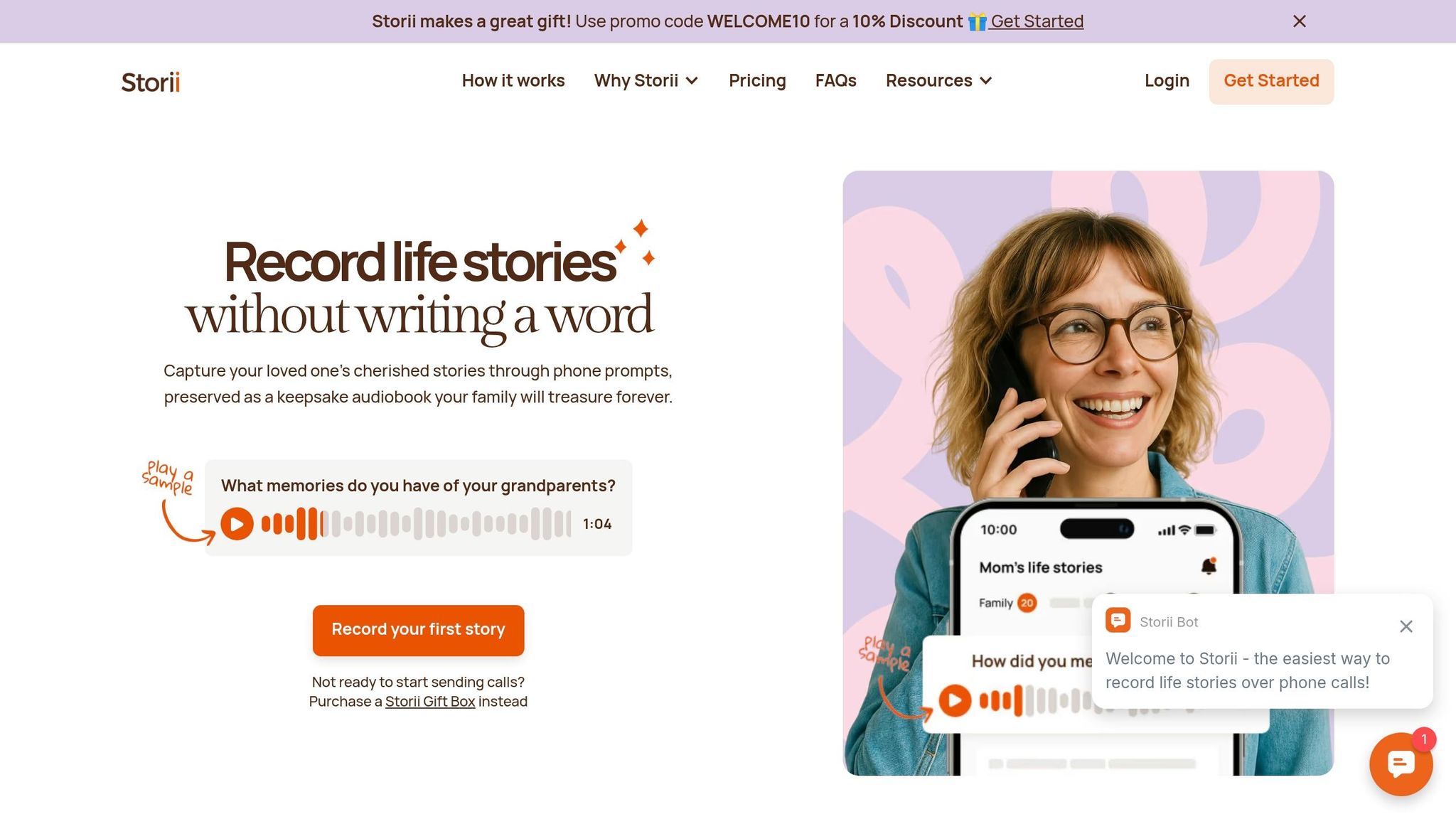
Coordenar as contribuições de membros da família em diferentes locais pode ser complicado. As ferramentas colaborativas da Storii simplificam este processo, permitindo que os parentes partilhem as suas próprias gravações. As notificações alertam todos quando novas histórias são adicionadas, criando um espaço partilhado onde toda a família pode participar. Uma vez que a Storii utiliza chamadas automatizadas para gravações de histórias de vida, mesmo parentes sem smartphones ou acesso à internet podem participar. Isto garante que as histórias das gerações mais velhas são capturadas antes que se percam no tempo.
Passo 4: Priorize os Sentimentos em Detrimento dos Fatos Exatos
Agora que trabalhou na captura de detalhes, é hora de mudar o foco para a essência emocional das suas memórias. Quando os detalhes específicos se tornam confusos, os sentimentos ligados a esses momentos muitas vezes permanecem vívidos. Sue William Silverman, autora e Co-presidente do MFA no Vermont College of Fine Arts, enfatiza isto de forma bela:
A memória é uma busca pela verdade emocional. Sim, os fatos importam, mas não é um tratado académico. Não é para um doutoramento. Não é para um tribunal. É apenas a sua melhor recordação.
Esta perspetiva permite-lhe ir além da pressão de recordar cada facto e, em vez disso, apoiar-se nas emoções que moldaram as suas experiências. O que sentiu num momento muitas vezes pinta um quadro mais cativante do que uma simples lista de datas ou nomes. Ao abraçar esta lente emocional, pode tecer memórias fragmentadas em histórias mais ricas e significativas.
Conte Histórias Enraizadas na Emoção
Em vez de se focar em detalhes exatos, faça perguntas que explorem memórias sensoriais e emocionais. Por exemplo, em vez de perguntar: "Em que ano nos mudámos?", tente perguntar: "Como se sentiu durante aquela primeira semana?". Silverman explica que a memória sensorial muitas vezes guarda verdades mais profundas do que a mente consciente:
O próprio processo de escrita ajuda a envolver a sua memória, particularmente quando escreve através dos sentidos. Os sentidos pertencem ao corpo - é onde eles vivem. Eles sabem muito mais do que a sua cabeça sabe quando se trata disto.
Preste atenção às sensações físicas - como uma mandíbula cerrada, um peito pesado ou uma onda súbita de calor. Estas pistas corporais podem desbloquear emoções e memórias que de outra forma poderiam permanecer ocultas. Se uma linha do tempo direta parece inatingível, considere usar uma estrutura mais fluida. Faça perguntas como: "Poderia ter sido isto?" ou "Foi aquilo?" para refletir a incerteza da memória sem forçar a precisão.
Para preencher as lacunas sem se desviar da honestidade, use linguagem especulativa. Frases como "Imagino", "Poderia ter sido" ou "Possivelmente aconteceu assim" permitem-lhe manter a narrativa fluida sem inventar especificidades. Pode até reconhecer as lacunas diretamente. A autora Sarah Perry compara a memória a:
uma névoa branca hospitalar, uma cortina inconstante que se estende pelas horas, obscurecendo alguns momentos, abrindo-se para deixar outros passarem.
Ser transparente sobre essas lacunas constrói confiança com o seu público e mantém a sua história autêntica.
Utilize Ferramentas de Transcrição e IA
Para dar vida às suas histórias carregadas de emoção, ferramentas como ferramentas de transcrição de IA e recursos do Storii podem ajudar. Essas ferramentas capturam as nuances das suas memórias faladas — pausas, tom e mudanças emocionais — transformando-as numa narrativa coesa. Isso é especialmente útil quando as suas memórias surgem como imagens vívidas e desconexas, em vez de uma sequência cronológica, quase como uma "apresentação de slides" de impressões.
As chamadas telefónicas automatizadas do Storii permitem-lhe gravar estas reflexões focadas na emoção offline, preservando cada detalhe, pausa e inflexão. Essas transcrições podem então servir de base para a criação de uma história mais rica e sincera.
Passo 5: Preencha as Lacunas de Forma Responsável com Suposições Fundamentadas
Ao montar a sua história, é natural encontrar lacunas na memória ou na informação. A chave é reconstruir essas partes de forma responsável — apoiando-se no contexto, na pesquisa e em suposições ponderadas. Evite inventar factos; em vez disso, utilize dados verificados e raciocínio fundamentado para preencher essas lacunas. Como Lisa Cooper Ellison, uma coach de escrita com foco em trauma, afirma:
Embora as memórias não possam ser inventadas, pode escrever cenas especulativas que imaginam o que poderia ter acontecido, desde que deixe claro que a cena é imaginada.
Isso significa fundamentar as suas suposições em evidências credíveis. Registos históricos, documentos judiciais, artigos de jornal e entrevistas familiares podem fornecer o contexto de que precisa para preencher os detalhes em falta. Ao combinar estas fontes externas com as suas próprias memórias, pode criar uma narrativa que pareça completa e precisa.
Identifique as Suposições Claramente
A transparência é crucial ao misturar memória com suposições fundamentadas. Utilize uma linguagem clara para distinguir entre o que sabe e o que está a especular. Frases como "Imagino", "Poderia ter sido assim", "Talvez" ou "Mais tarde disseram-me" ajudam a sinalizar aos leitores quando está a preencher as lacunas.
Por exemplo, Mary Karr em O Clube dos Mentirosos utiliza esta abordagem de forma eficaz quando escreve:
Não me lembro a quem fomos entregues nem por quanto tempo. Mais tarde, disseram-me que tínhamos ficado muito tempo com o casal sem filhos que criava pássaros.
Da mesma forma, Sharon Harrigan em Playing with Dynamite sinaliza especulação ao introduzir uma cena com "Poderia ter sido assim" e mudar para o tempo presente. Essa mudança sutil no tempo verbal — do passado para memórias confirmadas para o presente para cenas imaginadas — ajuda a guiar os leitores, deixando claro quando você está reconstruindo eventos.
Crie Histórias Completas a Partir de Fragmentos
Depois de rotular suas suposições e reunir seus fragmentos, é hora de tecê-los em uma história coesa. Integre suas suposições fundamentadas com memórias confirmadas para criar uma narrativa fluida. Ferramentas como o Storii podem ser incrivelmente úteis nesse processo. Com mais de 1.000 sugestões de histórias de vida, o Storii ajuda você a organizar memórias dispersas em um livro de memórias estruturado. Suas chamadas telefônicas automatizadas o guiam por perguntas que ligam os pontos, enquanto os serviços de transcrição capturam cada detalhe — incluindo momentos de incerteza.
Após a gravação, você pode baixar suas histórias como audiolivros ou PDFs, transformando lembranças fragmentadas em um livro de memórias polido. O Storii garante que sua voz se destaque, preservando até mesmo as admissões honestas como "Não me lembro" ou "Pode ter sido". Ao combinar a reconstrução responsável com as ferramentas do Storii, você pode elaborar uma narrativa que pareça genuína e completa.
Usando Estes Métodos com Gravação por Telefone
O Storii facilita a captura de memórias, mesmo para aqueles sem smartphones ou acesso à internet. Ao utilizar chamadas telefônicas automatizadas, ele integra técnicas como gatilhos sensoriais, entrevistas familiares e suposições fundamentadas em um sistema contínuo. Essas chamadas funcionam em qualquer número de telefone válido, incluindo telefones fixos, permitindo que os contadores de histórias compartilhem memórias fragmentadas sem a necessidade de tecnologia moderna. Cada etapa é projetada para simplificar o processo de gravação e preservação de histórias.
Como Cada Método Funciona com os Recursos do Storii
O Storii oferece mais de 1.000 perguntas selecionadas para ajudar a despertar memórias esquecidas. Para necessidades mais específicas, você pode criar sugestões personalizadas para abordar eventos, datas ou pessoas específicas. As famílias podem colaborar através da app Storii, revendo as respostas e sugerindo novas perguntas para preencher lacunas. A transcrição automática funcionalidade converte as gravações em texto, facilitando a identificação de inconsistências ou detalhes em falta ao compilar o eBook PDF final.
Veja como a Storii alinha as suas funcionalidades com várias técnicas de captura de memória:
Com até três chamadas automáticas por semana, os contadores de histórias desenvolvem um ritmo consistente para a reflexão. Após cada sessão, as gravações podem ser descarregadas como audiolivros ou PDFs, preservando tanto a voz do contador de histórias como os detalhes escritos. Este formato duplo facilita a consulta cruzada com documentos históricos ou registos familiares.
Gravar Histórias Sem Internet ou Smartphones
A Storii elimina os obstáculos tecnológicos, tornando-a ideal para idosos ou para qualquer pessoa mais confortável com telefones tradicionais. Como Helen Teegan partilhou:
O facto de a chamar diretamente para o telefone fixo dela fez uma grande diferença, já que ela não é muito boa a usar tecnologia.
O processo é simples: os contadores de histórias atendem o telefone quando a Storii liga - sem necessidade de aplicativos ou sites. Essa acessibilidade garante que o foco permaneça em compartilhar memórias, e não em navegar pela tecnologia. Os membros da família cuidam das tarefas organizacionais, como revisar transcrições, gerar perguntas de acompanhamento e compartilhar gravações por e-mail ou mensagem de texto.
Tom Vander Well resumiu a experiência lindamente:
A oportunidade de ouvir as suas histórias, gravadas na sua própria voz, será valorizada por gerações na nossa família. É tão simples e tão fácil, mas tão poderoso.
Conclusão
Lacunas na memória não precisam impedi-lo de montar uma história de vida significativa. Ao usar perguntas sobre memórias de infância, gatilhos sensoriais, entrevistas familiares e especulação ponderada, você pode criar uma narrativa que honre tanto os fatos quanto as emoções. O objetivo não é alcançar a perfeição - é preservar o que mais importa.
Pesquisas do Dr. Marshall Duke e da Dra. Robyn Fivush da Universidade Emory destacam a importância das narrativas familiares. Eles descobriram que conhecer as histórias da família é o mais forte preditor do bem-estar emocional de uma criança, ainda mais do que qualquer outro fator que estudaram. Esse conhecimento ajuda as crianças a desenvolver um "eu intergeracional", dando-lhes um senso de pertencimento dentro de uma história maior e duradoura. É por isso que preencher essas lacunas é tão impactante.
Preservar essa conexão com as nossas raízes exige ferramentas que tornem o processo simples e acessível. Cada memória que você registra, mesmo as pequenas ou fragmentadas, torna-se parte do legado duradouro da sua família. A Storii cuida do lado técnico com recursos como mais de 1.000 prompts selecionados, chamadas telefônicas automatizadas, serviços de transcrição e opções para criar audiolivros ou PDFs. Ela garante que suas memórias sejam preservadas por gerações, deixando você livre para se concentrar em capturar as próprias histórias.
Comece hoje - cada conversa e memória guardada o aproxima um passo de criar um legado que sua família valorizará para sempre.
Perguntas Frequentes
Como posso preencher uma lacuna na memória sem inventar coisas?
Ao lidar com lacunas na memória, é importante evitar inventar detalhes. Em vez disso, reconheça o que está faltando e use ferramentas como pesquisa, entrevistas ou pistas contextuais para juntar as peças. Você também pode contar com a reconstrução criativa, mas é crucial ser transparente sobre quaisquer incertezas. Dessa forma, sua história permanece honesta e preserva sua credibilidade.
Que perguntas devo fazer à família para obter mais detalhes?
Para coletar histórias detalhadas e envolventes, ajuda perguntar perguntas específicas e focadas em lugares que evocam memórias vívidas. Por exemplo, em vez de fazer uma pergunta geral como "Como foi sua infância?", você poderia perguntar: "Como era a sua casa de infância? Você pode descrever cada cômodo e o que mais te marcou?" Ao se concentrar em detalhes sensoriais, locais significativos ou rotinas diárias, você pode inspirar uma narrativa mais vívida e significativa.
Como a Storii pode ajudar alguém a gravar histórias em um telefone fixo?
A Storii oferece um recurso de chamada telefônica automatizada que permite aos usuários gravar suas histórias diretamente de um telefone fixo. Com chamadas agendadas, os usuários são gentilmente lembrados de compartilhar histórias pessoais ou responder a perguntas ponderadas. Essas gravações são então transcritas com segurança e salvas em seus perfis, garantindo que as memórias sejam preservadas e facilmente compartilhadas – tudo sem a necessidade de um smartphone ou acesso à internet.
Posts de Blog Relacionados
{"@context":"https://schema.org","@type":"FAQPage","mainEntity":[{"@type":"Question","name":"Como posso preencher uma lacuna de memória sem inventar coisas?","acceptedAnswer":{"@type":"Answer","text":"<p>Ao lidar com lacunas de memória, é importante evitar inventar detalhes. Em vez disso, <strong>reconheça o que está faltando</strong> e use ferramentas como pesquisa, entrevistas ou pistas contextuais para juntar as peças. Você também pode contar com a reconstrução criativa, mas é crucial ser honesto sobre quaisquer incertezas. Dessa forma, sua história permanece verdadeira e preserva sua credibilidade.</p>"}},{"@type":"Question","name":"Que perguntas devo fazer à família para obter mais detalhes?","acceptedAnswer":{"@type":"Answer","text":"<p>Para coletar histórias detalhadas e envolventes, ajuda fazer <strong>perguntas específicas e focadas em lugares</strong> que evocam memórias vívidas. Por exemplo, em vez de fazer uma pergunta geral como "Como foi sua infância?", você poderia perguntar: "Como era a sua casa de infância? Você pode descrever cada cômodo e o que mais te marcou?" Ao se concentrar em <strong>detalhes sensoriais</strong>, locais significativos ou rotinas diárias, você pode inspirar uma narrativa mais vívida e significativa.</p>"}},{"@type":"Question","name":"Como a Storii pode ajudar alguém a gravar histórias em um telefone fixo?","acceptedAnswer":{"@type":"Answer","text":"<p>A Storii oferece um recurso de chamada telefônica automatizada que permite aos usuários gravar suas histórias diretamente de um telefone fixo. Com chamadas agendadas, os usuários são gentilmente lembrados de compartilhar histórias pessoais ou responder a perguntas ponderadas. Essas gravações são então transcritas com segurança e salvas em seus perfis, garantindo que as memórias sejam preservadas e facilmente compartilhadas – tudo sem a necessidade de um smartphone ou acesso à internet.</p>"}}]}
Caixa de presente Storii
Ideal para ocasiões especiais, como Dia das Mães, Dia dos Pais, aniversários e feriados.

