
.png)
写家庭回忆录意味着分享您的故事,但它也涉及透露他人的细节。 这可能会带来法律、伦理和实际操作上的挑战,尤其是在隐私方面。以下是您需要了解的内容:
- 法律风险:分享私人事实或发表可识别身份的言论可能导致诽谤或隐私诉讼。即使是真实的叙述,如果暴露了敏感的个人细节,也可能引发法律问题。
- 伦理困境:平衡您分享自身经历的权利与尊重他人隐私的需求是棘手的。同意、记忆差异和权力动态在其中扮演着重要角色。
- 实用解决方案:匿名化细节、使用免责声明以及让家人参与审阅过程,有助于保护每个人的隐私并减少冲突。
回忆录写作在于讲述您的真实故事,同时谨慎地处理他人生活的界限。通过深思熟虑地应对这些挑战,您可以负责任地分享您的故事。
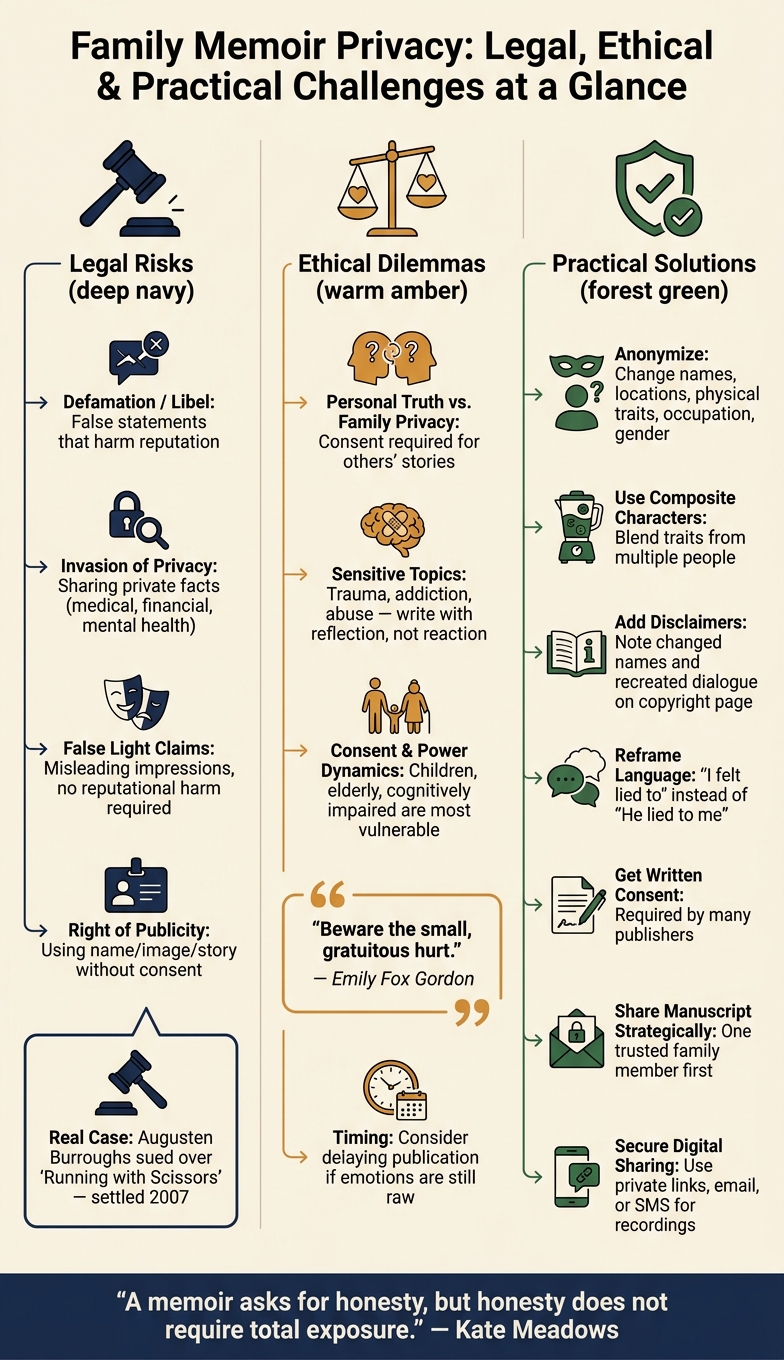
家庭回忆录隐私:法律、伦理与实际挑战一览
回忆录中保护身份的方法:我们应该做出哪些改变?
在记录这些回忆时, 记录具有时代背景的故事 确保叙述对未来的读者来说依然清晰。
sbb-itb-ce27d7a
家庭回忆录中的法律风险
在撰写家庭回忆录时,诽谤、侵犯隐私以及未经同意使用家庭成员身份等法律风险可能会带来重大挑战。虽然真诚是讲故事的关键,但有时也可能导致意想不到的法律后果。
诽谤与名誉损害
书面形式的诽谤被称为 诽谤罪,当虚假的事实陈述被公开发表并损害他人名誉时,即构成此罪。正如 作家协会 解释道:
“诽谤是指对可识别的个人或实体造成名誉损害的虚假事实陈述。当诽谤性陈述以书面形式(或以其他印刷形式)传播时,即被称为诽谤罪。”
即使您没有明确点名某人,如果他们可以通过上下文被识别出来,他们仍然可以提起诉讼。对于私人个体而言,证明诽谤通常需要表明作者未能采取合理措施确保信息的准确性。
一个著名的例子是奥古斯丁·伯罗斯,他因其回忆录 《与剪刀赛跑》而遭到特科特家族的起诉。该家族声称,书中对他们的描述构成诽谤和侵犯隐私。此案于2007年和解,伯罗斯同意支付一笔未公开的金额,将该书的分类从“回忆录”改为“书籍”,并加入一份声明,承认各方记忆可能存在差异。
除了诽谤,分享敏感的个人细节还可能导致 多代故事分享挑战 以及侵犯隐私的指控。
侵犯隐私与隐私事实披露
即使是真实的叙述,如果披露了个人隐私事实,也可能导致法律诉讼。当个人隐私信息——被一个理性人认为具有冒犯性——在没有合法公共利益的情况下被公开分享时,就会产生这类索赔。例如,披露亲属的病史、财务困境或心理健康问题。
另一个法律问题是 虚假光线 索赔,它关注的是所披露的信息是否造成了误导性或冒犯性的印象。与诽谤不同,虚假光线索赔不需要证明名誉受损。正如作家协会指出的:
“在诽谤诉讼中,原告通常必须提供其名誉受损的证据。而虚假光线索赔只要求所分享的信息对一个理性人来说是高度冒犯性的。”
当未经家人同意使用其身份时,这些法律风险会变得更加复杂。
未经同意使用亲属身份
未经他人允许发布其姓名、肖像或个人故事,可能会导致 公开权 在某些州提出索赔。
例如,以凯利·基特尔(Kelly Kittel)2014年的回忆录为例 Breathe。在书中,她点名了卷入一起非正常死亡案件的家庭成员。尽管这些事件是公开记录的一部分,但这本回忆录导致她与那边的家人产生了永久性的裂痕。在另一个案例中,一位出版商在书籍发行前取消了出版,因为一位当事人证明了某些主张是虚假的,这损害了作者的名誉和家庭关系。
正如Denyse Allen, 纪事创作者的创始人警告说:
大多数家族历史学家认为“一切都是真实的”能为他们提供法律保护。事实并非如此。
这些例子凸显了讲述真相与法律风险之间的微妙界限,强调了在分享家族故事时仔细斟酌的重要性。应对这些复杂情况的一种方法是 协作式回忆录创作,这能确保所有声音和顾虑都得到倾听。
家族故事讲述中的伦理挑战
在分享 带有世代背景的个人历史时,伦理考量往往与法律考量同样重要。即使回忆录在法律上站得住脚,它仍可能对相关人员造成情感伤害,从而带来复杂的道德困境。
个人真相与家族隐私
回忆录写作常常在个人表达与尊重他人隐私之间走钢丝。正如作家莉莉·丹西格(Lilly Dancyger)所解释的:
“任何主要发生在他人身上并以间接方式影响我的事情,都需要征得该他人的充分知情且自愿的同意。”
你的经历固然可以分享,但涉及他人的细节则需要他们的明确同意。塔拉·韦斯特弗(Tara Westover)在她2018年的回忆录 《教育》中,通过指出亲属的叙述与她自己的叙述不同之处,巧妙地处理了相互冲突的家族记忆。这种方法使她既能尊重自己的视角,又不否认他人的视角。
需要考虑的核心问题是: 包含这个细节会增强我的故事,还是会以牺牲他人为代价? 回忆录作家艾米丽·福克斯·戈登(Emily Fox Gordon)提供了一个指导原则: “警惕那些微小却无谓的伤害。”
在处理敏感话题时,平衡这些考量变得更加棘手。
撰写敏感话题
处理创伤、成瘾或虐待等问题需要深思熟虑——这不仅是为了涉及其中的当事人,也是为了故事的整体完整性。作家兼教授特蕾西·西利强调了这项责任:
“回忆录不应成为羞辱、贬低或惩罚他人的场合。它不是复仇的工具,而是从我们的生活中塑造意义的途径。”
如果情绪仍未平复,明智的做法可能是推迟出版。例如,劳里·赫策尔为了保护母亲的感受,将她的回忆录 《第四街的幽灵》 推迟了十年出版。即便如此,她的母亲在读完一篇关于她哥哥去世的文章后,仍与她断绝了关系。这其中的启示并非要回避艰难的真相,而是要确保你的写作是经过深思熟虑而非一时冲动。
写作教练凯特·梅多斯很好地概括了这种平衡: “回忆录要求真诚,但真诚不等于完全暴露。”
同意与权力动态
当权力动态影响同意时,又会产生另一层复杂性。例如,当当事人无法完全理解公开曝光的含义时,你该如何处理同意问题?2025年11月,作家杰奎琳·格林伯格分享了她撰写关于她12岁患有残疾、无法言语的儿子时的做法。她意识到儿子无法理解后果,因此在出版任何涉及他的内容之前,她咨询了丈夫和年长的孩子。
儿童、年迈的亲属以及认知障碍者在这些情况下尤其脆弱。作家艾比·阿尔滕·施瓦茨提出了重要问题:
“孩子何时才真正具备同意能力?父母是否有权自然而然地披露孩子的细节?真实性与剥削之间的界限在哪里?”
One way to address this is by granting vulnerable subjects "carte blanche" - the ability to revise how they’re portrayed - since their position often leaves them with the most to lose. Additionally, if you plan to share your manuscript with family members before publication, proceed carefully. Memoirist Sharon Harrigan learned this the hard way when she distributed her final manuscript to everyone at once. The result? A harsh, family-wide letter of grievances from an aunt just before Christmas, leading to a difficult revision process. Her advice: share it first with one trusted family member to gauge potential reactions.
Practical Ways to Protect Privacy
After discussing the legal and ethical challenges, let's explore practical steps to safeguard privacy. These strategies directly address issues like defamation, invasion of privacy, and consent, ensuring you handle sensitive material responsibly.
Changing Names, Locations, and Identifiers
Simply changing a name isn’t enough. As publisher and author Brooke Warner explains:
"If a person can recognize him or herself in your work because of their looks, their profession, how they're related to you, etc., then you need to find ways to disguise them."
Effective anonymization involves altering multiple details, such as physical traits, occupation, location, and sometimes even gender. Some writers take it a step further by creating composite characters, blending traits from several individuals to obscure identities. A helpful tip is to draft using real names for smoother writing, then revise later to replace identifying details. When choosing pseudonyms, opt for names with a different initial letter and syllable count from the real name - this provides an added layer of separation.
Once you've made these changes, adding clear disclaimers can further strengthen privacy protections.
Using Disclaimers and Framing Language
Disclaimers do more than protect you legally - they also build trust with readers. Author Jillian Barnet suggests including a statement like this on the copyright page or in the preface:
"Names and identifying characteristics of some individuals have been changed. Some dialogue has been recreated."
The way you frame events is just as important. For example, instead of making objective claims like "He lied to me", try subjective phrasing like "I felt lied to." This approach reduces legal risks while preserving your emotional truth. Similarly, avoid labeling someone outright - for instance, rather than calling someone an "alcoholic", describe behaviors you observed. Mary Karr illustrates this well in her memoirs:
"I never called my parents alcoholics. I showed the child me upending vodka bottles down the sink."
If family members have different recollections of events, consider noting these differences directly in the text or through footnotes. Tara Westover used this technique in Educated (2018), explicitly pointing out where her memories diverged from her family’s.
These strategies not only reduce legal risks but also create opportunities for collaboration and understanding.
Involving Family Members in the Review Process
Sharing your manuscript with family can be delicate, but the timing of this step is crucial. Tracy Seeley, an author and professor, advises:
"Simply letting our subjects in to the process goes a long way toward soothing any surprises down the road."
Avoid sharing early drafts; wait until the manuscript is complete so you’re not second-guessing yourself during the writing process. When you’re ready, start by sharing the manuscript with one trusted family member to address potential concerns before involving others.
It’s also wise to obtain written consent from anyone prominently featured in your work, as many publishers require this documentation before publication. If you’re conducting recorded interviews with relatives as part of your research, always get their permission beforehand and keep the recordings as evidence. These recordings can protect you against future claims of inaccuracies or bad intentions.
Privacy in Digital and Phone-Based Memoirs
When it comes to digital and phone-based recordings, the stakes for privacy are even higher due to their unfiltered, real-time nature. While strategies like anonymization, disclaimers, and family review are still essential, these formats bring their own set of challenges that require extra attention.
Privacy Risks in Phone-Based Storytelling
Speaking your story aloud can unintentionally reveal private details you didn’t plan to share. Unlike written drafts, which can be carefully revised, spoken recordings capture everything in the moment. This makes it easier for sensitive information to slip through. And as previously discussed, even if the details you share are true, publishing private information without consent can lead to legal trouble. This is why immediate review and editing of recordings is so important.
Editing and Removing Sensitive Content
Think of your first recording as a rough draft. The editing process is where you decide what stays and what goes. Writing coach Kate Meadows sums it up perfectly:
"The first version may need to say everything. The final version should know what to keep."
During the review process, focus on identifying and removing any private details that could expose others. This is especially critical for oral recordings, as spoken words can quickly reveal information about health, finances, or personal relationships. One effective technique is telescoping, which combines multiple similar events into one, making it harder to pinpoint specific timelines or individuals.
Brienna Burroughs, an editor specializing in transformational nonfiction, highlights the importance of going beyond surface-level changes:
"The goal of using a pseudonym isn't just to change the label. It's to make the person unidentifiable to someone who doesn't already know your story."
Once you’ve cleaned up your content, the next step is to control who gets to see - or hear - it.
Secure Sharing and Access Controls
After editing, managing how and where your memoir is shared becomes critical. Sharing too broadly, even within family circles, can lead to unintended exposure of private details. A smart approach is to share in stages. Start with the people directly involved in the story, giving them a chance to provide feedback or raise concerns. Ghostwriter Richard Lowe offers sound advice:
"Talk to the people in your book before the book comes out. Not after. Not when the manuscript is finished. Early enough that their response can inform how you handle their story."
Platforms like Storii are designed to help with controlled sharing. Storii’s system lets you share recordings securely through email, SMS, or private links, giving you full control over who has access. This is especially useful for older relatives who might not be comfortable with complex privacy settings. Plus, Storii works without requiring a smartphone or internet access, making it accessible to everyone involved.
Conclusion: Balancing Storytelling and Privacy
Writing a family memoir goes beyond simply recounting events - it's about deciding what to share and understanding the impact of those choices. As author and MFA instructor Laurie Hertzel explains:
"The purpose of a memoir is not to show how you have been wronged or aggrieved and how other people have behaved badly. The purpose is to examine an important time in your life as honestly as you can."
Being honest doesn’t mean revealing everything. Legal risks can be addressed by understanding their limits, while ethical challenges - like handling sensitive subjects, navigating consent, or respecting power dynamics - demand careful thought and consideration.
Practical steps like altering identifiable details, using disclaimers, involving family members early in the process, and managing recordings thoughtfully can help protect both your story and the people in it. Even small adjustments can preserve relationships while staying true to your narrative.
This approach applies to digital memoirs as well. For those who prefer capturing stories through recordings, tools like Storii offer a secure way to share memories. With features like private links, email, or SMS sharing - and no smartphone required - Storii provides families with a way to document their stories while maintaining control over privacy.
The aim isn’t to create a flawless memoir but an honest one - something you can stand by and that your loved ones can accept. By balancing openness with care, your memoir can reflect your truth while respecting your family’s boundaries.
FAQs
When do I need a family member’s written consent?
While it’s not a legal obligation, getting written consent from family members before publishing a memoir is a smart move to sidestep potential privacy issues. Publishers often prefer authors to secure releases, especially if they’ve been in touch with the people featured in the story. From an ethical perspective, sharing drafts or asking for feedback can help clear up any misunderstandings before they arise. If the memoir involves minors or individuals unable to give consent, it’s wise to consult other family members and ensure the subject’s comfort and well-being remain a top priority.
How can I make someone truly unidentifiable in my memoir?
To make someone completely unrecognizable in your memoir, it's essential to go beyond just changing their name. Modify key details such as their appearance, job, gender, location, or even their place of birth. When choosing a pseudonym, pick one that differs in both its first letter and syllable count from their real name.
Additionally, center your writing on your own experiences and emotions rather than making objective statements or accusations. For example, describe how their actions made you feel instead of outright labeling their behavior. This approach not only protects their identity but also keeps the narrative focused on your perspective.
How do I safely record and share phone-based memoir stories?
To record and share phone-based memoirs securely, always start by obtaining consent from everyone involved. Tools like Storii make this process easier by offering secure recording and sharing through automated phone calls. To safeguard privacy, consider changing identifiable details like names, professions, or locations, especially for sensitive stories. Before publishing or sharing your work, let the individuals featured review the manuscript to address any concerns and ensure trust is upheld.
Related Blog Posts
{"@context":"https://schema.org","@type":"FAQPage","mainEntity":[{"@type":"Question","name":"何时需要获得家人的书面同意?","acceptedAnswer":{"@type":"Answer","text":"<p>尽管这不是法律义务,但在出版回忆录前获得家人的书面同意是避免潜在隐私问题的明智之举。出版商通常希望作者获得授权,特别是如果他们与故事中的人物有过接触。从道德角度来看,分享草稿或征求反馈有助于在误解发生前消除它们。如果回忆录涉及未成年人或无法给予同意的个人,明智的做法是咨询其他家庭成员,并确保当事人的舒适和福祉始终是首要考虑。</p>"}},{"@type":"Question","name":"如何在我的回忆录中让某人真正无法被识别?","acceptedAnswer":{"@type":"Answer","text":"<p>为了让某人在你的回忆录中完全无法被识别,仅仅更改他们的名字是不够的。你需要修改关键细节,例如他们的<strong>外貌</strong>、<strong>职业</strong>、<strong>性别</strong>、<strong>地点</strong>,甚至是他们的出生地。在选择化名时,请选择一个与他们真实姓名的<strong>首字母</strong>和<strong>音节数</strong>都不同的名字。</p> <p>此外,你的写作应以自己的经历和感受为中心,而不是做出客观陈述或指责。例如,描述他们的行为让你有何感受,而不是直接给他们的行为贴标签。这种方法不仅能保护他们的身份,还能让叙事始终聚焦于你的视角。</p>"}},{"@type":"Question","name":"如何安全地录制和分享电话回忆录故事?","acceptedAnswer":{"@type":"Answer","text":"<p>要安全地录制和分享电话回忆录,请务必首先获得所有相关人员的同意。像<em>Storii</em>这样的工具通过提供自动电话安全录制和分享功能,使这一过程变得更加简单。为了保护隐私,请考虑更改可识别的细节,例如姓名、职业或地点,特别是对于敏感的故事。在出版或分享你的作品之前,请让故事中的人物审阅手稿,以解决任何疑虑并确保信任得到维护。</p>"}}]}
Storii 礼品盒
最适合特殊场合,例如母亲节、父亲节、生日和节日。

