
.png)
人生故事访谈是为后代子孙保存个人历史、价值观和经历的一种方式。拟定恰当的问题是鼓励讲述故事和建立有意义联系的关键。以下是您可以开始的方法:
- 从开放式问题开始:避免只用“是”或“否”回答的问题。使用“给我讲讲……”或“你还记得关于……什么?”之类的短语。
- 按主题分组问题:侧重于童年、职业、人际关系或人生经验等领域,而非严格的时间线。
- 根据个性调整问题:善于思考的人可能需要时间来组织思绪,而内向的人可能对照片或音乐等特定的记忆触发物反应更好。
- 逻辑排序:从简单的话题开始,逐步深入到更个人化的话题。
- 保持问题清晰中立:避免引导性或过于复杂的措辞,以确保获得真诚的回答。
像 Storii 这样的工具可以简化流程,通过录音、转录并将回答整理成有纪念意义的物品,如有声书或PDF文件。目标是营造轻松的氛围,让故事自然流淌,为家人留下珍贵的永恒遗产。
如何采访他人以记录其人生故事
sbb-itb-ce27d7a
准备人生故事访谈问题
在深入探讨人生故事问题之前,花时间做好准备至关重要。周全的准备能确保你的问题不止停留在表面事件,而是能深入挖掘定义一个人故事的情感和经历。关键在于要带着好奇心和真诚的兴趣来对待这个访谈过程。
调查受访者背景
首先,尽可能多地收集你将要采访的人的背景信息。这可能意味着与家人交谈、翻阅旧相册,或者阅读信件和日记。关注他们人生中的重大事件——他们在哪里长大、重要的职业选择、关键的人际关系以及改变他们人生轨迹的时刻。这一步不仅仅是收集事实;更是为了挖掘那些能让记忆鲜活起来的细节。正如 LifeEcho 编辑团队所说:
错误的问题只会得到事实,而正确的问题才能引出故事。“你在哪里长大?”和“你还记得在那所房子里度过的童年吗?”之间的区别,就在于数据点和鲜活记忆之间的区别。
进行一次预访谈讨论也很有帮助。利用这段时间明确目标,了解他们想分享什么,并设定任何界限。这不仅能帮助你拟定有意义的问题,还能建立信任,为更开放、真诚的对话奠定基础。
完成研究后,思考如何围绕关键主题来构建故事,而不是简单地按时间线进行。
确定核心人生主题
与其按时间顺序组织访谈,不如考虑按人生主题来分组问题。常见的主题可能包括童年、关键的人生转折、职业生涯、人际关系以及他们想传承的智慧。寻找那些变化的时刻——比如第一次尝到独立的滋味、一个意想不到的职业决定,或是一个改变人生的事件。一个发人深省的问题是: “如果你的生命是一本书,书名会是什么?” 这有助于揭示他们故事的核心主线。
计划每场访谈准备10-15个问题。然而,不必全部用完。留出提问追问的空间,以便你能深入探讨任何引发有意义或意想不到回应的话题。
考虑人格类型
确定了主题后,思考受访者的个性可能会如何影响他们的讲述方式。根据他们的个性调整你的方法,可以让他们感到更舒适,并更积极地参与其中。
对于善于思考的人来说,开放式提问效果很好。像 “给我讲讲……” 或 “描述一下当时的情景……” 这样的提问可以鼓励他们分享自己的想法。请记住,这些人可能需要一些时间来整理思绪,才能完整地回忆起来。不要急于填补停顿;正如LifeEcho编辑团队所解释的:
人们通常需要片刻来提取记忆,而最好的答案往往在几秒钟的安静思考后浮现。
对于那些比较内向或不愿多说的人,具体的提示或记忆触发器会很有帮助。可以带上老照片,播放他们年轻时的音乐,甚至重访有意义的地方来唤起他们的记忆。从轻松简单的问题开始,营造一个放松的氛围。如果他们对某个话题感到不适,不要强求。尊重他们的界限有助于培养安全感,这可能会鼓励他们以后敞开心扉。
提问的原则
在你做好准备并熟悉了受访者之后,下一步就是精心设计问题。 目标是激发故事,而不仅仅是收集事实。 好的问题能唤起生动的记忆和情感深度,而措辞不当的问题则可能在对话开始前就将其扼杀。这些原则将你的研究工作与你在访谈中将使用的实际策略联系起来。
使用开放式问题
开放式问题对于挖掘个人故事和有意义的细节至关重要。这些提示超越了简单的“是”或“否”的回答。例如,与其问 “你童年快乐吗?”,不如问 “你对在那所房子里长大的日子印象最深的是什么?” 第一个问题可能只会得到简短的回答,而第二个问题则会引出更深入的叙述。 能够激发故事的问题自然会吸引人们参与进来 并鼓励他们分享更多。
提问时可以这样开头: “跟我说说……”, “描述一下当时的情形……”,或者 “当……时你有什么感受?”这类提示能鼓励受访者给出详细而深思熟虑的回答,也为有意义的追问留下了空间,例如: “接下来发生了什么?” 或者 “那对你有什么影响?” ——故事中最引人入胜的部分往往就此浮现。提问之后, 忍住填补沉默的冲动。 有时,最好的答案恰恰出现在短暂的沉思之后。你也可以通过询问与经历相关的视觉、听觉或嗅觉线索,来开启更丰富的记忆。
合理安排提问顺序
问题的顺序对访谈的流畅性至关重要。 从轻松、非敏感的话题开始 以帮助受访者放松并建立信任。例如,可以先从童年记忆、家庭传统或个人爱好等轻松的话题入手,然后再转向更具内省性或情感色彩的领域。
良好的提问顺序通常是从宽泛到具体,从事实到反思。你可以先探讨早年生活和家庭背景,然后转向关键决策或转折性时刻,最后以关于传承或人生经验的问题作结。这种方法能创造自然的叙事流程。同样重要的是,不要严格遵循时间顺序。简单地叙述事件可能会显得平淡无奇,因此要穿插一些探究动机、价值观或恐惧的问题。例如,你可以问: “是什么促使你做出那个选择的?” 或 “那次经历对你的人生观产生了怎样的影响?” 为他们的故事增添更深层次的意义。
避免引导性或模糊不清的语言
你提问的方式很重要。 中立的语言可以确保你不会无意中引导受访者的回答。 避免以暗示特定感受或结果的方式提问,例如 “那一定让你不堪重负,对吗?” 相反,可以问一些开放式的问题,比如 “在那段时间里,你心里在想些什么?” 这种方法能让对方分享他们真实的看法,而不会觉得被引导到某个特定方向。
清晰度同样重要。 模糊不清或过于复杂的问题可能会让受访者感到困惑。如果你注意到对方犹豫或不确定,请用更简单的措辞重新提问。并且始终尊重界限——如果有人显得不舒服,请让他们知道跳过问题是可以的。维护信任和情感安全远比强求答案更有价值。通常,尊重他们的界限会鼓励他们在准备好之后敞开心扉。
这些原则为创建有意义、引人入胜的问题奠定了基础,有助于让个人故事鲜活起来。
人生故事问题撰写分步指南
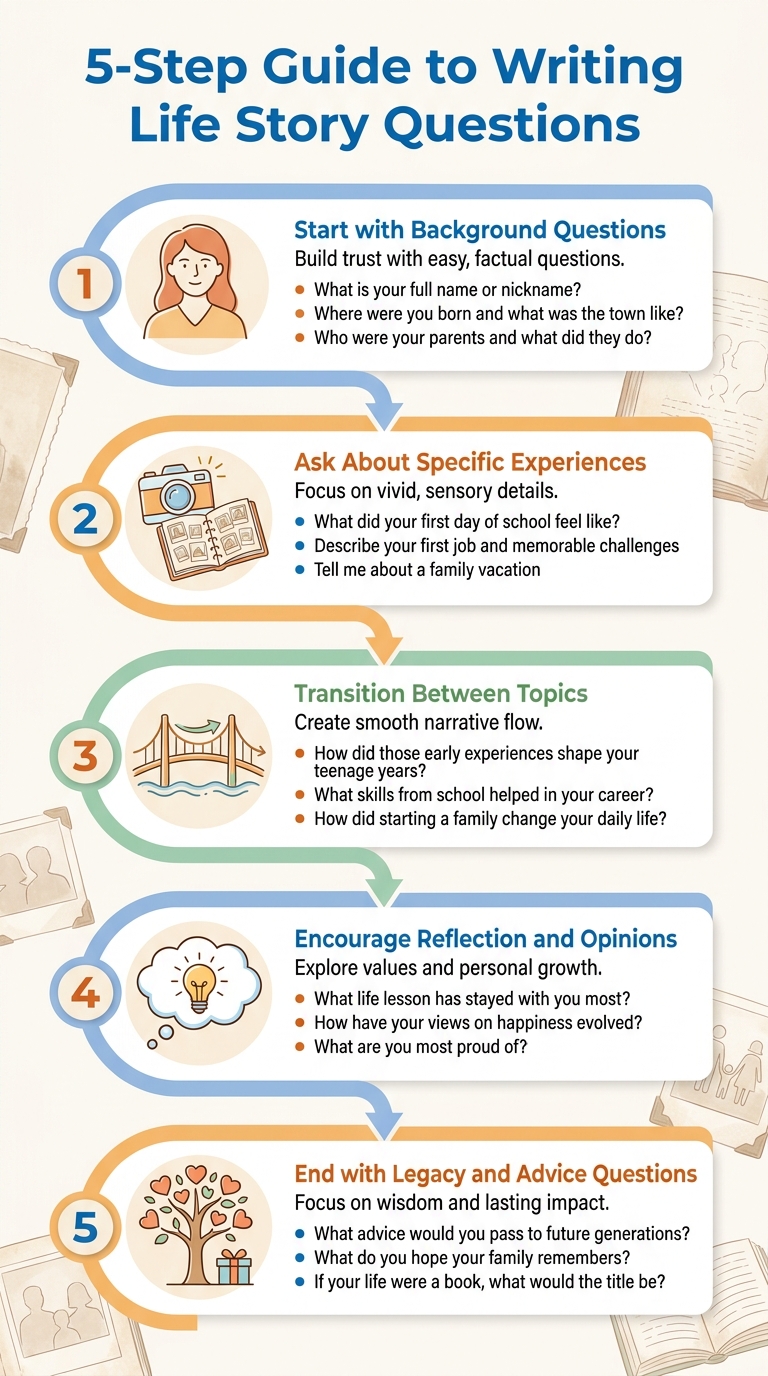
人生故事访谈问题撰写五步法
遵循这种结构化的方法来指导你的访谈过程,从简单、事实性的问题开始,逐步深入到更具反思性的主题。这种方法有助于将研究融入引人入胜且有意义的人生故事中。
Step 1: Start with Background Questions
Kick things off with straightforward questions to build trust and ease into the conversation. For example, ask: "What is your full name, or do you go by a nickname?" or "Where were you born, and what was the town like?" These low-pressure prompts allow the interviewee to share basic details before delving into more personal memories.
Tailor your questions to fit the individual’s background. For instance, you could ask: "Who were your parents, and what did they do for a living?" or "What early memories do you have of holidays or family traditions?" For someone who moved frequently, try: "Where did you grow up, and how many homes did you live in?" These questions can unlock stories about change and adaptation.
Once the groundwork is laid, you can transition into more detailed experiences.
Step 2: Ask About Specific Experiences
Now, shift the focus to specific moments that bring memories to life. Ask questions that invite sensory details, such as: "What did your first day of school feel like?" or "What do you remember about the smells and sounds of your childhood home?" These prompts encourage vivid storytelling rather than just listing facts.
Explore milestones like school, work, or travel with prompts like: "Describe your first job: who were your coworkers, and what was the most memorable challenge?" or "Tell me about a family vacation: what landscapes did you see, and what emotions stand out?" If their path was unconventional, adjust your questions. For example, ask about apprenticeships instead of college, or about launching a business instead of climbing a corporate ladder.
Step 3: Transition Between Topics
Smooth transitions between topics help create a cohesive narrative. Use bridging questions like: "How did those early experiences shape your teenage years?" to keep the story flowing naturally. Instead of jumping abruptly from childhood to career, ask: "What skills from school helped you in your early career?"
To connect life stages, you might ask: "What prompted that job change, and how did it affect your family?" or "How did starting a family change your daily life?" If emotions arise during the conversation, show understanding by offering a moment of silence or a reassuring gesture. This helps build trust and allows the interviewee to share at their own pace.
Once transitions are covered, you can guide the conversation toward reflection.
Step 4: Encourage Reflection and Opinions
Invite the interviewee to explore their values and personal growth with reflective questions. For example: "What life lesson has stayed with you the most, and why?" or "How have your views on happiness evolved over time?" These prompts go beyond facts, delving into the meaning behind their experiences.
A question like: "What are you most proud of in your life, and what made it meaningful?" works well for revealing deeper insights without feeling intrusive.
Step 5: End with Legacy and Advice Questions
Wrap up by focusing on legacy and advice. Ask questions like: "What advice would you pass on to future generations?" or "What do you hope your family remembers about you?" These questions provide a sense of closure and allow the interviewee to reflect on their contributions.
Other ideas include: "What three pieces of advice would you give your grandchildren?" or "If your life story became a book, what title would you choose?" If you're using Storii's automated calls, keep your questions short and clear for easier transcription into audiobooks or PDFs.
These final prompts tie together the rich details shared throughout the conversation, leaving the interviewee with a sense of accomplishment and purpose.
Using Storii to Create and Record Questions
Storii makes it easy to turn your carefully crafted questions into recorded memories through automated phone calls. By setting up the storyteller's profile - including their phone number, preferred language, time zone, and call schedule - Storii handles the rest. It automatically calls the storyteller, guiding them through each question step by step.
Using Storii's Prompt Library
If you're unsure where to start, Storii has a library of over 1,000 life story prompts. These prompts are designed to spark ideas or serve as templates for creating your own questions. Whether you’re diving into childhood memories, career highlights, or family traditions, you can pick prompts that match your themes or adjust them to suit the storyteller's unique experiences.
Once you've selected or written your questions, add them to the "Upcoming Questions" list. This feature allows you to reorder questions by dragging and dropping them, ensuring the interview flows naturally - from background details to deeper reflections. You can also remove questions that don’t fit or add new ones as the story develops. With your questions queued, Storii’s transcription tools ensure every answer is captured in detail.
Using Transcriptions and Audiobook Features
After each call, Storii automatically transcribes the audio and saves both the recordings and transcripts to your profile. This means you can review responses right away, identify potential follow-up questions, and track progress - all without needing to transcribe anything manually. Family members can even receive text updates whenever new answers are recorded, keeping everyone engaged in the process.
At any point, you can download the entire collection as either a keepsake audiobook or a transcribed PDF. The audiobook preserves the storyteller's voice and personality, offering a deeply personal legacy for future generations. Meanwhile, the PDF provides a written record that’s easy to print, share, or store securely.
Writing Questions for Automated Calls
When crafting questions for Storii's automated calls, simplicity is key. Keep questions short and straightforward to ensure clear recordings and accurate transcriptions. Avoid combining multiple questions into one. For instance, instead of asking, "What was your first job, who were your coworkers, and what challenges did you face?" split it into individual questions like: "What was your first job?", "Who were your coworkers?", and "What was the most memorable challenge?"
Since storytellers can receive up to three automated calls per week, you have plenty of time to build the narrative gradually without overwhelming them. The process is simple - storytellers press "1" to record their answers and hang up when they’re done. No internet or smartphone is required, making it accessible for everyone.
Refining and Testing Your Questions
Even the best questions can benefit from some fine-tuning. Before diving into recording life stories, take the time to review your questions to ensure they’re clear, engaging, and effective.
Testing Questions for Clarity
Try out your questions with someone you trust before the actual interview. This practice can reveal any confusing phrasing or questions that don’t lead to meaningful answers. Pay attention to whether your questions prompt simple facts or evoke detailed memories. As mentioned earlier, how you phrase a question can make all the difference between getting a short response or a rich story.
Start with easy, non-sensitive questions during the first ten minutes of your test. This helps create a relaxed atmosphere and builds trust before transitioning into deeper topics. Aim for open-ended phrasing like “Tell me about...” or “What was it like when...” to encourage more than just one-word replies.
Revising Questions Based on Feedback
Once you’ve tested your questions, use the feedback to refine them. Focus on crafting questions that explore deeper themes like motivations, fears, and values - not just surface-level facts. If you notice that certain questions make it hard for someone to recall specific details, consider using memory aids like old photos, music, or sentimental objects to help jog their memory.
Plan for around 10 to 15 questions per session, but don’t expect to use all of them. Conversations often take unexpected turns, and it’s important to remain flexible. Review your list for natural “hooks” where you can ask follow-ups like “Can you tell me more about that?” instead of rigidly sticking to your script. This approach allows for a more organic and engaging dialogue.
Adjusting Questions During the Interview
After refining your questions, be prepared to adapt during the actual interview. If the storyteller shares something intriguing, linger on that topic instead of rushing to the next question. Use follow-ups like “What happened next?” or “How did that make you feel?” to explore the story in greater depth. As the LifeEcho Editorial Team points out, "The best life story interviews happen when you hold the questions loosely and follow the conversation where it wants to go".
Don’t be afraid of silence. After asking a question, give the storyteller a few moments to reflect before stepping in - some of the most heartfelt answers come after a pause. If a topic seems to make them uncomfortable, move on without pushing. Often, they’ll revisit sensitive subjects when they feel ready. Think of your question list as a guide, not a rulebook, allowing the conversation to flow naturally while still capturing meaningful stories.
Conclusion
Creating meaningful life story questions requires thoughtful preparation, careful research, and a flexible approach. Start by understanding your interviewee, identifying key themes in their life, and crafting open-ended questions that delve into their motivations, emotions, and values. As LifeEcho aptly notes:
Specific questions unlock specific memories, and specific memories are what you actually want.
Instead of focusing on broad, sweeping questions that cover entire life periods, aim to ground the conversation in specific moments. This approach brings out vivid details and unique stories.
Begin with a solid foundation of research and a clear idea of the themes you want to explore. Remember, your list of questions should serve as a guide, not a rigid script. The most impactful interviews happen when you actively listen, follow where the conversation naturally leads, and allow the storyteller time to reflect. Even a brief pause - just a few seconds - after a response can encourage deeper, more heartfelt insights.
For a smoother recording process, tools like Storii can be invaluable. With features like a library of over 1,000 prompts, automated scheduling, and secure transcription services, Storii transforms interviews into lasting keepsakes, whether as audiobooks or PDFs. Starting at just $9.99 per month, it’s a practical way to document stories gradually, avoiding the pressure of capturing everything in one sitting.
Ultimately, these interviews do more than preserve memories - they strengthen bonds. As LifeEcho reminds us:
People have been waiting their whole lives for someone to ask the right question and actually listen to the answer.
FAQs
How do I get someone to share stories instead of facts?
To get someone to share stories rather than just listing facts, try asking open-ended questions that spark personal reflection and emotion. For example, instead of saying, "Where did you grow up?" you could ask, "What’s a childhood memory that still makes you smile?" Adjust your questions to fit their personality, and use prompts that tap into emotions or sensory details. This approach helps create a space where they feel at ease sharing deeper, more meaningful stories.
What should I do if the person gets quiet or emotional?
If someone becomes quiet or emotional, give them the space they need. Silence can be powerful, offering them a moment to process their thoughts or feelings. Stay patient and supportive during this time. When it feels right, you can gently encourage them to share more by asking follow-up questions. This approach helps keep the conversation natural while ensuring they feel heard and at ease.
一次访谈中应该问多少个问题?
进行访谈或有意义的对话时,最好侧重于提出 有深度、开放式的问题 而不是拘泥于一份死板的清单。这类问题能引导对方讲述故事,让对话自然流畅。可以从轻松愉快的问题开始,营造舒适的氛围,然后根据听到的有趣回答进行深入探讨。
由于一次典型的访谈通常持续约两小时,因此,重要的是要注重 重质不重量。与其匆忙地完成一份清单,不如以自然的速度深入探讨重要的生活事件和回忆。这种方法不仅能让对话更引人入胜,还能帮助挖掘更深层、更个性化的见解。
相关博文
{"@context":"https://schema.org","@type":"FAQPage","mainEntity":[{"@type":"Question","name":"How do I get someone to share stories instead of facts?","acceptedAnswer":{"@type":"Answer","text":"<p>To get someone to share stories rather than just listing facts, try asking open-ended questions that spark personal reflection and emotion. For example, instead of saying, "Where did you grow up?" you could ask, "What’s a childhood memory that still makes you smile?" Adjust your questions to fit their personality, and use prompts that tap into emotions or sensory details. This approach helps create a space where they feel at ease sharing deeper, more meaningful stories.</p>"}},{"@type":"Question","name":"What should I do if the person gets quiet or emotional?","acceptedAnswer":{"@type":"Answer","text":"<p>If someone becomes quiet or emotional, give them the space they need. Silence can be powerful, offering them a moment to process their thoughts or feelings. Stay patient and supportive during this time. When it feels right, you can gently encourage them to share more by asking follow-up questions. This approach helps keep the conversation natural while ensuring they feel heard and at ease.</p>"}},{"@type":"Question","name":"How many questions should I ask in one session?","acceptedAnswer":{"@type":"Answer","text":"<p>When conducting an interview or meaningful conversation, it’s better to focus on asking <strong>thoughtful, open-ended questions</strong> rather than sticking to a rigid list. These types of questions invite storytelling and allow the conversation to flow naturally. Start with easy, lighthearted questions to create a comfortable atmosphere, then build on any intriguing answers you hear.</p> <p>Since a typical session lasts around two hours, it’s important to focus on <strong>quality over quantity</strong>. Instead of rushing through a checklist, aim to explore key life events and memories at a natural pace. This method not only makes the conversation more engaging but also helps uncover deeper, more personal insights.</p>"}}]}
Storii 礼品盒
最适合特殊场合,例如母亲节、父亲节、生日和节日。

