
.png)
Les loisirs nous en disent plus sur une personne qu'un CV ne le pourrait jamais. Ils révèlent la joie, les valeurs et les relations à travers des moments du quotidien – qu'il s'agisse de cuisiner avec un grand-parent, d'entraîner une équipe ou de jardiner. Pourtant, beaucoup de gens considèrent ces histoires comme sans importance. Avec les bonnes questions, même un simple loisir peut faire surgir de riches souvenirs.
Voici comment vous pouvez aider quelqu'un à partager les histoires de ses loisirs :
Les loisirs évoluent avec le temps, reflétant les changements de la vie. En posant les bonnes questions et en organisant les réponses de manière réfléchie, vous pouvez préserver ces souvenirs comme faisant partie d'une histoire de vie plus vaste.

Comment recueillir des histoires de loisirs significatives : Un guide étape par étape
Principes fondamentaux pour les questions relatives aux loisirs
Qu'est-ce qui fait une bonne question sur les loisirs
Les meilleures questions sur les loisirs sont ouvertes, spécifiques et émotionnellement engageantes. Par exemple, demander « Avez-vous aimé jardiner ? » ne vous apportera peut-être qu'un simple « oui » ou « non ». Mais une question comme « Pouvez-vous décrire une matinée dans votre jardin qui vous a particulièrement marqué ? » invite à des réponses riches et détaillées, pleines de profondeur sensorielle et émotionnelle.
Être spécifique est crucial. Au lieu de demander un aperçu général, concentrez-vous sur une scène ou un moment particulier. Par exemple, interrogez sur une journée mémorable, un projet spécifique ou une expérience unique. Comme l'explique Charli Evaheld, experte en patrimoine chez Evaheld:
« Un narrateur qui sait que la session a un début et une fin clairs donne généralement de meilleures réponses que quelqu'un confronté à une conversation indéfinie du type "racontez-moi tout". »
De plus, se concentrer sur les émotions et le processus derrière un loisir peut mener à des histoires plus significatives. De nombreux passionnés trouvent que le cheminement lui-même – l'apprentissage, les défis et les moments de joie – est bien plus significatif que le résultat final. La bonne question peut aider à découvrir ces couches de sens.
Ces stratégies constituent une base solide pour adapter les questions aux styles de narration individuels.
Adapter les questions aux différents conteurs
Le type d'invites qui trouvent un écho dépend souvent du niveau d'expérience et du parcours du conteur. Pour les jeunes ou les nouveaux passionnés, les questions sur leurs premières expériences peuvent susciter des réponses intéressantes. Par exemple : « Quelle a été la première chose que vous ayez jamais fabriquée ? » ou « Qui vous a initié à cette activité ? » D'un autre côté, les passionnés chevronnés ayant des décennies d'expérience peuvent mieux réagir à des questions plus introspectives comme : « Comment votre approche a-t-elle évolué au fil des ans ? » ou « Qu'est-ce que ce passe-temps vous a appris sur la patience ? »
Le choix des mots est également important. Une couturière professionnelle pourrait préférer être désignée par ce titre, tandis qu'une personne qui coud pour le plaisir pourrait s'identifier davantage à des termes comme « couturier/couturière » ou « créateur/créatrice », qui mettent l'accent sur la créativité plutôt que sur la profession. De même, la façon dont vous présentez un passe-temps peut faire une différence. Pour un parent occupé, décrire un passe-temps comme un « exutoire créatif » pourrait trouver plus d'écho que de l'appeler une « activité de retraite », ce qui pourrait sembler plus approprié pour une personne plus âgée.
Comme le souligne Charli Evaheld, les conteurs donnent souvent de meilleures réponses lorsqu'ils savent que la session a une structure et un objectif clairs.
Conseils pour les enregistrements téléphoniques
Une fois que vous avez adapté vos questions au parcours et aux préférences du conteur, il est essentiel de réfléchir à la manière dont ces questions fonctionneront dans un cadre téléphonique.
Gardez les questions concises et ciblées pour éviter toute confusion. Pour les questions liées aux passe-temps, ancrer la question dans un moment précis – comme une saison, un projet ou une personne en particulier – peut aider le conteur à rester ancré sans avoir besoin d'indices visuels.
Faire une pause après avoir posé une question est essentiel, surtout lorsque le conteur réfléchit à un souvenir émotionnel. Adrienne Cain Darough, directrice adjointe et maître de conférences à l'Institut d'histoire orale de l'Université Baylor, met en évidence une approche utile pour les entretiens téléphoniques :
« S'il y a un certain passe-temps ou quelque chose auquel vous savez qu'ils sont affiliés, quand avez-vous découvert cela ? Racontez-moi en plus. Quel est votre intérêt pour cela ? Et puis ils se mettront à parler. »
Le moment choisi est également important pour les enregistrements planifiés. Mener les entretiens pendant les heures où le conteur est le plus alerte – et en tenant compte de facteurs tels que les horaires de prise de médicaments, le cas échéant – conduit souvent à de meilleures réponses. Envoyer les questions à l'avance peut aussi faire une grande différence. Lorsque les conteurs savent à quoi s'attendre, ils ont tendance à se sentir plus à l'aise et à venir préparés avec des réponses réfléchies et détaillées.
Questions générales sur les passe-temps et les centres d'intérêt
Les questions suivantes explorent trois étapes clés dans le parcours d'un passe-temps : ses débuts, son rôle au quotidien et comment il évolue au fil du temps.
Comment les passe-temps commencent
L'histoire d'un passe-temps commence souvent par un moment de découverte qui laisse une impression durable. Au lieu de demander un aperçu général, concentrez-vous sur des souvenirs spécifiques. LifeStoryPages offre un excellent exemple de cela :
« Racontez comment vous avez découvert votre passe-temps ou votre centre d'intérêt préféré. Qu'est-ce qui a allumé votre passion ? »
À partir de là, vous pouvez approfondir en posant des questions sur les premières influences. Est-ce un parent qui vous a appris à pêcher, un voisin qui vous a initié à la menuiserie, ou un professeur qui a inspiré votre amour pour le dessin ? Des questions comme « Qui vous a montré comment faire cela pour la première fois ? » ou « Quel âge aviez-vous lorsque vous l'avez essayé pour la première fois ? » donnent au conteur un excellent point de départ. Pour les collectionneurs, poser des questions sur un objet précieux peut souvent révéler l'origine du passe-temps. Une fois les débuts clairs, passez à la compréhension de la façon dont le passe-temps est devenu une partie de leur vie quotidienne.
Routines et pratiques liées au passe-temps
L'étape suivante consiste à explorer comment le passe-temps s'intègre dans la vie quotidienne. Comme le LifeEcho l'équipe éditoriale souligne, "Le principe est la spécificité. Affinez la question jusqu'à ce qu'elle porte sur quelque chose de concret et de particulier." Au lieu de poser des questions vagues comme « À quelle fréquence pratiquiez-vous ? », essayez quelque chose de plus évocateur, comme : « À quoi ressemblait un samedi matin typique lorsque vous étiez plongé dans ce passe-temps ? » ou « Où alliez-vous habituellement pour le faire, et comment était cet endroit ? »
Encouragez les détails sensoriels pour donner vie à ces souvenirs. Poursuivez avec des questions comme « Comment était-ce ? » pour découvrir les émotions liées à ces expériences. Une autre question utile est : « Qui était généralement avec vous ? », car elle relie le passe-temps à des relations significatives. Au fil du temps, les routines changent, tout comme le rôle du passe-temps, offrant une transition naturelle vers la phase suivante.
Comment les passe-temps évoluent au fil du temps
Les passe-temps sont rarement statiques. Ils évoluent, passent au second plan, ou même réapparaissent sous de nouvelles formes. LifeStoryPages capture magnifiquement cette dynamique :
"Décrivez comment votre passe-temps a évolué et a influencé votre identité au fil des ans."
Comparer la façon dont un passe-temps s'est intégré à différentes étapes de la vie – comme l'adolescence, la parentalité ou la retraite – peut révéler des perspectives inattendues. Une question comme "Ce passe-temps a-t-il déjà été mis de côté ? Qu'est-ce qui vous y a ramené ?" aide à découvrir comment l'étincelle originale s'est ravivée ou transformée avec les changements de circonstances. Pour que la conversation reste intéressante et ne soit pas accablante, limitez les questions à cinq à sept par session. Cette approche permet des réponses réfléchies et la possibilité que des souvenirs inattendus refassent surface.
Questions pour des types de passe-temps spécifiques
En matière de passe-temps, les questions génériques passent souvent à côté de l'essentiel. Si des amorces générales peuvent lancer une conversation, se plonger dans les spécificités d'un passe-temps peut révéler des histoires bien plus riches. Après tout, les questions qui résonnent chez un peintre pourraient laisser un menuisier ou un athlète indifférent. Voici comment affiner votre approche pour trois grandes catégories de passe-temps.
Passe-temps créatifs et artistiques
Les activités créatives comme la peinture, l'écriture, la musique et la photographie recèlent souvent des histoires cachées dans le processus, et pas seulement dans le résultat. Au lieu de simplement demander « Qu'avez-vous créé ? », approfondissez ce que l'expérience a signifié pour eux. Une question comme "Quelle partie du processus vous a permis de continuer, même les jours les plus difficiles ?" peut révéler la passion et le dévouement qui animent leur art.
L'identité joue un rôle majeur dans les loisirs créatifs. Pensez à poser la question suivante : « Quand avez-vous eu le sentiment pour la première fois que vous étiez vraiment un artiste, un écrivain ou un musicien ? » comme suggéré par l'équipe éditoriale de LifeEcho. Vous pourriez aussi explorer le rôle du mentorat avec des questions comme : « Y a-t-il eu quelqu'un qui a cru en votre talent et a changé votre parcours ? » Ce genre de questions révèle les réseaux de soutien et les moments charnières qui ont façonné leur parcours créatif.
Sports et activités physiques
Pour les athlètes ou toute personne impliquée dans des activités physiques, il est tentant de se concentrer sur les scores ou les réalisations. Mais les histoires les plus captivantes proviennent souvent des moments sensoriels et émotionnels derrière ces événements. Au lieu de poser des questions sur leur plus grande victoire, essayez quelque chose comme : « Qu'avez-vous ressenti en vivant ce moment décisif dans votre sport ? »
Les échecs et les revers peuvent aussi raconter des histoires puissantes. L'équipe éditoriale de LifeEcho souligne l'importance de la réflexion sur les défis :
« L'échec comme formation. Certains des enseignements les plus importants sont tirés de ce qui n'a pas fonctionné. »
Demandez : « Comment avez-vous géré une blessure ou une série de défaites difficiles ? » pour révéler la résilience et la croissance. Vous pourriez aussi explorer comment leur relation avec le sport a évolué au fil du temps, de l'intensité de la jeunesse au plaisir plus réfléchi des années ultérieures.
Loisirs manuels et de collection
Pour les loisirs comme le jardinage, le travail du bois, la cuisine ou la collection, la vraie profondeur réside souvent dans les objets et les traditions qui y sont liés. Au lieu de poser des questions générales sur le loisir, concentrez-vous sur quelque chose de tangible. Par exemple, « Y a-t-il un outil, une recette ou un objet spécifique dans votre collection qui a une signification particulière pour vous ? » relie le loisir à leur histoire personnelle.
Vous pouvez également explorer les liens sociaux ou familiaux liés à ces loisirs. Demandez : « Qui vous a appris cette compétence ou a partagé cette passion avec vous ? » ou « Y a-t-il une pièce que vous avez fabriquée ou collectionnée et que vous espérez transmettre aux générations futures ? » Ce type de questions relie leur passe-temps à des souvenirs et des relations, rendant l'histoire encore plus personnelle.
sbb-itb-ce27d7a
Personnaliser les questions sur les passe-temps pour chaque conteur
Les questions génériques mènent à des réponses génériques. En revanche, des questions personnalisées peuvent transformer des enregistrements routiniers en conversations sincères. En se concentrant sur les expériences uniques du conteur, ces questions sur mesure suscitent des réponses vives et significatives. Cette approche s'appuie sur l'idée de personnaliser les questions liées aux passe-temps pour s'assurer que chaque question est pertinente et engageante. Le résultat ? Des histoires plus riches et un récit de vie plus captivant.
Recueillir des informations préliminaires
Avant de commencer un enregistrement, il est utile de recueillir quelques détails préliminaires. Un membre de la famille proche peut souvent donner des informations sur des passions de longue date ou des intérêts uniques, comme le travail du bois, l'entretien d'un potager ou la participation à un club d'échecs.
Au-delà des informations familiales, prêtez attention aux activités qui font perdre la notion du temps au conteur - ces moments d'absorption totale. La psychologue Sue Jackson explique bien ce phénomène :
« Concentrer son attention sur ce que l'on fait pendant un certain temps, lâcher prise sur le passé et le futur et se connecter vraiment à ce que l'on fait va se traduire par une meilleure qualité d'expérience. »
En identifiant ces activités à l'avance, vous pouvez créer des questions qui résonnent vraiment avec le conteur.
Élaborer des questions sur mesure et de suivi
Le secret d'une meilleure narration réside dans les détails. Remplacez les questions génériques par des questions plus spécifiques. Par exemple, au lieu de demander : « Qu'est-ce que vous aimez dans le jardinage ? », vous pourriez dire : « Qu'est-ce qui vous pousse à revenir chaque matin pour prendre soin de vos plants de tomates ? »
Lorsqu'un conteur partage un souvenir précis - comme un outil préféré qu'il utilise depuis des décennies ou une victoire manquée de peu lors d'une compétition - posez des questions plus approfondies. Essayez de demander : « Qu'est-ce qui vous traverse l'esprit lorsque vous êtes complètement dans votre élément ? » ou « Comment vous êtes-vous adapté lorsque ce défi vous a semblé insurmontable ? » Ce type de questions mène souvent à des histoires qui n'émergeraient pas d'un script préétabli.
Utiliser Storii pour les questions personnalisées et la planification
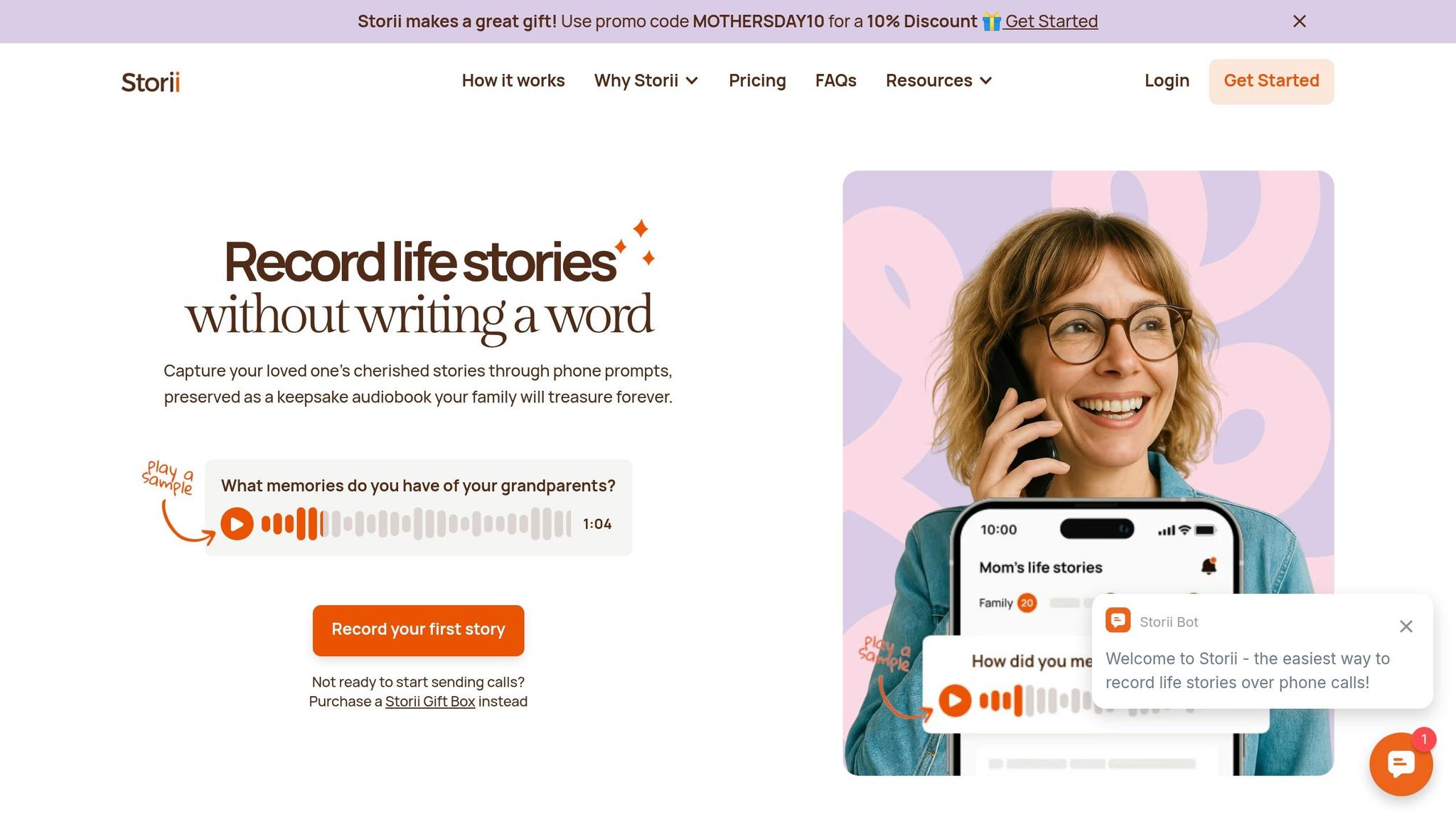
Des plateformes comme Storii facilitent l'intégration de ces questions personnalisées dans le processus d'enregistrement. Vous pouvez ajouter des questions personnalisées en sélectionnant une catégorie, telle que « Loisirs créatifs », et en élaborant une question adaptée à leurs intérêts - par exemple : « Quel a été le premier appareil photo que vous avez utilisé pour votre passion de la photographie ? »
Storii simplifie également la planification en envoyant une notification hebdomadaire chaque dimanche avec les questions à venir. Cela donne aux conteurs le temps de réfléchir avant la séance d'enregistrement. De plus, les membres de la famille ajoutés en tant que « Connexions » peuvent suggérer des questions de suivi. Cette fonctionnalité collaborative transforme des enregistrements ordinaires en mémoires profondément personnelles qui peuvent être revues à tout moment.
Organisation des témoignages sur les loisirs dans les enregistrements d'histoires de vie
Après avoir recueilli des récits riches et personnels sur les loisirs, l'étape suivante consiste à déterminer comment les organiser. Sans un système clair, même les enregistrements les plus captivants peuvent se perdre ou devenir difficiles à retrouver par la suite.
Regroupement des réponses par thème ou par chronologie
Deux méthodes efficaces pour organiser ces enregistrements sont de les classer par période de vie ou par thème. Une approche chronologique suit les loisirs tels qu'ils évoluent au fil du temps – par exemple, en commençant par les parties de baseball dans le jardin pendant l'enfance et en progressant vers l'entraînement de Little League à l'âge adulte. Une approche thématique, en revanche, regroupe les récits en fonction de traits ou d'activités partagés, comme la combinaison de toutes les activités créatives (peinture, menuiserie, photographie) en une seule catégorie, indépendamment de la période où elles se sont produites.
Choisissez la méthode qui correspond le mieux à vos besoins et assurez-vous d'étiqueter chaque enregistrement immédiatement. L'ajout d'étiquettes claires et descriptives vous fera gagner du temps et vous évitera des frustrations plus tard. Une fois cette structure en place, vous pouvez utiliser la technologie pour faciliter encore plus l'organisation.
Utilisation d'outils de transcription et de balisage
Des outils comme Storii peuvent simplifier le processus en transcrivant automatiquement les appels téléphoniques enregistrés en texte dans les deux minutes environ après la fin de l'appel. La transcription est ensuite stockée à côté de l'audio original dans le profil en ligne du conteur, ce qui facilite la recherche, la lecture ou le partage.
Ces transcriptions peuvent être modifiées pour corriger tout détail spécifique aux loisirs, garantissant ainsi leur exactitude. Vous pouvez également enrichir les enregistrements en y joignant des photos. Par exemple, téléchargez une photo d'une courtepointe terminée à côté de l'histoire de l'apprentissage de la couture. Cela transforme un simple clip audio en un souvenir plus vivant et significatif. Storii vous permet également d'exporter ces histoires sous forme de « Keepbook » PDF, d'eBook ou même de livre audio numérique, offrant une flexibilité quant à la manière dont les familles accèdent et préservent ces récits. Avec les outils de transcription et multimédia, vos enregistrements deviennent plus que de simples fichiers audio – ils font partie d'une archive de souvenirs complète.
Relier les récits de loisirs au récit de vie plus large
Une fois les récits de loisirs bien organisés, ils peuvent être intégrés à l'histoire de vie plus vaste du conteur. Les loisirs sont souvent liés à des thèmes ou des relations plus profonds. Par exemple, l'amour de la pêche peut remonter au temps passé avec un grand-parent, ou une passion pour le jardinage peut découler d'une période de difficultés financières. Relier ces fils entre eux crée un mémoire cohérent et percutant.
Une méthode utile consiste à utiliser les « questions déclaratives », une technique souvent employée par les historiens oraux. Ces questions relient les passe-temps à des événements de vie spécifiques, tels que : « Vous avez mentionné avoir déménagé dans le Montana rural en 1978. Comment cela a-t-il changé la façon dont vous passiez votre temps libre ? ». Des questions comme celle-ci intègrent naturellement les passe-temps dans le récit plus large sans paraître forcées.
Comme l' Smithsonian Institution Archives l'explique :
« L'histoire orale capture l'intégralité de l'entretien dans sa forme originale, et non comme une interprétation. »
Conclusion et points clés à retenir
Les passe-temps sont bien plus que de simples divertissements – ils offrent une fenêtre sur les valeurs, les relations et les expériences de vie déterminantes d'une personne. En 2001, les psychologues Dr Fivush et Dr Duke ont découvert que les enfants qui connaissent mieux l'histoire de leur famille ont tendance à avoir une meilleure santé émotionnelle, une plus grande maîtrise de soi et un bonheur accru. Les récits sur les passe-temps jouent un rôle clé dans la construction de ce récit familial, enrichissant les liens entre les générations.
La bonne question peut déclencher une cascade de souvenirs. Comme le dit Elizabeth :
« Tout ce dont vous avez besoin, c'est que quelqu'un vous pose une question d'une manière qui vous oblige à l'interrompre pour dire : "Oh, j'ai quelque chose à dire à ce sujet !" »
Des questions comme celles-ci n'ont pas besoin de mener à des réponses parfaites. Au lieu de cela, elles encouragent des histoires authentiques et personnelles auxquelles les futurs membres de la famille pourront s'identifier à un niveau plus profond.
C'est là que des outils comme Storii brillent. Avec plus de 1 000 questions, des appels téléphoniques automatisés (jusqu'à trois par semaine), et sans avoir besoin d'internet ou de smartphones, il élimine les obstacles courants au démarrage de ces conversations. De plus, tous les enregistrements sont transcrits et peuvent être sauvegardés sous forme de livres audio ou de PDF, garantissant que l'héritage de votre famille est préservé dans un format significatif.
FAQ
Comment poser des questions sur les passe-temps qui suscitent de vraies histoires, et non des réponses monosyllabiques ?
Pour susciter des histoires significatives, essayez de poser des questions ouvertes qui encouragent les gens à partager des expériences personnelles ou des réflexions. Par exemple, vous pourriez demander, Pourriez-vous partager un moment mémorable lié à votre passion ? ou De quelles manières votre passion a-t-elle influencé votre vie ? Ce type de questions évite les réponses simples par oui ou par non et se concentre plutôt sur des moments précis, des défis ou des leçons. Cette méthode permet d'obtenir des réponses détaillées et captivantes, rendant les conversations beaucoup plus enrichissantes.
Quelles sont les meilleures questions sur les passions pour quelqu'un de timide ou qui débute dans l'art de raconter des histoires ?
Lorsque l'on travaille avec quelqu'un de timide ou qui débute dans l'art de raconter des histoires, il est utile de poser des questions douces et ouvertes qui mettent en lumière leurs expériences positives ou leurs centres d'intérêt personnels. Par exemple, vous pourriez demander :
Ces types de questions créent un environnement sécurisant, leur permettant de s'ouvrir plus facilement et de partager leurs histoires d'une manière qui leur semble naturelle et confortable.
Comment puis-je enregistrer, organiser et sauvegarder ces récits de passion avec Storii ?
Storii offre un moyen simple de documenter et de chérir vos récits de passion. Voici comment vous pouvez l'utiliser :
Avec Storii, préserver vos souvenirs devient une expérience fluide et personnelle.
Articles de blog associés
- Questions pour susciter la connaissance de soi à travers les histoires
- Comment personnaliser les amorces de récits pour les seniors
- Questions sur les passions pour enregistrer des histoires de famille
- Comment utiliser les amorces pour l'enregistrement de récits de vie
{"@context":"https://schema.org","@type":"FAQPage","mainEntity":[{"@type":"Question","name":"Comment poser des questions sur les passions qui suscitent de vraies histoires, et non des réponses monosyllabiques ?","acceptedAnswer":{"@type":"Answer","text":"<p>Pour susciter des histoires significatives, essayez de poser des questions ouvertes qui encouragent les gens à partager des expériences personnelles ou des réflexions. Par exemple, vous pourriez demander : <strong>"Pourriez-vous partager un moment mémorable lié à votre passion ?"</strong> ou <strong>"De quelles manières votre passion a-t-elle influencé votre vie ?"</strong> Ce type de questions évite les réponses simples par oui ou par non et se concentre plutôt sur des moments précis, des défis ou des leçons. Cette méthode permet d'obtenir des réponses détaillées et captivantes, rendant les conversations beaucoup plus enrichissantes.</p>"}},{"@type":"Question","name":"Quelles sont les meilleures questions sur les passions pour quelqu'un de timide ou qui débute dans l'art de raconter des histoires ?","acceptedAnswer":{"@type":"Answer","text":"<p>Lorsque l'on travaille avec quelqu'un de timide ou qui débute dans l'art de raconter des histoires, il est utile de poser <strong>des questions douces et ouvertes</strong> qui mettent en lumière leurs expériences positives ou leurs centres d'intérêt personnels. Par exemple, vous pourriez demander :</p> <ul> <li><em>Quelles sont vos passions préférées ?</em></li> <li><em>Qu'aimez-vous faire pendant votre temps libre ?</em></li> <li><em>Avez-vous des souvenirs heureux liés à vos passions ?</em></li> </ul> <p>Ces types de questions créent un environnement sécurisant, leur permettant de s'ouvrir plus facilement et de partager leurs histoires d'une manière qui leur semble naturelle et confortable.</p>"}},{"@type":"Question","name":"Comment puis-je enregistrer, organiser et sauvegarder ces récits de passion avec Storii ?","acceptedAnswer":{"@type":"Answer","text":"<p>Storii offre un moyen simple de documenter et de chérir vos récits de passion. Voici comment vous pouvez l'utiliser :</p> <ul> <li><strong>Enregistrer</strong> : Répondez aux amorces de Storii ou créez vos propres questions pour enregistrer des réponses audio.</li> <li><strong>Organiser</strong> : Classez vos histoires par catégories, modifiez-les ou supprimez des entrées si nécessaire.</li> <li><strong>Sauvegarder et partager</strong> : Exportez vos enregistrements sous forme de livres audio ou de PDF, ou partagez-les en toute sécurité avec vos proches.</li> </ul> <p>Avec Storii, préserver vos souvenirs devient une expérience fluide et personnelle.</p>"}}]}

Coffret cadeau Storii
Idéal pour les occasions spéciales telles que la fête des mères, la fête des pères, les anniversaires et les vacances.

