
.png)
いつか聞こうと思いながら、そのままになっていることはありませんか。「また今度」「次の帰省で」「次の休日に」と自分に言い聞かせているうちに、時は過ぎていきます。そしてある日、大切な人を失ったとき、最も心に深く刺さるのは、ただ別れが訪れたことではなく、結局何も聞けなかったという後悔なのです。
後回しにしてしまう気持ちはよくわかります。しかし、失われてしまった声は二度と取り戻せません。写真や家宝、家族の笑い話の裏にある物語も同じです。だからこそ、今すぐ始めてみませんか。単なる事実の記録ではなく、親の物語をその人たらしめている声の響きや口調、そしてその時の感情を、そのまま残しておくために。
これからお伝えするのは、 なぜ今、それが必要なのか そして、 どうすれば 大げさな準備をせずに始められるか、というヒントです。
人生の物語を記録することは、単なる素敵なアイデア以上の意味を持ちます。それは親御さんに「自分の話を聞いてもらえた」という喜びを与え、家族にとっては、これから先何年にもわたって立ち返ることができる大切な宝物になります。 アメリカ人の47%が 愛する人の声を録音しておけばよかったと後悔しており、家族の歴史のほとんどは 2世代 も経てば失われてしまいます。誰かが残そうとしなければ、記憶は消えていくのです。この数字が胸に突き刺さるのは、多くの人が「待ってしまった」という共通の後悔を抱えているからです。
人の心に残るのは、語られた言葉そのものだけではありません。冗談を言った後の笑い声、辛い記憶を語る前の沈黙、母親が初めての仕事を語る時の口調、父親が子供時代を振り返る時の表情。 そうしたものから先に、失われていくのです。 写真は顔を写すことはできますが、録音は、その写真の向こう側にいる人の息遣いを、子供や孫たちに届けてくれます。
こうした物語は、単なる日付や名前以上のものを伝えてくれます。仕事、愛、喪失、信念、お金、そして家族についての教訓がそこには詰まっています。ある研究によると、家族の歴史をよく知っている子供は、 より高い精神的健康、自制心、幸福感を持つ傾向があるそうです。つまり、これは過去を振り返るためだけのものではありません。次の世代が、自分がどこから来たのかを感じ、自分らしく生きるための助けにもなるのです。
幸いなことに、スタジオ機材や綿密なインタビュー計画、何時間もの自由時間は必要ありません。シンプルに考えましょう。スマートフォンを使い、答えが一つに決まらない質問を一つ投げかけ、あとは会話の流れに身を任せるだけです。まずは、こんなことから始めてみませんか。 子供時代の思い出、 両親の出会い、 家族の習慣、 困難な時期、 誇らしい瞬間、あるいは 孫に伝えたいこと。
すべて自分で行うのが負担で、後回しになってしまいそうなら、 Storii のようなサービスが役立ちます。親の 固定電話や携帯電話に電話をかけ、人生の物語を引き出す質問をして回答を録音し、その内容を音声や文章の記録として残してくれます。準備やデータの管理といった手間が省けるため、最初の一歩を踏み出しやすくなります。
大切なのはシンプルに、 完璧なタイミングを待たないことです。次の電話が、家族にとって何十年も残る宝物の始まりになるかもしれません。今週のたった一度の会話が、将来みんなが「残しておいてくれてよかった」と感謝するものになるはずです。
両親の物語を記録したいけれど、何から始めればいいかわからない
sbb-itb-ce27d7a
親の物語を記録しないことで失われるもの
写真や思い出の品は、親が「何を持っていたか」を教えてくれます。しかし、記録された物語は、親が「どのような人だったか」を伝えてくれます。写真は祖母の顔を映し出すことはできても、その写真の背景にある物語を語る時の笑い声や、言葉の間の取り方、声に滲む誇り、そして思い出をまるで 彼女自身のもののように感じさせたユーモアまでは残せません。こうした細部が失われてしまうと、家族の物語を次世代へ語り継ぐことは非常に難しくなります。
もし 親の人生の物語を記録しなければ、家族の思い出の品に込められた声や背景、そして意味は急速に薄れていきます。家族の歴史の大部分は、その意味や背景にある人間関係を含め、わずか2世代で消えてしまいます。名前のない写真の箱はただの謎に変わり、家族の家宝は単なる物に成り下がります。物語が消えれば、その価値を支えていた多くのものも一緒に消えてしまうのです。
思い出以上のもの:価値観、回復力、そして家族のアイデンティティ
この喪失は、単なるノスタルジーをはるかに超えるものです。親の物語は、事実だけでなく価値観をも伝えます。親が苦難や犠牲、あるいは苦労して手に入れた成功について語る時、彼らは単に何が起きたかを話しているだけではありません。人生にどう向き合い、何を支えにして乗り越えてきたのかを、次世代に示しているのです。
2001年の研究によると、家族の歴史をよく知っている子供ほど、精神的な健康度や自制心が高く、幸福を感じやすい傾向があることがわかっています。これは重要なことです。こうした物語は、子供や孫が自分のルーツを知り、家族という系譜の中で自分がどのような存在であるかを理解する助けとなります。
なぜ次世代にとって重要なのか
次世代にとって、記録は写真には決して残せないもの、つまり「生きた声」を保存してくれます。平均して人は25歳までに祖父母を亡くしますが、多くの人は 家族の歴史を保存する ことを40代や50代になるまで始めません。その頃には、記憶がすでに薄れ始めていることもあります。今記録を残すということは、子供や孫、そしてその先の世代のために、その声を未来へ届けることを意味します。
人生の物語を記録することが最高の贈り物である理由
ほとんどの贈り物は、時とともに忘れ去られていきます。しかし、記録された人生の物語は違います。
それは年月が経つほどに意味を増していきます。語る本人には確かな充足感を与え、声が失われた後も、それを聞く人々に永遠に残る宝物となります。物語を記録しなければ、多くは消えてしまいます。だからこそ、親の物語を記録することは、単に思い出を守る以上の意味があるのです。それは、 家族の物語を分かち合うためのギフトアイデア として、親自身が今感じ取ることができ、家族が未来へと受け継いでいける最高の贈り物なのです。
ご両親に今すぐ贈れる、心温まるギフト
ご両親にこれまでの人生を語ってもらうことには、静かながらも大きな力があります。何かを解決しようとする必要はありません。ただ耳を傾けるだけでいいのです。
その真摯な姿勢が大切です。ご両親は「自分を見てくれている」と感じることができます。それは、次のようなメッセージを伝えます。 あなたが歩んできた人生はかけがえのないものであり、私たちはそれを大切に受け継ぎたい。 ただ話を聞くというそのシンプルな行為こそが、何よりの贈り物なのです。
家族で何十年も分かち合える贈り物
今日録音した声は、家族が何年先も繰り返し聴ける大切な宝物になります。いつでも振り返り、共有し、そして次世代へと受け継いでいくことができます。
要約された文章を読むのと、本人の声で聴くのとでは大きな違いがあります。笑い声やふとした沈黙、思い出を語る時の声のトーンの変化。そうした一つひとつに、文字だけでは伝えきれない深い感情が宿っています。家族の歴史の多くは、意識的に残さなければ二世代のうちに消えてしまいます。大切なのは、物語そのものの価値ではなく、失われてしまう前にどう記録しておくかということです。
心に響く記録を残すために
繰り返し聴きたくなる記録は、堅苦しいものではありません。ありのままの人生を語り合う、誠実な会話から生まれるものです。
特に豊かな物語を引き出しやすいトピックをいくつかご紹介します。
- 子供時代: どのような環境で育ったのか
- 出会い: 二人の物語のすべて
- 家族の伝統: その始まりと、込められた想い
- 最大の課題: 直面した困難とそれをいかに乗り越えたか
- 誇りに思う瞬間: キャリアでの成功と人生の節目
- 孫へのメッセージ: アドバイス、願い、そして次世代に最も伝えたいこと
Storiiユーザーのクレイトン・ボインクさんは、次のように語っています。
「母の子供時代や、私たちが生まれる前の生活について、多くのことを知ることができました。家族との絆を深めたい方、よく知っていると思っていた人の素晴らしい物語や意外な一面を発見したい方に、ぜひおすすめしたいです!」
こうした物語こそが、人生の記録を残す価値あるものにしてくれます。何が最も大切かを知ったら、次はそれを記録するためのシンプルな方法を選びましょう。
両親の人生の物語を記録し始める方法
自分で記録する vs Storii:あなたに最適なのは?
始めるのに大げさな準備は必要ありません。スマートフォンが1台あれば十分です。会話は短く、気楽な雰囲気で、自然な流れを大切にしましょう。完璧な インタビューを目指す必要はありません。あなたが残そうとしているのは、声や笑い声、そして家族が後から何度でも振り返ることができる、その人ならではの物語の語り方なのです。
ほんの数分の会話の積み重ねが、家族にとってかけがえのない宝物になります。
会話を記録する簡単な方法
まずはスマートフォンのボイスレコーダーやボイスメモアプリを使ってみましょう。短時間のセッションが最適です。子供時代、学校、家族の伝統といった話しやすい話題から始め、親が自由に話せるようなオープンエンドの質問を投げかけてみてください。
録音した音声は文字起こしをして、回想録や記念のブックレットにまとめることもできます。
Storii Storii が選ばれる理由
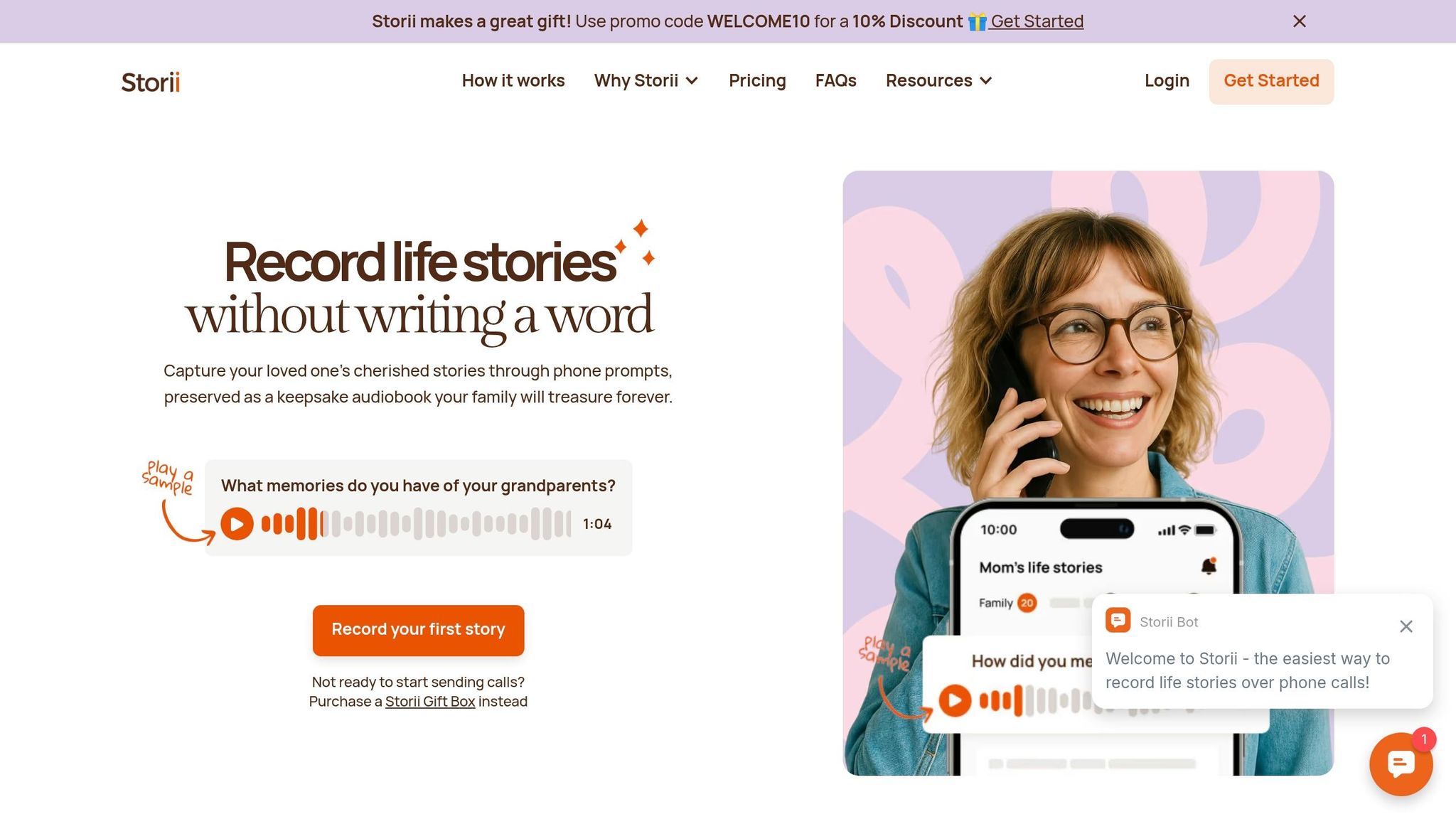
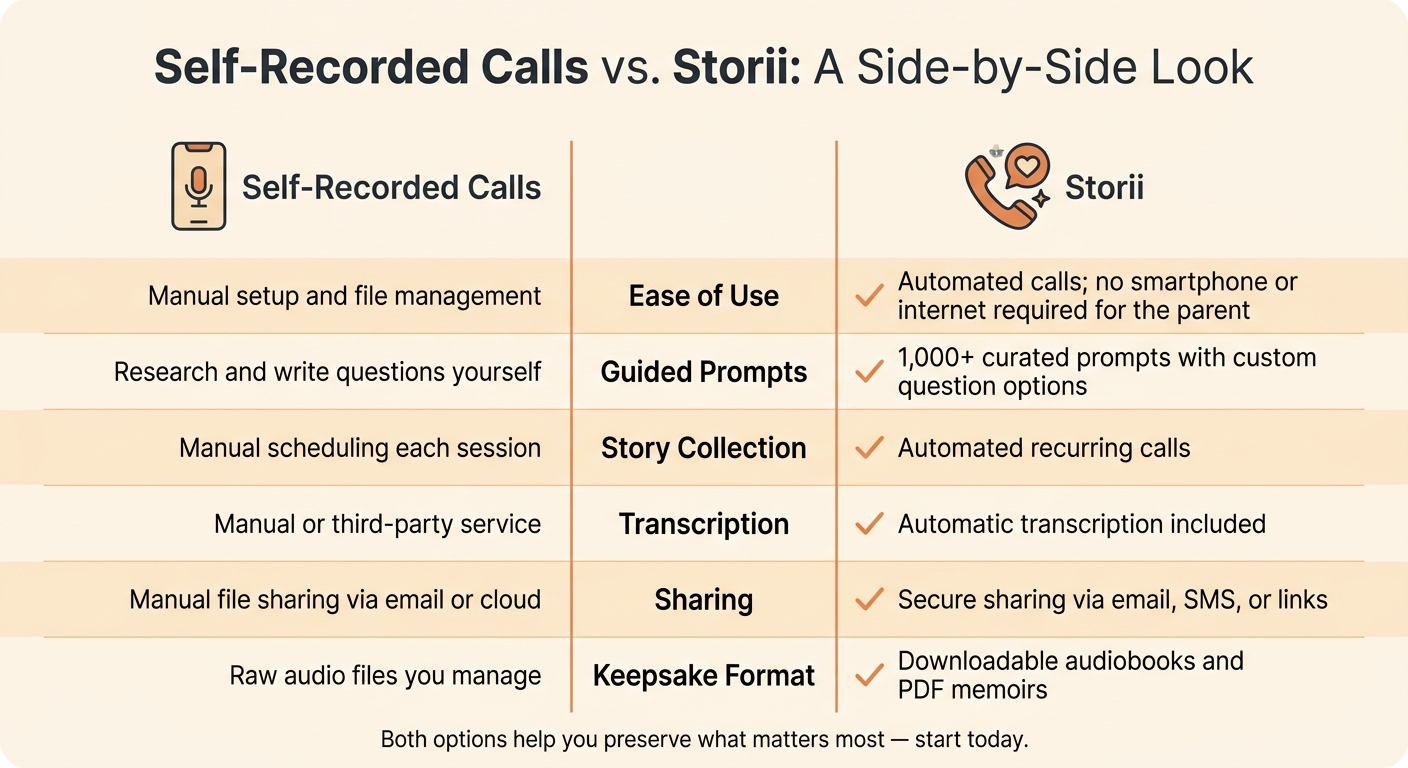
Storiiは、いつもの電話を家族のアーカイブに変えるサービスです。固定電話や携帯電話に直接電話をかけるため、相手側でスマートフォンやインターネット、アプリを用意する必要はありません。
各通話では 1,000以上 の人生の質問リストがガイド役となり、あなたにとって大切な思い出に焦点を当てた独自の質問を追加することも可能です。回答はすべて自動的に録音・文字起こしされます。準備ができたら、ストーリーを記念オーディオブックやPDF形式の回想録としてダウンロードできます。Storiiにはギフトボックスのオプションもございます。
「母はテクノロジーが苦手なので、自宅の電話に直接かけてくれるという点が非常に助かりました。」 - ヘレン・ティーガン
2つの選択肢を簡単に比較してみましょう。
自分で録音する方法とStoriiの比較
大切な思い出を、今すぐ残しましょう
多くの家族が、物語がいかに早く失われてしまうかに気づいていません。平均して25歳までに祖父母を亡くす人が多い一方で、家族の歴史を残し始めるのは40代や50代になってからです。その頃には、多くの物語がすでに失われてしまっています。
だからこそ、次の会話が重要になるのです。完璧な準備や、 質問リスト、あるいは完璧なタイミングを待つ必要はありません。まずは始めることが大切です。
会話から、家族の宝物へ
物語は、記録された瞬間に変わります。それはもう、薄れたり消えたりするかもしれない記憶ではありません。次世代へと受け継げるものになるのです。
記録された会話は、 家族の歴史を綴るブック年月が経つほどに、家族がいつでも立ち返れる場所となります。
写真は顔を写し、書類は事実を記録します。しかし、音声にはそれ以上のものが宿ります。親の口調、笑い声、言葉の合間の息遣い、そしてその人らしさ。それこそが、未来の世代が物語の背後にいる人物と真のつながりを感じるための鍵となるのです。
研究によると、家族の歴史をよく知っている子供ほど、精神的な健康や自制心、幸福感が高まり、強い帰属意識を持つことがわかっています。
まずは今週、一度だけ会話を始めてみましょう。
よくある質問
親が録音を嫌がる場合はどうすればいいですか?
親が不安を感じているなら、まずは納得してもらうことから始めましょう。何を録音し、それをどう活用するのかを明確に伝え、質問をスキップしたり、いつでも中断したりできることを約束してください。
小さな一歩から始めましょう。プレッシャーを感じさせない簡単な質問から入り、セッションは短時間で切り上げます。機材の操作が負担なら、電話をかけてボタンを押すだけで録音できるシンプルな方法を選びましょう。
気まずくならずに深い質問をするにはどうすればいいですか?
まずは簡単なことから始めましょう。子供の頃の思い出や、育った場所、家族との暮らしについて尋ねてみてください。そうすることで会話にゆとりが生まれ、より深い話題へと自然に移ることができます。
相手が自分の言葉で語れるよう、オープンエンドな質問を心がけましょう。話が盛り上がったら、そのまま深掘りしてください。「そのあとどうなったの?」「なぜそれが大切だったの?」といった問いかけで、会話を自由に広げましょう。最高の瞬間は、台本通りではなく、話が脱線した先に生まれるものです。
沈黙も大切です。間を埋めようと焦らないでください。少し考える時間を与えることで、記憶がより鮮明に蘇ることがよくあります。
何よりも、主導権が相手にあることを伝えてください。質問を飛ばすことも、休憩することも、いつでもやめることも自由だと理解してもらいましょう。
録音したデータはどのように保存すればいいですか?
録音データを安全かつ確実に保管するために、 3-2-1ルールを取り入れましょう。これは「3つのコピーを、2種類の媒体に保存し、そのうち1つを別の場所に保管する」というシンプルな習慣で、将来のデータ紛失を防ぐのに役立ちます。ファイル名は YYYY.MM.DD 形式に話し手の名前を添えて保存すれば、整理や検索がスムーズになります。
録音を文字起こししておくことも役立ちます。言葉がテキスト化されれば検索が可能になり、ざっと目を通すのも簡単で、数ヶ月後や数年後に振り返る際にも非常に便利です。
Storiiを使えば、録音データを永久に保存できるほか、オーディオブックやPDF形式の文字起こしデータとしてダウンロードしたり、メールやSMS、プライベートリンクを通じて家族と共有したりすることも可能です。
関連記事
{"@context":"https://schema.org","@type":"FAQPage","mainEntity":[{"@type":"Question","name":"親が録音を嫌がる場合はどうすればいいですか?","acceptedAnswer":{"@type":"Answer","text":"<p>親が乗り気でない場合は、まずは納得してもらうことから始めましょう。何を録音するのか、どのように活用するのかを明確に説明し、答えにくい質問はスキップしてもいいこと、いつでも一時停止や終了ができることを伝えて安心させてあげてください。</p> <p>まずは小さな一歩から始めましょう。プレッシャーのかからない簡単な質問から、短時間でセッションを終えるようにします。もし操作が難しいようなら、電話に出るだけで録音ボタンを押せるような、よりシンプルな方法を検討してみてください。</p>"}},{"@type":"Question","name":"気まずくならずに深い質問をするにはどうすればいいですか?","acceptedAnswer":{"@type":"Answer","text":"<p>まずは簡単な質問から始めましょう。子供の頃の思い出や、育った場所、家族との生活について聞いてみてください。そうすることで、重いテーマに移る前に会話が自然に弾むようになります。</p> <p>相手が自分の言葉で話せるよう、オープンエンド(自由回答形式)の質問を心がけましょう。話が盛り上がったら、その話題を深掘りしてください。「そのあとどうなったの?」「なぜそれが大切だったの?」といった質問を投げかけ、会話を少し脱線させてみるのも良いでしょう。最高の瞬間は、台本通りではない何気ない話の中から生まれるものです。</p> <p>沈黙も大切です。間を埋めようと焦る必要はありません。少し考える時間を与えることで、より多くの記憶が蘇ることがよくあります。</p> <p>何よりも大切なのは、親自身が主導権を握っていると感じてもらうことです。いつでも質問をスキップしたり、休憩したり、やめたりできることを伝えておきましょう。</p>"}},{"@type":"Question","name":"録音したデータはどう保存すればいいですか?","acceptedAnswer":{"@type":"Answer","text":"<p>録音データは、<strong>「3-2-1ルール」</strong>(3つのコピーを、2種類の異なる媒体に保存し、そのうち1つを別の場所に保管する)で安全に管理しましょう。これは将来の悲しい事態を防ぐためのシンプルな習慣です。ファイル名は<strong>「YYYY.MM.DD_名前」</strong>の形式にしておくと、整理や検索が非常に楽になります。</p> <p>また、録音を文字起こししておくことも役立ちます。言葉がテキスト化されれば検索が可能になり、ざっと目を通すのも簡単で、数ヶ月後や数年後に振り返る際にも非常に便利です。</p> <p><strong>Storii</strong>を使えば、録音データを永久に保存できるほか、オーディオブックやPDF形式の文字起こしデータとしてダウンロードしたり、メールやSMS、プライベートリンクを通じて家族と共有したりすることも可能です。</p>"}}]}
Storii ギフトボックス
母の日、父の日、誕生日、祝日などの特別な日に最適です。

