
.png)
Entrevistas de história de vida são uma forma de preservar histórias pessoais, valores e experiências para as futuras gerações. Elaborar as perguntas certas é fundamental para incentivar a narrativa e criar conexões significativas. Veja como você pode começar:
- Comece com perguntas abertas: Evite perguntas de sim ou não. Use frases como "Fale-me sobre…" ou "O que você se lembra de…".
- Agrupe as perguntas por temas: Concentre-se em áreas como infância, carreira, relacionamentos ou lições de vida, em vez de uma linha do tempo rigorosa.
- Adapte as perguntas à personalidade: Indivíduos reflexivos podem precisar de tempo para pensar, enquanto pessoas mais reservadas podem responder melhor a gatilhos de memória específicos, como fotos ou música.
- Organize em sequência lógica: Comece com tópicos fáceis e avance gradualmente para os mais profundos e pessoais.
- Mantenha as perguntas claras e neutras: Evite formulações tendenciosas ou excessivamente complexas para garantir respostas genuínas.
Ferramentas como Storii podem simplificar o processo gravando, transcrevendo e organizando as respostas em recordações como audiolivros ou PDFs. O objetivo é criar uma atmosfera relaxada onde as histórias fluam naturalmente, deixando um legado duradouro para as famílias valorizarem.
Como Entrevistar Pessoas para Suas Histórias de Vida
sbb-itb-ce27d7a
Preparando-se para Escrever Perguntas sobre Histórias de Vida
Dedicar tempo para se preparar antes de mergulhar nas perguntas sobre histórias de vida pode fazer toda a diferença. Uma preparação cuidadosa garante que suas perguntas vão além dos eventos superficiais e exploram as emoções e experiências que definem a história de uma pessoa. O segredo é abordar o processo com curiosidade e um interesse genuíno em compreender o entrevistado.
Pesquisando o Entrevistado
Comece reunindo o máximo de informações de fundo que puder sobre a pessoa que você vai entrevistar. Isso pode significar conversar com familiares, folhear álbuns de fotos antigos ou ler cartas e diários. Preste atenção aos principais eventos da vida – onde foram criados, escolhas de carreira importantes, relacionamentos-chave e momentos que mudaram seu caminho. Este passo é mais do que apenas coletar fatos; trata-se de descobrir os detalhes que dão vida às memórias. Como a LifeEcho Equipe Editorial coloca:
As perguntas erradas produzem fatos. As perguntas certas produzem histórias. A diferença entre 'Onde você cresceu?' e 'O que você se lembra de ser criança naquela casa?' é a diferença entre um dado e uma memória.
Também é útil ter uma discussão pré-entrevista. Use este tempo para esclarecer objetivos, entender o que eles querem compartilhar e estabelecer quaisquer limites. Isso não só ajuda a elaborar perguntas significativas, mas também constrói confiança, preparando o terreno para uma conversa mais aberta e honesta.
Depois de fazer sua pesquisa, pense em como estruturar a história em torno de temas-chave, em vez de simplesmente seguir uma linha do tempo.
Identificando Temas Centrais da Vida
Em vez de organizar a entrevista cronologicamente, considere agrupar as perguntas por temas de vida. Temas comuns podem incluir infância, transições de vida cruciais, jornadas de carreira, relacionamentos e a sabedoria que desejam transmitir. Procure por momentos de mudança – como um primeiro gosto de independência, uma decisão de carreira inesperada ou um evento que mudou a vida. Uma pergunta instigante a fazer é, “Se sua vida fosse um livro, qual seria o título?” Isso pode ajudar a descobrir o fio condutor central de sua história.
Planeje preparar de 10 a 15 perguntas por sessão. No entanto, não sinta a necessidade de usar todas elas. Deixe espaço para perguntas de acompanhamento para que você possa aprofundar qualquer tópico que gere uma resposta significativa ou inesperada.
Considerando Tipos de Personalidade
Depois de delinear os temas, pense em como a personalidade do entrevistado pode influenciar sua narrativa. Adaptar sua abordagem à personalidade deles pode tornar a experiência mais confortável e envolvente para eles.
Para indivíduos reflexivos, perguntas abertas funcionam bem. Frases como “Conte-me sobre…” ou “Descreva como foi…” pode incentivá-los a compartilhar seus pensamentos. Lembre-se de que esses indivíduos podem precisar de alguns momentos de silêncio para reunir completamente suas memórias. Não se apresse em preencher as pausas; como explica a Equipe Editorial da LifeEcho:
As pessoas geralmente precisam de um momento para acessar uma memória, e as melhores respostas vêm depois de alguns segundos de reflexão silenciosa.
Para aqueles que são mais reservados ou hesitantes em falar, perguntas específicas ou gatilhos de memória podem ser úteis. Traga fotografias antigas, toque músicas de seus anos mais jovens ou até mesmo visite locais significativos para refrescar a memória deles. Comece com perguntas leves e fáceis para criar uma atmosfera relaxada. E se eles parecerem desconfortáveis com um tópico específico, não insista. Respeitar seus limites pode ajudar a promover uma sensação de segurança, o que pode encorajá-los a se abrir mais tarde.
Princípios para Escrever Boas Perguntas
Depois de se preparar e se familiarizar com a pessoa que você está entrevistando, o próximo passo é elaborar perguntas ponderadas. O objetivo é inspirar histórias, não apenas coletar fatos. Perguntas bem elaboradas convidam a memórias vívidas e profundidade emocional, enquanto as mal formuladas podem interromper a conversa antes mesmo de começar. Esses princípios conectam seus esforços de pesquisa às estratégias práticas que você usará durante a entrevista.
Usando Perguntas Abertas
Perguntas abertas são essenciais para descobrir histórias pessoais e detalhes significativos. Essas perguntas vão além de simples respostas de "sim" ou "não". Por exemplo, em vez de perguntar "Você gostou da sua infância?", tente "O que você mais se lembra de crescer naquela casa?" A primeira pergunta pode obter uma resposta breve, enquanto a segunda convida a uma narrativa mais profunda. Perguntas que estimulam a narrativa naturalmente atraem as pessoas. e incentivá-los a compartilhar mais.
Comece suas perguntas com frases como "Conte-me sobre...", "Descreva como foi...", ou "Como você se sentiu quando...". Esses tipos de perguntas incentivam respostas detalhadas e ponderadas. Eles também abrem espaço para perguntas de acompanhamento significativas, como "O que aconteceu a seguir?" ou "Como isso te impactou?" – muitas vezes onde as partes mais cativantes da história surgem. Depois de perguntar, resista ao impulso de preencher qualquer silêncio. Às vezes, as melhores respostas surgem após um momento de reflexão silenciosa. Você também pode usar pistas sensoriais para desbloquear memórias mais ricas, perguntando sobre visões, sons ou cheiros ligados a uma experiência.
Sequenciando Perguntas de Forma Lógica
A ordem das suas perguntas desempenha um papel importante no fluxo da entrevista. Comece com tópicos fáceis e não sensíveis para ajudar o entrevistado a relaxar e construir confiança. Por exemplo, comece com assuntos leves como memórias de infância, tradições familiares ou hobbies antes de passar para áreas mais introspectivas ou emocionais.
Uma boa sequência geralmente vai do geral ao específico e do factual ao reflexivo. Você pode começar explorando a vida inicial e o histórico familiar, depois passar para decisões cruciais ou momentos transformadores, e finalmente concluir com perguntas sobre legado ou lições de vida. Essa abordagem cria um fluxo narrativo natural. Também é importante não seguir estritamente uma linha do tempo cronológica. Um simples relato de eventos pode parecer monótono, então inclua perguntas que explorem motivações, valores ou medos. Por exemplo, você poderia perguntar, "O que te inspirou a fazer essa escolha?" ou "Como essa experiência moldou sua visão de vida?" para adicionar camadas de significado à sua história.
Evitando Linguagem Indutiva ou Pouco Clara
A forma como você formula suas perguntas é importante. Uma linguagem neutra garante que você não guie, involuntariamente, a resposta do entrevistado. Evite formular perguntas de forma a pressupor um sentimento ou resultado específico, como "Isso deve ter sido avassalador, certo?" Em vez disso, faça uma pergunta aberta como "O que estava passando pela sua cabeça naquele momento?" Essa abordagem permite que a pessoa compartilhe sua perspectiva genuína sem se sentir direcionada para um lado específico.
A clareza é igualmente importante. Perguntas ambíguas ou excessivamente complicadas podem confundir o entrevistado. Se você notar hesitação ou incerteza, reformule sua pergunta em termos mais simples. E sempre respeite os limites — se alguém parecer desconfortável, diga que não há problema em pular uma pergunta. Preservar a confiança e a segurança emocional é muito mais valioso do que forçar uma resposta. Muitas vezes, demonstrar respeito pelos limites da pessoa a encoraja a se abrir mais tarde, quando se sentir pronta.
Esses princípios estabelecem as bases para a criação de perguntas significativas e envolventes que ajudam a dar vida a histórias pessoais.
Guia Passo a Passo para Escrever Perguntas sobre Histórias de Vida
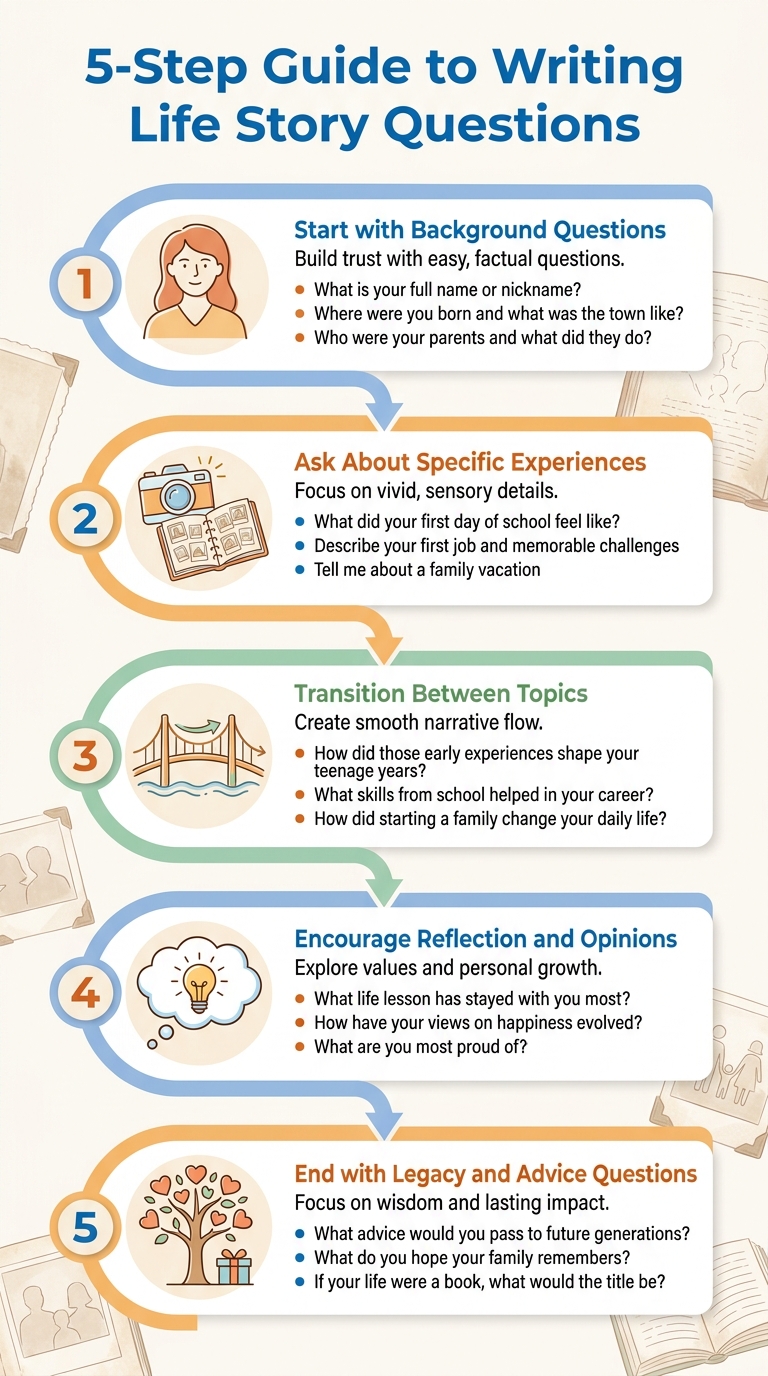
Processo de 5 Etapas para Escrever Perguntas de Entrevista sobre Histórias de Vida
Siga esta abordagem estruturada para guiar seu processo de entrevista, começando com perguntas simples e factuais e avançando gradualmente para tópicos mais profundos e reflexivos. Este método ajuda a transformar a pesquisa em uma história de vida cativante e significativa.
Passo 1: Comece com Perguntas de Contexto
Comece com perguntas diretas para construir confiança e iniciar a conversa de forma mais tranquila. Por exemplo, pergunte: "Qual é o seu nome completo, ou você usa um apelido?" ou "Onde você nasceu, e como era a cidade?" Essas perguntas mais leves permitem que o entrevistado compartilhe detalhes básicos antes de se aprofundar em memórias mais pessoais.
Adapte suas perguntas para se adequar ao histórico do indivíduo. Por exemplo, você poderia perguntar: "Quem eram seus pais, e qual era a profissão deles?" ou "Quais são suas primeiras memórias de feriados ou tradições familiares?" Para alguém que se mudou com frequência, tente: "Onde você cresceu, e em quantas casas você morou?" Essas perguntas podem revelar histórias sobre mudança e adaptação.
Uma vez que a base esteja estabelecida, você pode passar para experiências mais detalhadas.
Passo 2: Pergunte Sobre Experiências Específicas
Agora, mude o foco para momentos específicos que dão vida às memórias. Faça perguntas que convidem a detalhes sensoriais, como: "Como foi o seu primeiro dia de aula?" ou "O que você se lembra sobre os cheiros e sons da sua casa de infância?" Essas perguntas incentivam uma narrativa vívida em vez de apenas listar fatos.
Explore momentos importantes como escola, trabalho ou viagens com perguntas como: "Descreva seu primeiro emprego: quem eram seus colegas de trabalho e qual foi o desafio mais marcante?" ou "Conte-me sobre uma viagem em família: que paisagens você viu e quais emoções se destacam?" Se o percurso deles foi não convencional, adapte suas perguntas. Por exemplo, pergunte sobre programas de aprendizagem em vez de faculdade, ou sobre abrir um negócio em vez de subir na carreira corporativa.
Passo 3: Transição Entre Tópicos
Transições suaves entre tópicos ajudam a criar uma narrativa coesa. Use perguntas de ligação como: "Como essas primeiras experiências moldaram sua adolescência?" para manter a história fluindo naturalmente. Em vez de pular abruptamente da infância para a carreira, pergunte: "Que habilidades da escola o ajudaram no início da sua carreira?"
Para conectar as fases da vida, você pode perguntar: "O que motivou essa mudança de emprego e como ela afetou sua família?" ou "Como formar uma família mudou seu dia a dia?" Se emoções surgirem durante a conversa, demonstre compreensão oferecendo um momento de silêncio ou um gesto de apoio. Isso ajuda a construir confiança e permite que o entrevistado compartilhe no seu próprio ritmo.
Depois de abordar as transições, você pode direcionar a conversa para a reflexão.
Passo 4: Incentive a Reflexão e Opiniões
Convide o entrevistado a explorar seus valores e crescimento pessoal com perguntas reflexivas. Por exemplo: "Qual lição de vida mais marcou você e por quê?" ou "Como suas opiniões sobre a felicidade evoluíram ao longo do tempo?" Essas perguntas vão além dos fatos, aprofundando-se no significado por trás de suas experiências.
Uma pergunta como: "Do que você mais se orgulha na sua vida e o que a tornou significativa?" funciona bem para revelar percepções mais profundas sem parecer intrusivo.
Passo 5: Finalize com Perguntas sobre Legado e Conselhos
Conclua focando em legado e conselhos. Faça perguntas como: "Que conselho você passaria para as futuras gerações?" ou "O que você espera que sua família se lembre sobre você?" Essas perguntas proporcionam um senso de encerramento e permitem que o entrevistado reflita sobre suas contribuições.
Outras ideias incluem: "Quais três conselhos você daria aos seus netos?" ou "Se a história da sua vida virasse um livro, que título você escolheria?" Se você estiver usando as chamadas automatizadas do Storii, mantenha suas perguntas curtas e claras para facilitar a transcrição em audiolivros ou PDFs.
Essas perguntas finais amarram os ricos detalhes compartilhados ao longo da conversa, deixando o entrevistado com um senso de realização e propósito.
Usando Storii para Criar e Gravar Perguntas
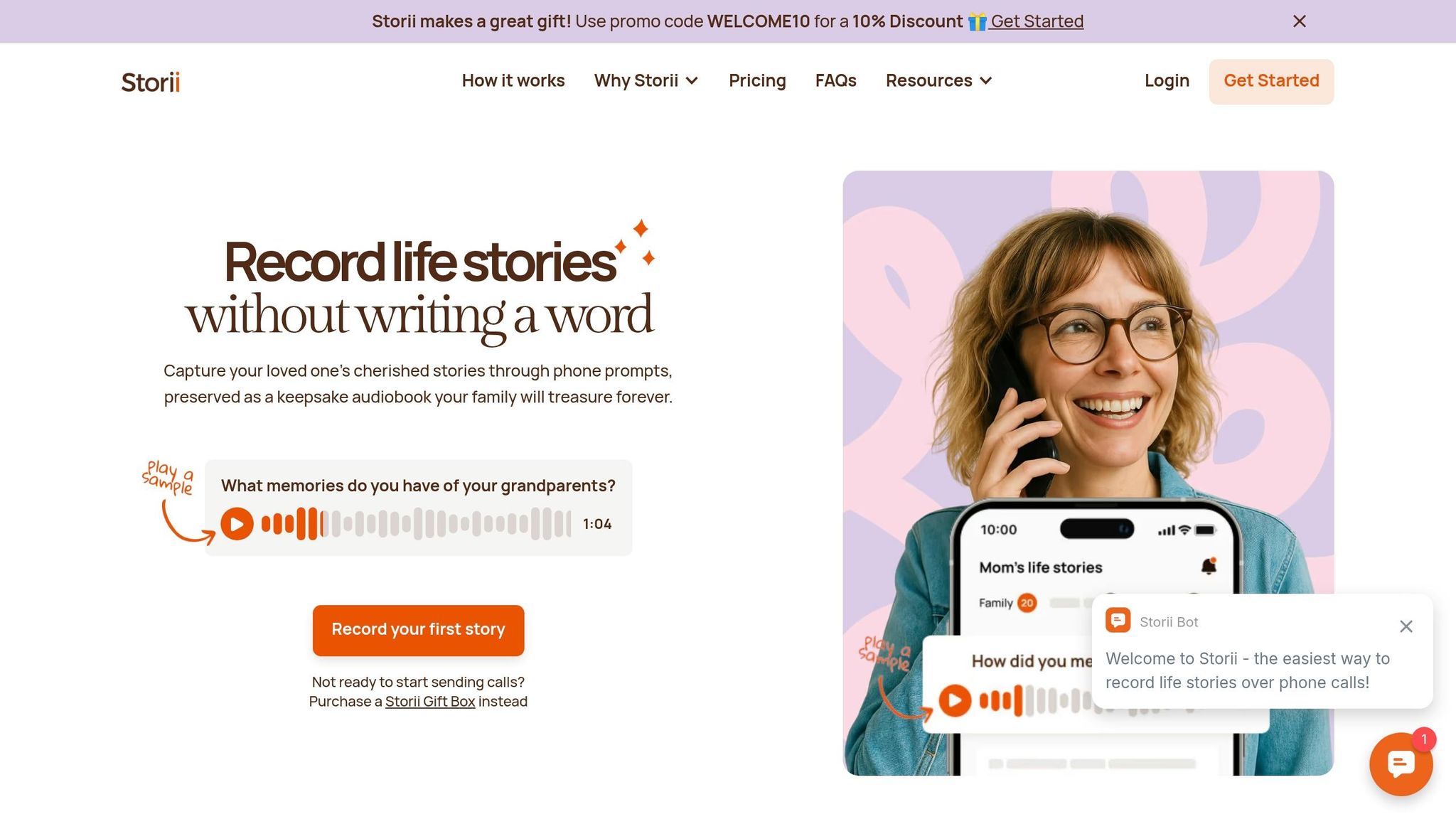
A Storii facilita a transformação das suas perguntas cuidadosamente elaboradas em memórias gravadas através de chamadas telefónicas automatizadas. Ao configurar o perfil do contador de histórias – incluindo o seu número de telefone, idioma preferido, fuso horário e agenda de chamadas – a Storii trata do resto. Ela liga automaticamente para o contador de histórias, guiando-o por cada pergunta, passo a passo.
Usando a Biblioteca de Sugestões da Storii
Se não tem certeza por onde começar, a Storii tem uma biblioteca com mais de 1.000 sugestões de histórias de vida. Estas sugestões são projetadas para despertar ideias ou servir como modelos para criar as suas próprias perguntas. Quer esteja a mergulhar em memórias de infância, momentos marcantes da carreira ou tradições familiares, pode escolher sugestões que correspondam aos seus temas ou ajustá-las para se adequarem às experiências únicas do contador de histórias.
Depois de selecionar ou escrever as suas perguntas, adicione-as à lista "Próximas Perguntas". Este recurso permite reordenar as perguntas arrastando e soltando-as, garantindo que a entrevista flua naturalmente – desde detalhes de fundo a reflexões mais profundas. Também pode remover perguntas que não se encaixam ou adicionar novas à medida que a história se desenvolve. Com as suas perguntas na fila, as ferramentas de transcrição da Storii garantem que cada resposta seja capturada em detalhes.
Usando Transcrições e Recursos de Audiolivro
Após cada chamada, a Storii transcreve automaticamente o áudio e guarda tanto as gravações quanto as transcrições no seu perfil. Isso significa que pode rever as respostas imediatamente, identificar possíveis perguntas de acompanhamento e acompanhar o progresso – tudo sem precisar transcrever nada manualmente. Os membros da família podem até receber atualizações por mensagem de texto sempre que novas respostas são gravadas, mantendo todos envolvidos no processo.
A qualquer momento, pode descarregar a coleção completa como um audiolivro de recordação ou um PDF transcrito. O audiolivro preserva a voz e a personalidade do contador de histórias, oferecendo um legado profundamente pessoal para as futuras gerações. Enquanto isso, o PDF fornece um registo escrito fácil de imprimir, partilhar ou armazenar de forma segura.
Escrevendo Perguntas para Chamadas Automatizadas
Ao elaborar perguntas para as chamadas automatizadas da Storii, a simplicidade é fundamental. Mantenha as perguntas curtas e diretas para garantir gravações claras e transcrições precisas. Evite combinar várias perguntas em uma só. Por exemplo, em vez de perguntar: "Qual foi o seu primeiro emprego, quem eram os seus colegas de trabalho e que desafios enfrentou?", divida-a em perguntas individuais como: "Qual foi o seu primeiro emprego?", "Quem eram os seus colegas de trabalho?" e "Qual foi o desafio mais memorável?".
Como os contadores de histórias podem receber até três chamadas automatizadas por semana, você tem bastante tempo para construir a narrativa gradualmente sem sobrecarregá-los. O processo é simples – os contadores de histórias pressionam "1" para gravar as suas respostas e desligam quando terminam. Não é necessário internet ou smartphone, tornando-o acessível para todos.
Aperfeiçoando e Testando as Suas Perguntas
Mesmo as melhores perguntas podem beneficiar de alguns ajustes finos. Antes de mergulhar na gravação de histórias de vida, reserve um tempo para rever as suas perguntas para garantir que sejam claras, envolventes e eficazes.
Testando Perguntas para Clareza
Experimente as suas perguntas com alguém de confiança antes da entrevista real. Esta prática pode revelar qualquer fraseado confuso ou perguntas que não levam a respostas significativas. Preste atenção se as suas perguntas suscitam factos simples ou evocam memórias detalhadas. Como mencionado anteriormente, como você formula uma pergunta pode fazer toda a diferença entre obter uma resposta curta ou uma história rica.
Comece com perguntas fáceis e não sensíveis durante os primeiros dez minutos do seu teste. Isso ajuda a criar uma atmosfera relaxada e a construir confiança antes de transitar para tópicos mais profundos. Procure por frases abertas como “Conte-me sobre...” ou “Como era quando...” para incentivar mais do que apenas respostas de uma palavra.
Revisando Perguntas Com Base no Feedback
Depois de testar as suas perguntas, use o feedback para refiná-las. Concentre-se em elaborar perguntas que explorem temas mais profundos como motivações, medos e valores – não apenas factos superficiais. Se notar que certas perguntas dificultam a recordação de detalhes específicos, considere usar auxiliares de memória como fotos antigas, música ou objetos sentimentais para ajudar a refrescar a memória.
Planeie cerca de 10 a 15 perguntas por sessão, mas não espere usar todas elas. As conversas frequentemente tomam rumos inesperados, e é importante permanecer flexível. Reveja a sua lista para encontrar "ganchos" naturais onde possa fazer perguntas de acompanhamento como "Pode me contar mais sobre isso?" em vez de seguir rigidamente o seu roteiro. Esta abordagem permite um diálogo mais orgânico e envolvente.
Ajustando Perguntas Durante a Entrevista
Depois de refinar as suas perguntas, esteja preparado para se adaptar durante a entrevista real. Se o contador de histórias partilhar algo intrigante, demore-se nesse tópico em vez de apressar-se para a próxima pergunta. Use perguntas de acompanhamento como “O que aconteceu a seguir?” ou “Como isso o fez sentir?” para explorar a história com maior profundidade. Como a Equipe Editorial da LifeEcho aponta, As melhores entrevistas de história de vida acontecem quando você não se prende rigidamente às perguntas e segue a conversa para onde ela quiser ir..
Não tenha medo do silêncio. Depois de fazer uma pergunta, dê ao contador de histórias alguns momentos para refletir antes de intervir — algumas das respostas mais sinceras surgem após uma pausa. Se um tópico parecer deixá-lo desconfortável, siga em frente sem insistir. Muitas vezes, eles retomarão assuntos delicados quando se sentirem prontos. Pense na sua lista de perguntas como um guia, não um livro de regras, permitindo que a conversa flua naturalmente enquanto ainda captura histórias significativas.
Conclusão
Criar perguntas significativas para histórias de vida exige preparação cuidadosa, pesquisa minuciosa e uma abordagem flexível. Comece por compreender o seu entrevistado, identificar temas chave na sua vida e elaborar perguntas abertas que se aprofundem nas suas motivações, emoções e valores. Como a LifeEcho bem observa:
Perguntas específicas desbloqueiam memórias específicas, e memórias específicas são o que você realmente quer.
Em vez de focar em perguntas amplas e abrangentes que cobrem períodos inteiros da vida, procure ancorar a conversa em momentos específicos. Essa abordagem traz à tona detalhes vívidos e histórias únicas.
Comece com uma base sólida de pesquisa e uma ideia clara dos temas que deseja explorar. Lembre-se, sua lista de perguntas deve servir como um guia, não um roteiro rígido. As entrevistas mais impactantes acontecem quando você ouve ativamente, segue para onde a conversa naturalmente leva e dá tempo ao contador de histórias para refletir. Mesmo uma breve pausa — de apenas alguns segundos — após uma resposta pode incentivar insights mais profundos e sinceros.
Para um processo de gravação mais tranquilo, ferramentas como o Storii podem ser inestimáveis. Com recursos como uma biblioteca com mais de 1.000 sugestões, agendamento automatizado e serviços de transcrição seguros, o Storii transforma entrevistas em lembranças duradouras, seja como audiolivros ou PDFs. A partir de apenas US$ 9,99 por mês, é uma maneira prática de documentar histórias gradualmente, evitando a pressão de capturar tudo de uma vez.
Em última análise, essas entrevistas fazem mais do que preservar memórias — elas fortalecem laços. Como a LifeEcho nos lembra:
As pessoas esperaram a vida toda por alguém que fizesse a pergunta certa e realmente ouvisse a resposta.
Perguntas Frequentes
Como faço para que alguém compartilhe histórias em vez de fatos?
Para que alguém compartilhe histórias em vez de apenas listar fatos, tente fazer perguntas abertas que despertem reflexão pessoal e emoção. Por exemplo, em vez de dizer: "Onde você cresceu?", você poderia perguntar: "Qual é uma memória de infância que ainda te faz sorrir?". Ajuste suas perguntas para se adequar à personalidade deles e use sugestões que explorem emoções ou detalhes sensoriais. Essa abordagem ajuda a criar um espaço onde se sintam à vontade para compartilhar histórias mais profundas e significativas.
O que devo fazer se a pessoa ficar em silêncio ou emocionada?
Se alguém ficar em silêncio ou emocionado, dê a essa pessoa o espaço de que precisa. O silêncio pode ser poderoso, oferecendo-lhe um momento para processar seus pensamentos ou sentimentos. Mantenha-se paciente e solidário durante esse período. Quando parecer apropriado, você pode incentivá-la gentilmente a compartilhar mais, fazendo perguntas de acompanhamento. Essa abordagem ajuda a manter a conversa natural, garantindo que a pessoa se sinta ouvida e à vontade.
Quantas perguntas devo fazer em uma sessão?
Ao conduzir uma entrevista ou uma conversa significativa, é melhor focar em fazer perguntas ponderadas e abertas em vez de se ater a uma lista rígida. Esses tipos de perguntas convidam à narrativa e permitem que a conversa flua naturalmente. Comece com perguntas fáceis e leves para criar uma atmosfera confortável e, em seguida, aprofunde-se em quaisquer respostas intrigantes que ouvir.
Como uma sessão típica dura cerca de duas horas, é importante focar na qualidade em vez de quantidade. Em vez de apressar-se por uma lista de verificação, procure explorar eventos e memórias importantes da vida em um ritmo natural. Este método não só torna a conversa mais envolvente, mas também ajuda a descobrir insights mais profundos e pessoais.
Artigos de Blog Relacionados
{"@context":"https://schema.org","@type":"FAQPage","mainEntity":[{"@type":"Question","name":"Como faço para que alguém compartilhe histórias em vez de fatos?","acceptedAnswer":{"@type":"Answer","text":"<p>Para fazer com que alguém compartilhe histórias em vez de apenas listar fatos, tente fazer perguntas abertas que despertem reflexão pessoal e emoção. Por exemplo, em vez de dizer: "Onde você cresceu?", você poderia perguntar: "Qual é uma memória de infância que ainda te faz sorrir?" Ajuste suas perguntas para se adequar à personalidade da pessoa e use prompts que explorem emoções ou detalhes sensoriais. Essa abordagem ajuda a criar um espaço onde a pessoa se sinta à vontade para compartilhar histórias mais profundas e significativas.</p>"}},{"@type":"Question","name":"O que devo fazer se a pessoa ficar quieta ou emotiva?","acceptedAnswer":{"@type":"Answer","text":"<p>Se alguém ficar quieto ou emotivo, dê-lhe o espaço de que precisa. O silêncio pode ser poderoso, oferecendo-lhe um momento para processar seus pensamentos ou sentimentos. Mantenha-se paciente e solidário durante este tempo. Quando parecer apropriado, você pode gentilmente encorajá-lo a compartilhar mais, fazendo perguntas de acompanhamento. Essa abordagem ajuda a manter a conversa natural, garantindo que a pessoa se sinta ouvida e à vontade.</p>"}},{"@type":"Question","name":"Quantas perguntas devo fazer em uma sessão?","acceptedAnswer":{"@type":"Answer","text":"<p>Ao conduzir uma entrevista ou uma conversa significativa, é melhor focar em fazer <strong>perguntas ponderadas e abertas</strong> em vez de se ater a uma lista rígida. Esses tipos de perguntas convidam à narrativa e permitem que a conversa flua naturalmente. Comece com perguntas fáceis e leves para criar uma atmosfera confortável e, em seguida, aprofunde-se em quaisquer respostas intrigantes que ouvir.</p> <p>Como uma sessão típica dura cerca de duas horas, é importante focar na <strong>qualidade em vez de quantidade</strong>. Em vez de apressar-se por uma lista de verificação, procure explorar eventos e memórias importantes da vida em um ritmo natural. Este método não só torna a conversa mais envolvente, mas também ajuda a descobrir insights mais profundos e pessoais.</p>"}}]}
Caixa de presente Storii
Ideal para ocasiões especiais, como Dia das Mães, Dia dos Pais, aniversários e feriados.

