What Are Intergenerational Story Circles?

How family story circles work, their benefits, setup tips, and ways to record and preserve memories.

未找到任何物品。

Intergenerational story circles are structured gatherings where family members of all ages share personal stories in a respectful, equal environment. Unlike casual conversations, these circles focus on personal experiences rather than opinions, encouraging empathy, understanding, and connection across generations.

Key Points:

  • Purpose: Preserve family stories, strengthen bonds, and build mutual respect.
  • How It Works: Participants sit in a circle, follow a no-interruption rule, and share stories prompted by guided questions.
  • Tools: Rituals like a talking stick ensure fairness, while platforms like Storii help record and store these memories.
  • Benefits: Deepens family connections, helps younger members appreciate older generations, and creates lasting archives of family history.

By creating a safe space for storytelling, families can share wisdom, understand each other better, and keep their legacies alive.

Intergenerational Storytelling and Family History Activities for Families

What Are Intergenerational Story Circles?

Intergenerational story circles are structured gatherings where family members of all ages come together to share personal stories, memories, and values. Unlike casual conversations, these circles follow a specific format designed to ensure every participant has an equal opportunity to speak. Sitting in a circle allows everyone to see one another, creating a sense of equality and connection. Let’s explore the principles that make these gatherings so impactful.

Basic Principles of Story Circles

At the core of a successful story circle is active listening. John O'Neal, co-founder of the Free Southern Theater, summed it up perfectly:

In storytelling, listening is always more important than talking. If you're thinking about your story while someone else is telling theirs, you won't hear what they say.

Participants engage by giving their full attention, using non-verbal cues like nodding or maintaining eye contact to show they value the storyteller's words.

Guided prompts play a key role in keeping the conversation on track. Questions like "What was the happiest moment of your childhood?" or "Can you share a time you felt proud?" help spark meaningful dialogue. Brief follow-up questions can further deepen the understanding and connections between generations.

Rituals are another important element. For example, lighting a candle or using a "talking stick" can set the tone for the session. The talking stick ensures that only the person holding it speaks, eliminating interruptions and giving everyone their turn. These practices create a safe and respectful environment where stories can be shared openly.

Why Story Circles Matter for Families

Story circles are a powerful way to preserve family history. Personal stories - whether about overcoming challenges, immigrating to a new country, or navigating life’s milestones - become woven into the family’s collective memory, enriching its heritage.

These gatherings also help participants develop communication skills. Children learn to speak confidently and listen attentively, while older family members practice sharing memories they may not have expressed before. As Hunter Briggs, an Oregon State University alumnus who took part in story circles, reflected:

True leadership is not about how many projects you complete or how many people you reach, but more so about the quality of connection/understanding you have amongst your peers.

The benefits go beyond storytelling. A teenager might gain a deeper appreciation for hard work after hearing about their grandmother’s first job, while older relatives can better understand the struggles younger generations face today. This mutual exchange fosters empathy and creates a space for vulnerability, allowing family members to connect on a deeper level and process shared experiences together.

Benefits of Intergenerational Story Circles

Building Stronger Family Connections

Story circles have a way of fostering emotional bonds that casual family gatherings often fail to achieve. By creating a structured environment - where participants sit in a circle and practice attentive, uninterrupted listening - these gatherings transform everyday conversations into meaningful exchanges. This format encourages empathy, allowing family members to connect with one another’s challenges and achievements across different stages of life.

The effects of these exchanges extend beyond the moment. As Loick Roche and John Sadowsky put it:

Stories align and motivate by portraying the world in vivid terms that build emotional connections among constituents, giving them a sense of shared purpose.

For older family members, being truly heard offers a sense of validation and respect. Younger participants, on the other hand, often develop a newfound appreciation for relatives they may have previously overlooked. Mark Naison highlights this dynamic:

Having young people sit down and record their stories not only gives the people interviewed an enhanced sense of purpose, it unleashes a creative power that can be a force in its own right.

These emotional connections also act as a bridge to preserving the rich and unique history of a family.

Preserving Family Histories

Story circles are like living time capsules, capturing traditions, beliefs, and values that might otherwise fade with time. Unlike formal records, they bring to life the emotional essence of a family’s journey - moments of bravery, love, and growth that shape its identity. Research published in Frontiers in Psychology reveals that knowing family stories boosts emotional resilience and fosters a stronger sense of belonging among family members.

The Legacy Project at Inspīr Senior Living is a perfect example of how this preservation can take shape. Residents collaborate with local college students in guided interviews and photo selection sessions, resulting in keepsakes like digital memory books or audio stories. As the Inspīr Senior Living Team emphasizes:

The most lasting heirlooms are not objects, they are memories, preserved with intention.

By recording these histories thoughtfully, families create lasting emotional bonds and deepen understanding across generations.

Building Empathy Across Generations

The circle format itself is a powerful equalizer. It ensures that a teenager’s voice holds as much weight as a grandparent’s, fostering mutual respect. With a strict "no crosstalk" rule in place, participants are encouraged to focus on listening, which helps them see the shared humanity in one another, regardless of age or background, using shared stories as tools for building empathy.

A compelling example of this comes from June 2017, when Roadside Theater premiered a youth-led play, The Future of Letcher County, at the "Seedtime on the Cumberland" festival in Whitesburg, Kentucky. The play wove together personal stories gathered through intergenerational story circles to address local challenges like school consolidation and the decline of mining jobs. This production not only brought performers and audiences together but also sparked meaningful conversations.

As Blueprint Kentucky reflects:

In a world fraught with divisions, the story sharing process we went through together speaks to our deepest desire to be heard and to feel connected with others. It speaks to our common humanity.

When family members share their triumphs and struggles openly, it creates an immediate sense of community. This shared vulnerability helps bridge gaps that might otherwise divide modern families.

How to Set Up and Run Intergenerational Story Circles

How to Set Up and Run an Intergenerational Story Circle: A Step-by-Step Guide

How to Set Up and Run an Intergenerational Story Circle: A Step-by-Step Guide

Choosing the Right Setting

The setting plays a key role in creating a welcoming atmosphere. Arrange 6–12 chairs in a circle without any barriers in the middle. This setup encourages equality and makes it easy for everyone to maintain eye contact. Select a quiet, private space - options could include a living room, a community center, or even a peaceful backyard on a nice day.

If your family members are scattered across different locations, virtual circles can work just as well. Platforms like Zoom are ideal, especially with the grid view feature that lets everyone see each other simultaneously. To keep things organized, post the speaking order in the chat at the beginning of the session. If the group grows beyond 12 participants, consider using breakout rooms to maintain an intimate atmosphere.

Using Effective Story Prompts

Once the space is ready, the next step is to encourage participation with well-thought-out prompts, such as those used for event-based life story recordings. The best prompts inspire personal stories. For instance, asking, "Tell us a personal story about a time when..." helps participants share meaningful experiences rather than abstract opinions. Striking the right balance is key: the prompt should be specific enough to trigger memories but broad enough to allow for diverse responses. For example, "Tell us about a time when you felt proud of a family member" is likely to elicit more engaging stories than a general question about family values.

Start with lighthearted prompts to ease everyone in - like recalling a funny childhood moment - before transitioning to deeper topics. You can also use physical objects as conversation starters. Passing around an old family photo or heirloom can spark stories, with participants sharing what they know or imagining the moments leading up to the picture.

Getting Everyone Involved

Prompts set the tone, but ensuring everyone feels heard is equally important. Stick to a no-interruption rule to give each participant the space to share without fear of being cut off. This approach is particularly helpful for quieter or more reserved family members.

Using a talking stick - an object designated to indicate whose turn it is - can help maintain order and ensure everyone gets a chance to speak. Let participants pass if they’re not ready, but give them the opportunity to share later in the session.

For younger or hesitant participants, encourage them to start with a drawing or an object that reminds them of a memory. When the facilitator shares a personal story instead of just managing the session, it fosters a sense of openness and encourages others to do the same.

Tools for Recording and Preserving Family Stories

Capturing and preserving the unique stories shared during intergenerational storytelling sessions is just as important as the act of sharing them.

Recording and Transcription Methods

Audio recordings are excellent for preserving the tone and emotion of stories, while video adds the dimension of gestures and facial expressions. However, video files require more storage and might feel intrusive to some participants. Written transcripts offer the advantage of being searchable but can take significant time to produce. For in-person gatherings, placing a smartphone or digital recorder in the center of the group works well. In virtual settings, most video conferencing platforms have built-in recording capabilities.

It’s crucial to get explicit consent from all participants before recording. Be clear about how the recordings will be used and stored. By combining these methods, you can ensure that the emotional depth and historical significance of each story are preserved.

Using Storii to Preserve Stories

Storii

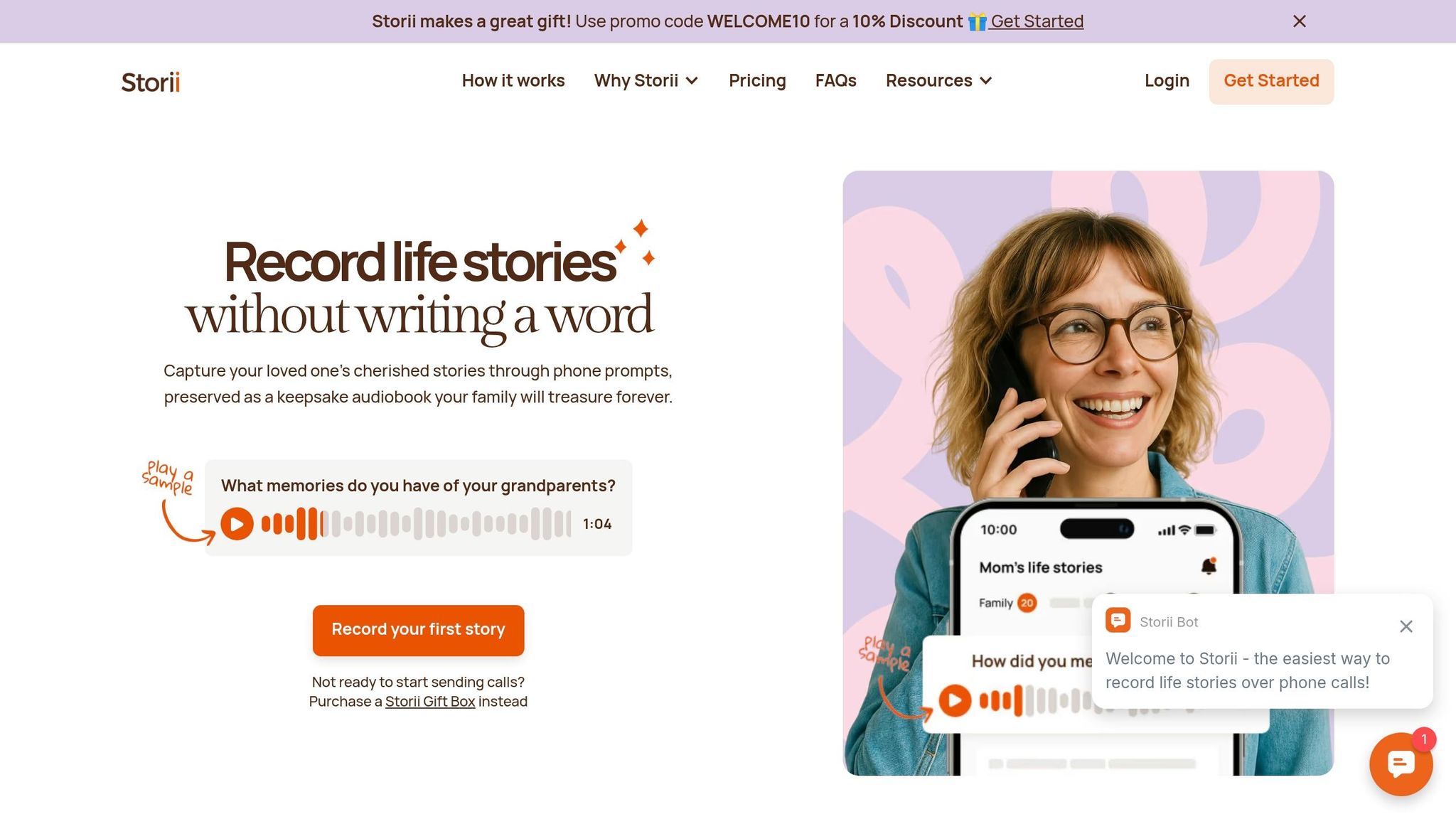
For a more streamlined approach, platforms like Storii can simplify the process of recording and preserving family stories.

Storii is particularly helpful for older family members who may not be comfortable with modern technology. The platform connects directly to a landline or mobile phone, making it accessible without the need for smartphones or internet access. It schedules up to three automated calls per week, during which storytellers can share their memories in response to prompts.

The platform offers a library of over 1,000 life story questions to inspire recollections, or you can create custom prompts tailored to your family’s history. You might also consider using specific interview questions for grandparents to spark deeper conversations. Each call is automatically transcribed and added to a digital archive. Families can download these stories as high-quality audiobooks or transcribed eBook PDFs, offering multiple ways to preserve and experience these memories.

"The chance to hear his stories, recorded in his own voice, will be treasured by generations in our family. It's so simple and so easy, yet so powerful." - Tom Vander Well

Family members can access these recordings via the Storii Family App. The app allows users to view answered questions, listen to recorded stories, and securely share them through email, SMS, or direct links. This systematic approach ensures that these invaluable memories are preserved for years to come.

Creating Long-Term Family Archives

To safeguard your family’s stories, store digital archives in multiple locations - such as cloud storage, external drives, and downloadable files - to minimize the risk of data loss.

After each storytelling session, take time to document recurring themes and vivid imagery from the discussions. These reflections provide additional context and help future generations connect the dots between different narratives. Label each recording with the date, participants’ names, and the memory prompts used to make future searches easier.

Consider creating both digital and physical versions of your family archive. Digital files allow for easy sharing and access, while printed photo books or bound transcripts serve as tangible keepsakes that don’t rely on technology. Save recordings as both audiobooks and PDFs to give your descendants options for how they want to experience these cherished stories.

Conclusion

Intergenerational story circles provide families with a meaningful way to connect, share, and grow together. By creating a space for storytelling, these gatherings turn everyday chats into opportunities to share wisdom, preserve traditions, and nurture understanding across generations.

Storytelling does more than capture the past - it helps shape the future. As Susan V. Bosak, Author and Educator, puts it:

The gift of hope, of dreams. That's the very best legacy we can all leave.

By holding regular storytelling sessions, families can create a lasting archive - whether through audio, video, or written records - that serves as both a historical treasure and a guide for the future. This practice reinforces the value of listening and sharing personal truths.

Starting your own story circle doesn’t have to be complicated. Pick a regular time that works for everyone, and create an atmosphere where all voices are valued equally. Simple rituals, like lighting a candle or sharing a family heirloom, can mark the start of each session. Encourage participation across all ages, emphasizing that every story, no matter how small, is worth sharing.

To preserve these moments, consider using tools like Storii, which can record, transcribe, and store your family’s stories. These practices ensure your family’s legacy is not only remembered but celebrated.

FAQs

How long should a story circle session last?

A story circle session usually runs for 60 to 90 minutes. Each person in the group should plan to share their story within 10 to 12 minutes, though this can vary based on the number of participants and the session's goals. Adjust the timing as necessary to make sure everyone gets a turn to share.

What if someone gets emotional during a story circle?

If someone gets emotional during an intergenerational story circle, it's important to respond with care and empathy. Emotions often highlight how deeply meaningful these shared memories are. Be supportive - pause the session if necessary - and reassure them that their feelings are completely valid.

Fostering a safe and respectful space is key to helping everyone feel at ease. Facilitators can keep tissues on hand, remind participants that they’re free to pass or step away if they need a moment, and gently steer the conversation back when the time feels right.

How do we record stories without making it feel awkward?

To make story-sharing flow naturally in intergenerational story circles, it’s important to create a welcoming atmosphere. Choose familiar spots like libraries or community centers where everyone feels at ease. Instead of formal storytelling, center the conversations around shared themes and personal experiences. This approach keeps things relatable and engaging. Encouraging active listening, empathy, and respect for different perspectives helps participants feel valued and safe, breaking down barriers and building authentic connections.

Related Blog Posts

关注我们