
.png)
Quando alguém é convidado a registrar a história de sua vida, muitas vezes resume eventos em vez de compartilhar memórias detalhadas. Os prompts resolvem isso ao guiar os contadores de histórias a focar em momentos específicos, pessoas ou emoções. Essa abordagem leva a narrativas mais ricas e envolventes que vão além de resumos superficiais.
Principais Conclusões:
- Os prompts criam foco: Eles ajudam a desbloquear memórias específicas em vez de visões gerais ensaiadas.
- Melhor narrativa: Perguntas sobre detalhes sensoriais (o que você viu, ouviu, sentiu) dão vida às histórias.
- Tópicos mais amplos: Os prompts incentivam o compartilhamento de aspectos negligenciados, como rotinas diárias ou experiências iniciais.
- Conforto emocional: Um ponto de partida claro torna menos intimidante se abrir.
- Qualidade aprimorada: As histórias fluem naturalmente e parecem mais pessoais.
Plataformas como Storii usam perguntas para ajudar as pessoas a registrar histórias de vida significativas, uma pergunta focada de cada vez.
1. Gravação de Histórias de Vida com Perguntas
Quando alguém se senta com uma pergunta específica para registrar sua história de vida, isso direciona seu foco para um momento, um indivíduo, ou uma emoção. Essa mudança de uma visão geral ampla para um único ponto focal dá vida às memórias de uma forma que parece mais vívida e pessoal. Isso permite uma narrativa rica em detalhes e profundidade.
Profundidade Narrativa
As perguntas atuam como gatilhos de memória, afastando os narradores de resumos ensaiados e os levando ao reino da verdadeira recordação. Perguntas que aprofundam detalhes sensoriais - como o que alguém viu, ouviu ou cheirou - desbloqueiam camadas mais profundas da memória. Essa abordagem leva a uma narrativa mais vibrante, em vez de um resumo rápido e superficial. Quando as perguntas incluem "por que" ou "como", elas incentivam os narradores a refletir sobre suas motivações ou o impacto mais amplo de suas experiências. Isso transforma uma linha do tempo simples em uma narrativa mais significativa e introspectiva.
Variedade de Tópicos de Vida
Sem perguntas, a maioria das pessoas tende a se ater a marcos familiares. As perguntas, no entanto, introduzem variedade, incentivando os narradores a explorar aspectos negligenciados de suas vidas. Estes podem incluir memórias de infância, detalhes sobre o bairro onde cresceram, ou os relacionamentos menores que deixaram uma impressão duradoura. Ao se afastar da tendência de focar em grandes eventos - um fenômeno que os pesquisadores chamam de fixação narrativa - as perguntas garantem que as experiências iniciais e formativas não sejam ofuscadas por memórias mais recentes.
A biblioteca da Storii, com mais de 1.000 perguntas para histórias de vida, foi concebida com isso em mente. Ela guia sistematicamente os narradores por diversas fases e temas, garantindo que nenhum detalhe importante seja deixado de fora. Essa estrutura temática ajuda a tecer a textura autêntica da história de vida de uma pessoa.
Segurança Emocional
As perguntas também criam um espaço emocional seguro. Em vez de serem sobrecarregados pelo pedido amplo de "conte-me sobre sua vida", os narradores recebem um ponto de partida claro e gerenciável. Essa estrutura facilita a abertura, pois o escopo contido parece menos intimidante. Tópicos sensíveis tornam-se mais acessíveis quando abordados gradualmente através de uma sequência cuidadosa de perguntas, em vez de serem tratados de uma só vez.
Qualidade da Gravação
Do ponto de vista prático, as gravações guiadas por perguntas tendem a ser mais polidas e completas. Os narradores gastam menos tempo procurando as palavras certas e mais tempo compartilhando suas memórias. O resultado? Áudio que flui naturalmente, permanece focado e captura o tipo de detalhes específicos e sinceros que tornam uma história de vida digna de ser revisitada.
sbb-itb-ce27d7a
2. Gravação de História de Vida Não Guiada
Gravações não guiadas frequentemente perdem a riqueza e as complexidades dos momentos da vida. Sem perguntas para fazer a idosos sobre histórias de vida, essas gravações tendem a soar como resumos ensaiados - estruturados, mas sem profundidade. Essa ausência de direção afeta todas as camadas da narrativa.
Profundidade da História
Quando os narradores não recebem perguntas, suas histórias geralmente se tornam linhas do tempo condensadas, desprovidas de textura sensorial e emocional.
"Peça a alguém para 'contar sua história' e geralmente receberá um resumo. Um parágrafo que cobre os principais eventos em linhas gerais, comprimindo décadas em generalidades." - Equipe Editorial LifeEcho
A memória prospera com gatilhos. Sem uma pergunta para despertar recordações específicas, as pessoas frequentemente recorrem a uma versão polida e superficial dos eventos. Essa abordagem não só limita a profundidade das memórias individuais, mas também restringe a variedade de experiências compartilhadas.
Abrangência de Tópicos de Vida
A falta de perguntas também restringe o escopo das histórias contadas. As pessoas tendem a se ater a anedotas familiares - aquelas que já compartilharam em reuniões de família ou durante entrevistas. Como resultado, capítulos inteiros de suas vidas permanecem intocados. Detalhes como o cheiro de um lugar favorito da infância ou a sensação de uma amizade há muito perdida raramente vêm à tona sem um empurrão na direção certa.
Segurança Emocional
Diante de um microfone aberto e sem orientação, muitos narradores sentem-se pressionados a fazer com que suas vidas pareçam "interessantes". Isso frequentemente leva a uma apresentação que se assemelha mais a uma entrevista formal do que a uma conversa honesta e sincera. Sem estrutura, é mais difícil para os contadores de histórias se abrirem emocionalmente ou compartilharem seu verdadeiro eu.
"Fale-me sobre a sua vida" é tecnicamente um convite. Na prática, é uma barreira." - Equipe Editorial LifeEcho
Qualidade da Gravação
Gravações sem foco tendem a soar desconexas e excessivamente formais. Essa falta de coesão torna o áudio menos envolvente e não consegue capturar a verdadeira essência da história de vida de alguém. Sem uma direção clara, as gravações perdem a capacidade de ressoar e preservar memórias significativas.
Prós e Contras
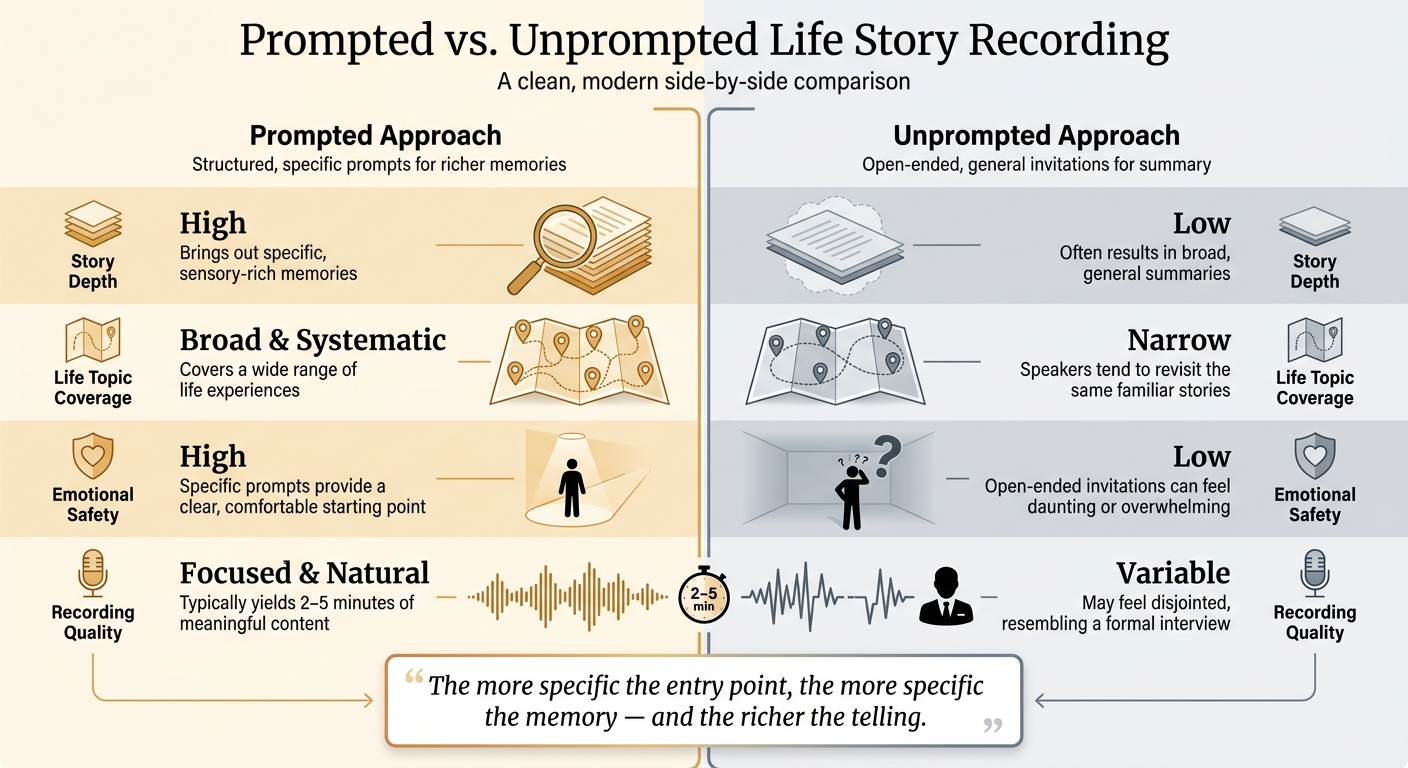
Gravação de Histórias de Vida Guiadas vs. Não Guiadas: Principais Diferenças
A tabela abaixo destaca as principais diferenças entre duas abordagens de narração de histórias, resumindo seus respectivos pontos fortes e fracos.
Usar prompts permite uma narrativa mais profunda e garante conforto emocional, mas exige paciência. Construir uma narrativa completa leva tempo, pois cada sessão se concentra em criar gravações de histórias de vida baseadas em eventos que capturam pequenas e específicas partes da vida de uma pessoa. Este método garante que o narrador não se sinta sobrecarregado, ao mesmo tempo que captura memórias ricas e detalhadas.
Por outro lado, a abordagem sem prompts pode documentar rapidamente marcos importantes, mas muitas vezes perde os detalhes que tornam uma história pessoal e viva.
"Quanto mais específico o ponto de entrada, mais específica a memória, e quanto mais específica a memória, mais rica a narrativa." - Equipe Editorial LifeEcho
Plataformas como Storii adotam essa filosofia, oferecendo mais de 1.000 prompts de histórias de vida entregues por meio de chamadas telefônicas automatizadas. Cada sessão começa com uma pergunta projetada para extrair lembranças vívidas e detalhadas que realmente trazem as histórias de vida à tona.
Conclusão
Nossa análise destaca uma distinção fundamental: enquanto gravações sem prompts fornecem um resumo conciso, sessões com prompts dão vida às histórias com detalhes vívidos. A forma como as perguntas são formuladas importa tanto quanto as próprias perguntas. Gravações sem prompts frequentemente resultam em uma visão geral ampla – estruturada, mas sem profundidade. Em contraste, sessões com prompts exploram memórias emocionalmente ricas e detalhadas, criando narrativas que parecem vivas.
"A diferença entre essas duas respostas – o resumo e a história – é quase inteiramente produzida pela qualidade e especificidade do prompt." - Equipe Editorial LifeEcho
O que torna a narrativa com prompts tão bem-sucedida não é a complexidade; é a precisão. Uma pergunta cuidadosamente elaborada atua como uma âncora para as memórias, incentivando detalhes sensoriais e anedotas pessoais. Essa abordagem direcionada transforma lembranças vagas em histórias significativas e ricas em detalhes. Com o tempo, sessões curtas e focadas criam um panorama mais completo de uma vida do que qualquer conversa aberta poderia. Pesquisas mostram que uma sessão de 20 minutos com prompts bem estruturada geralmente resulta em 3 a 5 minutos de conteúdo rico e de alto valor. Esses esforços consistentes não apenas preservam detalhes intrincados, mas também garantem que as histórias sejam transmitidas de uma forma que ressoe.
Para quem deseja preservar uma legado para as futuras gerações, a narração de histórias orientada por prompts é o caminho a seguir. Storii torna este processo fácil e acessível com mais de 1.000 prompts cuidadosamente elaborados, entregues através de chamadas telefónicas automatizadas - sem necessidade de internet ou smartphone. As histórias são transcritas e podem ser partilhadas com a família ou descarregadas como audiolivros ou memórias em PDF, a partir de apenas $9.99/mês.
As melhores histórias não são ensaiadas - são aquelas que surgem da pergunta certa no momento exato.
Perguntas Frequentes
O que torna um prompt "bom" para gravar histórias de vida?
Um bom prompt funciona melhor quando é específico, explora os sentidos e convida a memórias detalhadas. Ao focar-se num tópico específico - como uma pessoa, um lugar ou um detalhe sensorial vívido - ajuda os narradores a recordar momentos com clareza e emoção.
Eis o que torna um prompt eficaz:
- Especificidade: Foca-se num único tema ou evento, evitando tópicos amplos ou vagos.
- Detalhes sensoriais: Incentiva o uso de memórias físicas, como cheiros, sons ou texturas, para dar vida às histórias.
- Fraseado aberto: Os prompts devem convidar à narração de histórias, em vez de respostas simples de sim ou não.
- Abordagem de baixa pressão: Comece com perguntas leves e fáceis e avance naturalmente para tópicos mais profundos à medida que o conforto aumenta.
Ao combinar esses elementos, os prompts podem despertar histórias significativas e envolventes.
Como posso usar prompts sem que a história pareça roteirizada?
Ao incentivar alguém a compartilhar sua história, é importante evitar que pareça ensaiada ou forçada. Uma ótima maneira de fazer isso é usando prompts específicos e sensoriais que se concentrem em um único tópico. Por exemplo, você pode perguntar, “Qual era o cheiro da cozinha da sua infância?” Esse tipo de pergunta convida a imagens vívidas e reflexão pessoal.
Comece com um tom calmo e descontraído e use uma linguagem neutra. Permita que a pessoa explore suas memórias no seu próprio ritmo. Continue com perguntas abertas como, “Como você se sentiu naquele momento?” para guiá-los suavemente mais fundo na história.
Comece com tópicos leves e não intimidadores para ajudá-los a se sentir à vontade. À medida que a conversa avança, você pode fazer a transição para assuntos mais significativos. Sempre os tranquilize de que não há problema em pular qualquer coisa que considerem muito pessoal para compartilhar. Isso cria um ambiente seguro e respeitoso para a narrativa.
Com que frequência devo gravar para construir uma história de vida completa ao longo do tempo?
Construir uma história de vida é mais fácil quando feito por meio de gravações consistentes e regulares, em vez de sessões ocasionais e longas. Sessões mais curtas e recorrentes – como configurar chamadas automáticas duas ou três vezes por semana – tornam mais simples manter o processo. Mesmo gravar apenas uma vez por mês durante um ano pode criar um arquivo significativo. Ao longo de vários anos, esse hábito pode se transformar em uma reflexão detalhada e multifacetada da vida de uma pessoa.
Posts de Blog Relacionados
{"@context":"https://schema.org","@type":"FAQPage","mainEntity":[{"@type":"Question","name":"O que torna um prompt “bom” para o registro de histórias de vida?","acceptedAnswer":{"@type":"Answer","text":"<p>Um bom prompt funciona melhor quando é <strong>específico</strong>, explora os sentidos e convida a memórias detalhadas. Ao focar num tópico particular – como uma pessoa, um lugar ou um detalhe sensorial vívido – ajuda os contadores de histórias a recordar momentos com clareza e emoção.</p> <p>Aqui está o que torna um prompt eficaz:</p> <ul> <li><strong>Especificidade</strong>: Foca num único tema ou evento, evitando tópicos amplos ou vagos.</li> <li><strong>Detalhes sensoriais</strong>: Incentiva o uso de memórias físicas, como cheiros, sons ou texturas, para dar vida às histórias.</li> <li><strong>Frases abertas</strong>: Os prompts devem convidar à narração de histórias, em vez de respostas simples de sim ou não.</li> <li><strong>Abordagem de baixa pressão</strong>: Comece com perguntas leves e fáceis e avance naturalmente para um território mais profundo à medida que o conforto aumenta.</li> </ul> <p>Ao combinar estes elementos, os prompts podem despertar histórias significativas e envolventes.</p>"}},{"@type":"Question","name":"Como posso usar prompts sem que a história pareça roteirizada?","acceptedAnswer":{"@type":"Answer","text":"<p>Ao incentivar alguém a partilhar a sua história, é importante evitar que pareça ensaiada ou forçada. Uma ótima maneira de fazer isso é usando prompts específicos e sensoriais que se concentram num único tópico. Por exemplo, pode perguntar: <em>“Qual era o cheiro da sua cozinha de infância?”</em> Este tipo de pergunta convida a imagens vívidas e reflexão pessoal.</p> <p>Comece com um tom calmo e descontraído e use uma linguagem neutra. Permita que a pessoa explore as suas memórias ao seu próprio ritmo. Continue com perguntas abertas como: <em>“Como se sentiu naquele momento?”</em> para guiá-la suavemente para mais fundo na história.</p> <p>Comece com tópicos leves e não intimidadores para ajudá-los a sentir-se confortáveis. À medida que a conversa avança, pode fazer a transição para assuntos mais significativos. Sempre os tranquilize de que não há problema em ignorar qualquer coisa que considerem demasiado pessoal para partilhar. Isso cria um ambiente seguro e respeitoso para a narração de histórias.</p>"}},{"@type":"Question","name":"Com que frequência devo gravar para construir uma história de vida completa ao longo do tempo?","acceptedAnswer":{"@type":"Answer","text":"<p>Construir uma história de vida é mais fácil quando feito através de gravações consistentes e regulares, em vez de sessões ocasionais e longas. Sessões mais curtas e recorrentes – como configurar chamadas automáticas duas ou três vezes por semana – tornam mais simples manter o processo. Mesmo gravar apenas uma vez por mês durante um ano pode criar um arquivo significativo. Ao longo de vários anos, este hábito pode transformar-se numa reflexão detalhada e multifacetada da vida de uma pessoa.</p>"}}]}
Caixa de presente Storii
Ideal para ocasiões especiais, como Dia das Mães, Dia dos Pais, aniversários e feriados.

