
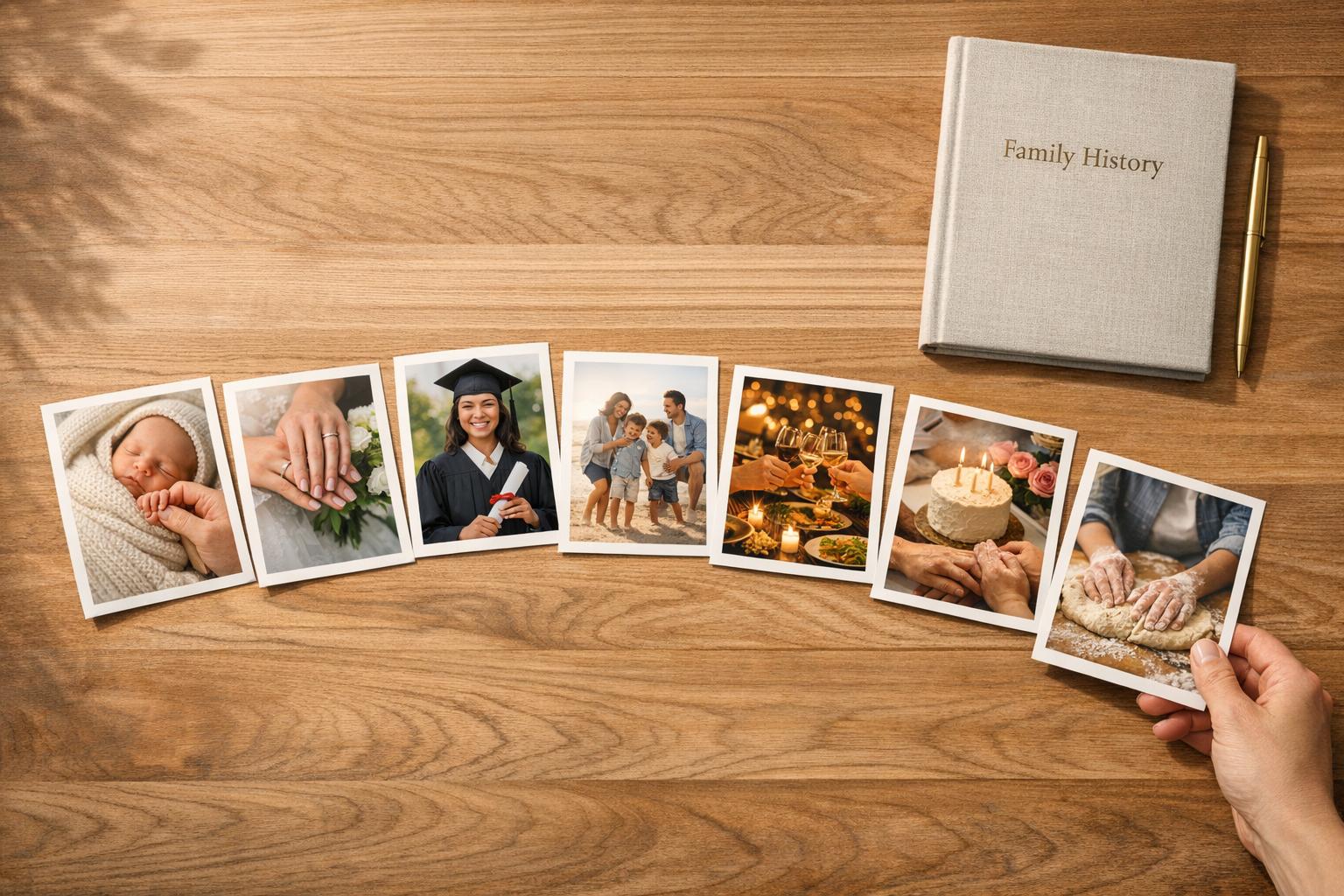
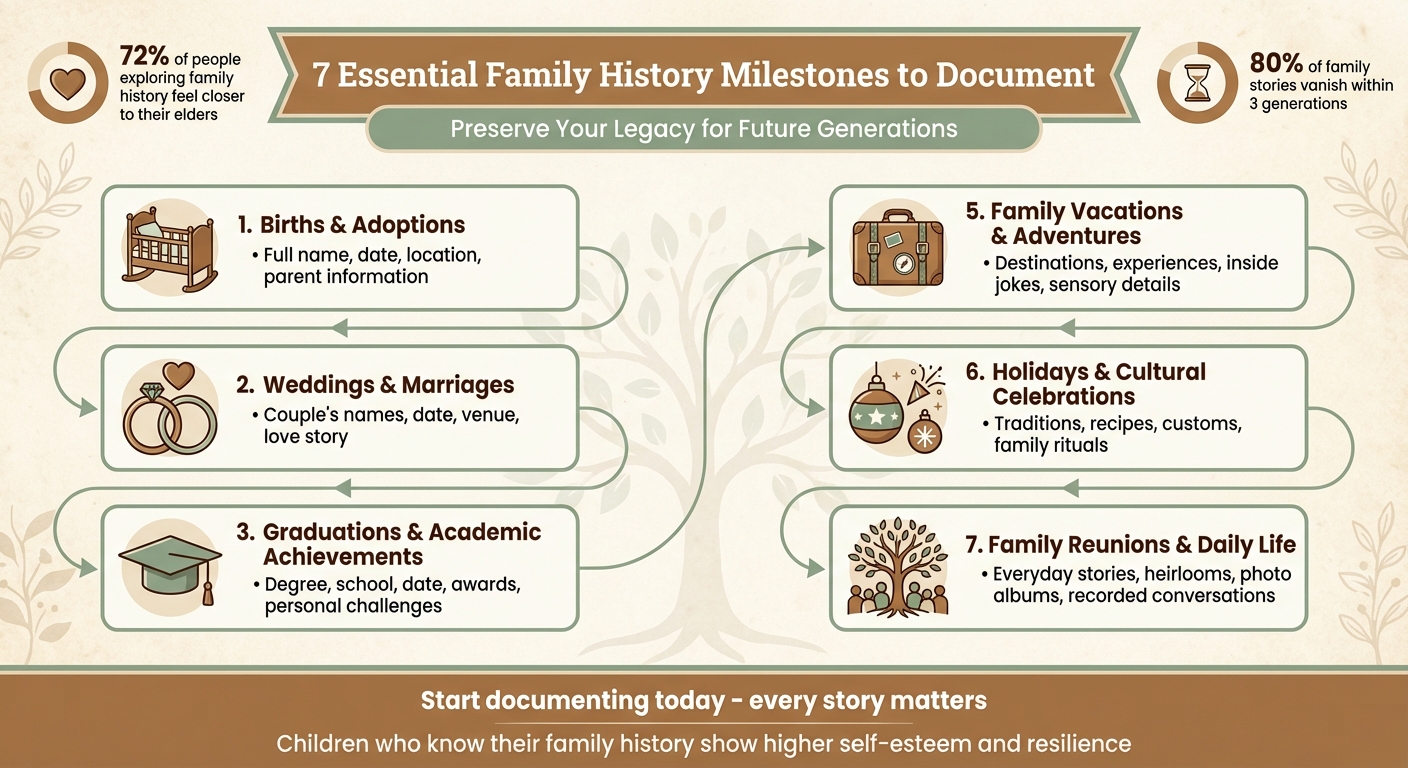
Family history is more than dates and names - it's about preserving the stories, emotions, and connections that define who we are. From births to family reunions, these moments shape our legacy and strengthen bonds across generations. Research shows that 72% of people exploring their family history feel closer to their elders, while children who know their family's past often develop higher self-esteem and resilience. Below are seven key milestones worth documenting to ensure these memories endure:
- Births and Adoptions: Record names, dates, locations, and personal stories tied to these life-changing moments.
- Weddings and Marriages: Capture not just the official details but also the love stories and traditions behind them.
- Graduations and Academic Achievements: Highlight degrees, awards, and the challenges overcome during these milestones.
- Birthdays and Anniversaries: Celebrate personal growth and enduring relationships with meaningful stories and traditions.
- Family Vacations and Adventures: Preserve the laughter, inside jokes, and unique experiences from shared journeys.
- Holidays and Celebrations: Document the smells, sounds, and rituals that connect generations through shared traditions.
- Family Reunions and Daily Life: Dive into everyday memories, from old photo albums to cherished heirlooms, for a richer family narrative.
Every story you document today becomes a gift for future generations. Start with one conversation or memory and let it grow into a legacy that lasts forever.
7 Essential Family History Milestones to Document and Preserve
Write It Down: Tips for Recording Family History | Ancestry
1. Births and Adoptions
Welcoming a new family member is a milestone worth documenting. Birth and adoption records are the foundation of your family tree, linking one generation to the next. These records do more than mark a date - they tell the story of a new life and the continuation of your family's journey.
When documenting a birth, include the full name, birth date, and birthplace (such as the hospital, city, county, and state). Don’t forget to capture details about the parents, like their full names, ages, birthplaces, occupations, and even the order of siblings. These pieces of information can reveal deeper family connections and provide a fuller picture of your family history.
Adoption records require equal care. Beyond legal documentation, include the personal aspects of the adoption story. Record the adoption date, details from legal documents, and the names of everyone involved. If possible, preserve personal narratives by interviewing adoptive parents, birth parents (when appropriate), and even the adoptee later in life. Keep amended birth certificates and any other relevant paperwork to ensure the story is complete.
Adding personal touches, like mementos or secondary sources, can bring these records to life. If official records are missing, consider searching for delayed birth certificates. Many of these were filed after 1937 when people needed documentation for Social Security cards.
The best time to collect these details is now, while memories are still fresh and accessible.
2. Weddings and Marriages
Marriage records do more than just list a date - they weave together two family lines and create the roots for future generations. When documenting a wedding, start with the essentials: the full names of both the bride and groom, including the bride's maiden name. Be sure to note the exact date and specific location of the ceremony, including the city, county, state, and venue. These key details are the foundation of any family tree.
But don’t stop there. Add depth by including the ages of the couple at the time of marriage, their residences, occupations, and birthplaces. Record the names and birthplaces of both sets of parents, as these details help connect generations. Don’t overlook the officiant - whether a minister, priest, rabbi, or justice of the peace - and the witnesses, who are often siblings or close relatives. These names can provide valuable clues to other branches of your family tree. These official facts are essential, but they’re only part of the story.
"Marriage records join two families together, often providing crucial details and verifying family connections." - Leslie Albrecht Huber, Author
Bring the story to life by capturing the personal moments. How did the couple meet? When did they fall in love? What were the details of the proposal? Adding these narratives turns a simple record into a vivid portrait of two lives coming together. Talk to living relatives while their memories are still fresh - future generations will cherish these firsthand accounts.
For even more details, explore less obvious sources like marriage bonds or newspaper announcements. Newspaper wedding announcements from the 20th century often include rich descriptions, such as the names of bridesmaids and details of the ceremony. If official records are missing, don’t hesitate to check neighboring counties for clues. These pieces can help complete the picture of a family’s history.
3. Graduations and Academic Achievements
Academic milestones, much like other family achievements, add layers of perseverance and growth to your family story. When documenting a graduation, start with the essentials: the degree or diploma earned, the school or university name, the field of study, and the graduation date. These details provide a solid foundation, but there's so much more to uncover.
To add richness, include academic accolades such as GPA, class rank (e.g., top 10%), or Honor Roll recognition. Highlight awards and scholarships, and for those that might not be widely recognized, explain their significance - like "Most Confident Speaker in Chinese Class." These details ensure future generations fully grasp their importance. Research shows that children who understand their family history, including both successes and struggles, often exhibit higher self-esteem and resilience. These records transform a simple timeline into a celebration of personal victories.
"Genealogy records are essential for keeping track of lineage, but only stories reveal the full richness of a person's life." - StoriedLife
To truly capture the moment, go beyond the facts. Ask graduates about their proudest accomplishments, the obstacles they faced, and the advice that resonated most during their journey. These reflections turn a diploma into a story of growth and determination. Record these memories now - before they fade - since over 90% of family stories are often lost within three generations.
4. Birthdays and Anniversaries
Birthdays and anniversaries are more than just dates on a calendar - they’re milestones that tell the story of your family’s journey. While birth and marriage dates are essential for identifying individuals in a family tree, the true value lies in the stories and traditions that make these events meaningful.
Celebrating milestone birthdays - like a child’s first, a parent’s 50th, or a grandparent’s 90th - not only marks the passage of time but also highlights personal growth and change. Similarly, wedding anniversaries honor the enduring bonds of love and partnership, offering a chance to reflect on shared experiences. Capturing details like who attended, the weather, or how the event was celebrated adds richness to these memories.
"Family traditions can live on, such as traditional celebrations, holidays, and anniversaries, and unique events like camping, vacations, or celebrations of a family historical event."
- FamilySearch Wiki
One idea to make birthdays even more special is conducting annual interviews. Simple, consistent questions like “What makes you happy?” can reveal how personalities evolve over time. These small, thoughtful rituals help weave these celebrations into the fabric of your family’s history.
Don’t forget to preserve physical keepsakes - wedding announcements, birthday cards, or even newspaper clippings. When speaking with older relatives, ask about their childhood birthdays or how they got engaged. These personal stories go beyond what official records can provide, adding color and depth to your family’s legacy. Annual celebrations, just like other milestones, are a powerful way to keep your family’s history alive.
sbb-itb-ce27d7a
5. Family Vacations and Adventures
Family trips are more than just a getaway - they’re the foundation for stories and memories that last a lifetime. Whether it’s a cross-country road trip, a weekend camping under the stars, or an unplanned detour that becomes the highlight of the trip, these moments deserve more than a few forgotten photos on your phone. The secret to preserving them? Capture the details while they’re fresh, before time erases the little things that make them special.
Capture the moments as they happen. Taking notes on the go helps ensure those fleeting details aren’t lost. Use your smartphone to jot down quick notes, record ambient sounds like laughter or street musicians, or even snap photos with captions that tell the story behind the image. A simple voice memo describing the day’s events can bring back emotions in ways a photo alone might not.
Go beyond surface-level memories by including precise details that future generations can connect with.
"Tracking these events and leaving them behind for future generations to recreate enables you to create a stronger bond than would come from someone simply reading your words." - Matt Misbach, RootsTech Speaker
For outdoor adventures like hikes or bike rides, consider geo-journaling to save exact routes. Pair these digital keepsakes with physical mementos - ticket stubs, transportation passes, or even a pressed flower from the trail - to make the memories more tangible.
What truly stands out is documenting how the journey unfolded and, most importantly, how it impacted your family. What made the experience unforgettable? Studies show that younger generations place a high value on shared experiences. Including sensory details - like the scent of a local dish, the feel of the weather, or inside jokes shared along the way - can give future family members a vivid, almost tangible connection to your adventures.
6. Holidays and Cultural Celebrations
Holiday gatherings are more than just festive meals - they're a bridge between generations, filled with shared memories and traditions. These occasions offer a unique opportunity to delve into the customs that shape your family's identity. Ever wonder why your family serves a particular dish every Thanksgiving or how that quirky Christmas morning ritual began? These stories carry the essence of your heritage, offering insights that photos alone can't capture.
To uncover these stories, try asking open-ended questions like, "What did the house smell like on Christmas morning?" or "How did our favorite family traditions begin?" Baylor University's Institute for Oral History illustrates this beautifully with "Nana's banana pudding", where even the omission of an ingredient tells its own tale. By exploring such details, you can add depth and meaning to your holiday memories.
"The holiday season brings about the opportunity to spend time with family members... This presents the perfect opportunity to conduct oral histories to capture the stories and experiences of your family and loved ones, to learn more about them, the history of your family, traditions that have been passed down from generation to generation and more." - Adrienne Cain Darough, Assistant Director and Senior Lecturer, Baylor University Institute for Oral History
Beyond conversations, consider capturing the atmosphere of your celebrations. Use your smartphone to record the sounds of the holiday - your uncle's unmistakable laugh, the chatter of children playing, or the hum of voices around the dinner table. Even old photo albums or cherished decorations can spark memories, helping older relatives recall details they might not have thought about in years.
Interestingly, family members often remember the same event in different ways. Comparing these varied accounts can add layers to your family's history. As Anne Toohey, Reference Librarian at the Library of Congress, explains:
"Sometimes different branches of the family know different versions of the same story, and comparison adds details and veracity to the story itself".
These differing perspectives don't dilute your family history - they make it richer. By preserving these diverse recollections, you're ensuring that your family's celebrations and traditions remain a cherished part of its legacy for generations to come.
7. Family Reunions and Daily Life
Family reunions are more than just big events - they’re opportunities to dive into the everyday stories that define your family’s history. While these gatherings often highlight major milestones, they also offer a chance to uncover the small, intimate details that truly bring your relatives to life. Take time to explore old photo albums together, identifying the people, places, and events captured in those images. These shared moments of discovery can deepen your connection to your family’s past.
Sometimes, the most vivid memories come from the sounds and gestures of daily life. Record a loved one’s unique laugh or the lively conversations around the dinner table. These audio snapshots preserve the essence of your family in ways that photos cannot.
Ask about cherished belongings - like a first car, a favorite childhood toy, or a family heirloom - and document the stories behind them. These personal anecdotes paint a more complete picture of your relatives, revealing their personalities in ways that formal events often miss. Megan Harris, a Research Specialist at the Library of Congress, captures this sentiment perfectly:
"People have entire worlds contained within their lives. Listening, engaging, and really trying to understand someone's perspective and what they've been through is an experience like no other".
When conducting interviews, embrace moments of silence. These pauses can be powerful, as Yowei Shaw, Host and Producer of NPR's Invisibilia, explains:
"Something electric is happening. They are turning something over in their head, having an emotional reaction, or might be trying to access a memory they haven't thought about in decades. Don't step on the silence. That's where magic can happen".
If a relative struggles to recall a memory, old photographs or letters can serve as prompts, helping to unlock stories that might otherwise remain hidden.
For families separated by distance, tools like Storii offer a modern solution. With automated phone calls and over 1,000 life story prompts, it’s easier than ever to capture these everyday moments and preserve them for future generations. These recordings bridge the gap between major milestones and the daily experiences that make up your family’s unique legacy.
Conclusion
Your family's story is more than just a collection of dates and events - it's the heartbeat of your identity. Capturing these seven milestones offers a bridge between generations, allowing your descendants to understand not just what happened, but why it mattered and how their ancestors truly lived. Dina Gachman, an author who knows the pain of missed opportunities, puts it perfectly:
"When somebody's gone, their stories are gone, right? Why did I not ask a million questions when they were here".
The urgency is real. Research shows that nearly 80% of family stories vanish within three generations unless they’re deliberately preserved. Memories fade quickly, and every day that passes is a chance for these connections to slip away. Yet, children who grow up knowing their family history are shown to have higher self-esteem and greater resilience.
Don’t wait for the perfect moment - start now. Whether it’s recording a quick voice memo, sitting down for an interview, or using tools like Storii, which offers a simple way to document memories for $9.99/month or $99.99/year, every effort counts.
Each memory you save today strengthens the foundation for tomorrow. Begin with one of these milestones - a single conversation or a cherished story - and keep your family’s history alive for generations to come.
FAQs
Why is it important to record family milestones for future generations?
Recording family milestones plays an important role in preserving your family's story and creating a legacy for future generations. Moments like weddings, births, and anniversaries reflect your family’s journey, offering future members a way to connect with their roots and gain a deeper understanding of their heritage.
When you document these milestones, you’re creating a record that ensures cherished stories, traditions, and memories are passed down rather than forgotten. These records help build a sense of identity and belonging, while also highlighting the struggles and victories that shaped your family’s path. It’s a heartfelt way to honor your family’s history and keep it alive for generations to come.
What’s the best way to capture family stories during reunions?
Preserving family stories can be one of the most meaningful ways to connect with loved ones during reunions. To start, create a relaxed and welcoming environment where storytelling feels natural. Choose a quiet spot for one-on-one chats, and have tools like a smartphone or audio recorder handy to document these precious moments. Don’t forget to back up your recordings to ensure they’re safe for the long term.
It’s helpful to prepare a few open-ended questions ahead of time to spark meaningful conversations. Ask about family traditions, unforgettable events, or treasured keepsakes - these topics often lead to heartfelt and engaging stories. You can also use platforms like Storii to record and preserve these memories, making it easy to share them with family members and create digital keepsakes that can be cherished for generations.
Most importantly, focus on active listening and showing genuine curiosity. This encourages relatives to open up and share their most valued memories and experiences, creating a deeper connection for everyone involved.
What are some fun and meaningful ways to preserve memories from family vacations?
Saving memories from family vacations can be both fun and meaningful. One great option is creating a photo book filled with highlights from the trip. Include key moments, candid shots, and even some funny or unexpected photos - it’s a fantastic way to relive the adventure.
Another idea? Record audio or video interviews with family members. Ask them about their favorite stories, funny moments, or even what surprised them most during the trip. These recordings add a personal touch and become treasures for future generations.
You can also start a travel journal that the whole family contributes to. Each person can write about their favorite activities, meals, or unexpected surprises. Add photos, quotes, and small mementos like tickets or postcards to make it even more special. These keepsakes turn a vacation into a lasting family legacy.
Related Blog Posts

Storii Gift Box
Best for special occasions such as Mothers Day, Fathers Day, Birthdays and the Holidays.

