
.png)
Family recipes are more than just food - they’re stories, memories, and connections to past generations. Asking the right questions can help you preserve these recipes along with the emotions and traditions tied to them. Here’s a quick guide to uncovering the history, meaning, and unique details behind your family’s favorite dishes:
- What’s your favorite family recipe and why? Learn the emotional significance behind cherished dishes.
- Where did the recipe come from? Discover its historical and geographical roots.
- Who taught you to make it? Understand the personal connections and learning experiences tied to the recipe.
- Is it tied to a holiday or special occasion? Highlight its role in family celebrations.
- Are there any unique techniques or hidden ingredients? Capture the nuances that make the recipe special.
- What did it taste or smell like? Record sensory details that bring the recipe to life.
- How long has it been in the family? Trace its timeline through generations.
- What’s the best part - making it, eating it, or both? Understand the joy behind the process or the meal itself.
- When and where did you eat this growing up? Contextualize the recipe with childhood memories.
- How has it been preserved? Note whether it’s written, oral, or adapted over time.

10 Essential Questions to Ask About Family Recipes
10 Questions to Ask About Family Recipes
1. What is your favorite family recipe and why?
Start by asking about their favorite recipe and its emotional significance. This often uncovers stories of comfort, celebration, and connection. Take Dee Kim's example: in 2021, she documented her mother's dumpling (mandu) recipe, which was used to feed 20 to 50 people at a time. For Kim, making these dumplings not only brought comfort during isolation but also connected her to generations of women in her family. Understanding why a recipe holds special meaning opens the door to exploring deeper family traditions.
2. Where did the recipe come from?
Discovering a recipe's origins can reveal a lot about your family's history. For instance, Caroline Shin preserved her grandmother's recipes as a tribute to her resilience after escaping North Korea. These dishes reflect her family's journey and survival. Ask if the recipe comes from a specific village, region, or country. The answer may include migration stories, regional influences, or how the recipe adapted over time due to ingredient availability during challenging periods.
3. Whose recipe is it, and who taught you to make it?
Identifying the origin of a recipe and who passed it down turns it into a cherished family heirloom. Ask about the process of learning it - was it through hands-on teaching or simply by observing? These shared moments of learning often carry as much meaning as the recipe itself. They also highlight the occasions when the recipe was celebrated, adding another layer to its importance.
4. Is it tied to a holiday or special occasion?
Some recipes only make an appearance during specific celebrations. For example, one family connects their charoset recipe to ancestral traditions during special occasions. Ask if the recipe is linked to holidays like Thanksgiving, Christmas, or birthdays. Understanding when it’s prepared helps highlight its role in family traditions, ensuring future generations know its significance.
5. Are there any unique techniques or hidden ingredients?
This question captures the essence of the recipe - the little details that often aren’t written down. For example, one salsa verde recipe became a family treasure because of subtle additions like capers and garlic. Similarly, Lisa Hiton documented her family's brisket recipe in 2019, noting it required "Kitchen Bouquet" as a key ingredient. Ask about specific techniques, like why basil is torn instead of chopped, or if a particular tool is essential to the process.
"The most unique and valuable element in cooking a meal is the technique in which you cook." - Lisa Hiton, Editorial Associate, Write the World
6. What did it taste or smell like when you made or ate it?
Sensory details bring these recipes to life. Encourage them to describe the dish's aroma, texture, and flavors. These vivid details help future generations imagine the experience - whether it’s the sizzle of onions in a pan, the aroma of freshly baked bread, or the crackle of dough being rolled out.
7. How long has the recipe been in your family?
Tracing the recipe’s timeline can uncover its historical significance. Some recipes have been passed through generations, while others are relatively new additions that quickly became beloved traditions. Understanding how the recipe survived migrations, wars, or other challenges reveals the resilience behind your family’s food history.
8. What's the best part about the recipe - making it, eating it, or both?
This question sheds light on what makes the recipe special. Some people find joy in the process of cooking - kneading dough, chopping vegetables, or perfecting a sauce. Others cherish the moment of sharing the meal with loved ones. Knowing what makes the recipe meaningful helps preserve not just the dish but the emotions and rituals tied to it.
9. When and where did you typically eat this growing up?
The setting and context of a meal add richness to its story. Was it a casual dinner around the kitchen table, a formal Sunday lunch, or an outdoor picnic? These memories often include details about childhood, kitchen layouts, and family rituals that might otherwise fade. Understanding these settings reinforces the recipe’s role in your family’s traditions.
10. How has the recipe been preserved, and where is it now?
Ask how the recipe has been kept - whether it’s a handwritten card, a digital file, or an oral tradition. Find out if it’s been updated over time or if the original version still exists. Many recipes evolve as families adapt to new ingredients or circumstances. For example, some changes stem from migration, when access to certain ingredients was lost. These adaptations are part of the recipe’s history and worth documenting.
"Family food history gets easily lost because descendants don't know how that dish fits in their family history. Take time to explain why a certain recipe has been made and enjoyed over the generations." - Gena Philibert-Ortega, Author and Researcher
sbb-itb-ce27d7a
Using Storii to Record Recipe Stories
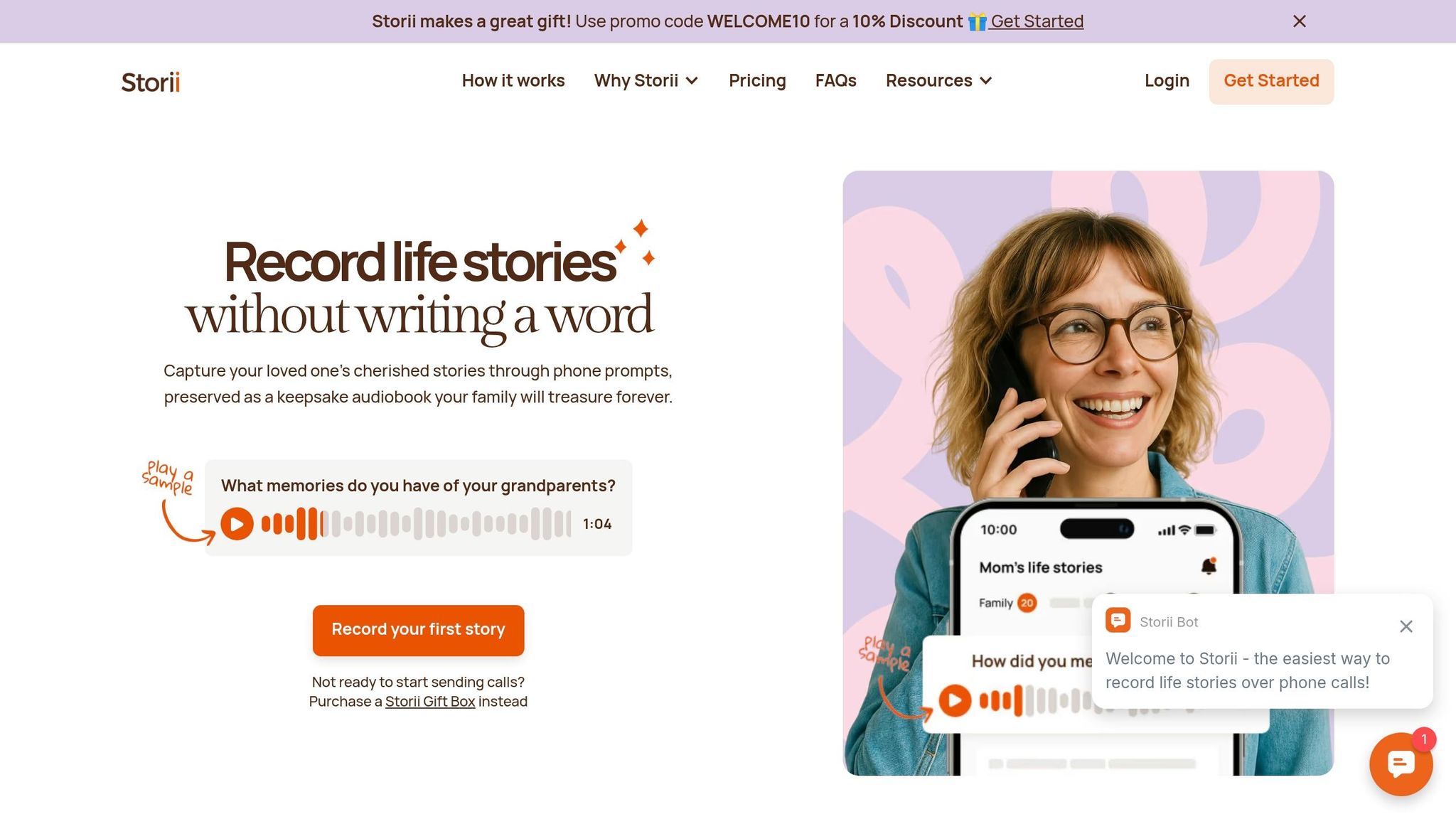
Preserving family culinary traditions goes beyond just jotting down ingredients - it’s about capturing the stories, the voices, and the memories tied to those recipes. Storii makes this process effortless by recording your loved ones’ recipe stories, ensuring that these rich traditions endure for future generations. With just a landline or cell phone, Storii’s automated phone calls help you document these treasures.
How Storii's Automated Phone Calls Work
Storii allows you to schedule up to three automated calls per week at times that work best for your family member. When the call connects, the system asks a question and records their response. The recorded memory is then automatically transcribed and added to their digital profile. Plus, they can call in anytime to share a memory, making it a user-friendly option for seniors who prefer traditional phones.
"The fact that it calls her directly on her home phone made a big difference as she isn't great at using technology." – Helen Teegan
Custom Prompts for Recipe Memories
While automated calls are great for spontaneous recollections, custom prompts allow you to dig deeper into specific culinary traditions. Storii provides over 1,000 curated questions, but you can also create your own prompts tailored to family recipes. For example, you might ask, “What’s the secret to your Sunday roast?” or “Who first taught you how to bake this pie?” These personalized questions help uncover the unique details that make your family’s recipes so special.
Saving Recipes as Audiobooks or PDFs
Once the stories are recorded, they’re transcribed into audiobooks and PDFs. Imagine listening to your grandmother describe her favorite dumpling recipe in her own voice or printing out a beautifully transcribed eBook to add to your family cookbook. These keepsakes can be easily shared with family members via email, SMS, or direct links.
"The chance to hear his stories, recorded in his own voice, will be treasured by generations in our family. It's so simple and so easy, yet so powerful." – Tom Vander Well
Conclusion
Family recipes are so much more than a list of ingredients or steps - they're a reflection of the people who created them, the traditions they upheld, and the resilience that carried them through generations. As Rachael Rifkin beautifully puts it, "Family recipes that have been passed down throughout the generations are about much more than just food - they're about who created the recipes and the culture they can be traced to". Without preserving these recipes, the unique techniques, the reasons behind each detail, and the memories tied to them risk being lost when loved ones are no longer with us.
Every question you ask and every memory you record adds another layer to your family's legacy. A dish without its story is just food, but when paired with its history, it transforms into a cherished piece of your heritage. Imagine hearing your grandmother's voice describing her secret for perfect dumplings or your uncle reminiscing about the scents of his childhood kitchen. These recordings capture emotions and personalities that written words alone can't fully express.
Thankfully, preserving family memories doesn't have to be complicated. Storii offers a simple way to record recipe stories through automated phone calls. These recordings are then transcribed into audiobooks and PDFs, making it easy to share and save for future generations. You can even tailor prompts to your family's unique recipes, ensuring every detail - from special ingredients to the tales behind holiday traditions - is preserved.
This accessible approach makes safeguarding your family's culinary history straightforward. As Pat Cornett aptly says, "Family recipes are important documents in the genealogical sense. They preserve a personal part of our heritage and our pasts". These recordings capture the voices, laughter, and stories that make your family's food traditions truly unforgettable.
Why wait? Start capturing your family's recipe stories today.
FAQs
How do I get relatives to share recipe stories?
To get your relatives to share the stories behind cherished recipes, try asking thoughtful questions about the origins of the dishes or any special preparation techniques they use. When you show real curiosity and create a relaxed atmosphere, it becomes easier for them to open up. Using structured prompts - like the ones in the article "10 Questions to Ask About Family Recipes" - can also help steer the conversation and make collecting these treasured memories both fun and unforgettable.
What if the recipe has no written measurements?
If a recipe doesn't include written measurements, try asking the family member for more details about how they prepare it. They might rely on visual cues - like a particular bowl, cup, or even their hands - to estimate amounts. You can also record their stories or techniques to help you replicate the dish later, even without precise measurements. Documenting these nuances helps keep the recipe's legacy alive for future generations.
How do I record and save these stories with Storii?
With Storii, capturing your stories is as easy as making a phone call. You can select from over 1,000 prompts to help guide your narrative. Once you call the provided number, just follow the prompts and start sharing your memories out loud. Storii takes care of the rest by transcribing your recordings. These can then be downloaded as audiobooks or PDFs, making it simple to securely share them with your family and preserve them for generations to come.
Related Blog Posts

Storii Gift Box
Best for special occasions such as Mothers Day, Fathers Day, Birthdays and the Holidays.

