
.png)
Life stories can transform care plans by focusing on the individual's unique experiences, values, and preferences. They help caregivers understand the person behind the diagnosis, improving emotional well-being and fostering better connections. Here's what you need to know:
Tools like Storii simplify the process by automating story collection and securely storing them for easy access. Start today to ensure these memories guide compassionate care.
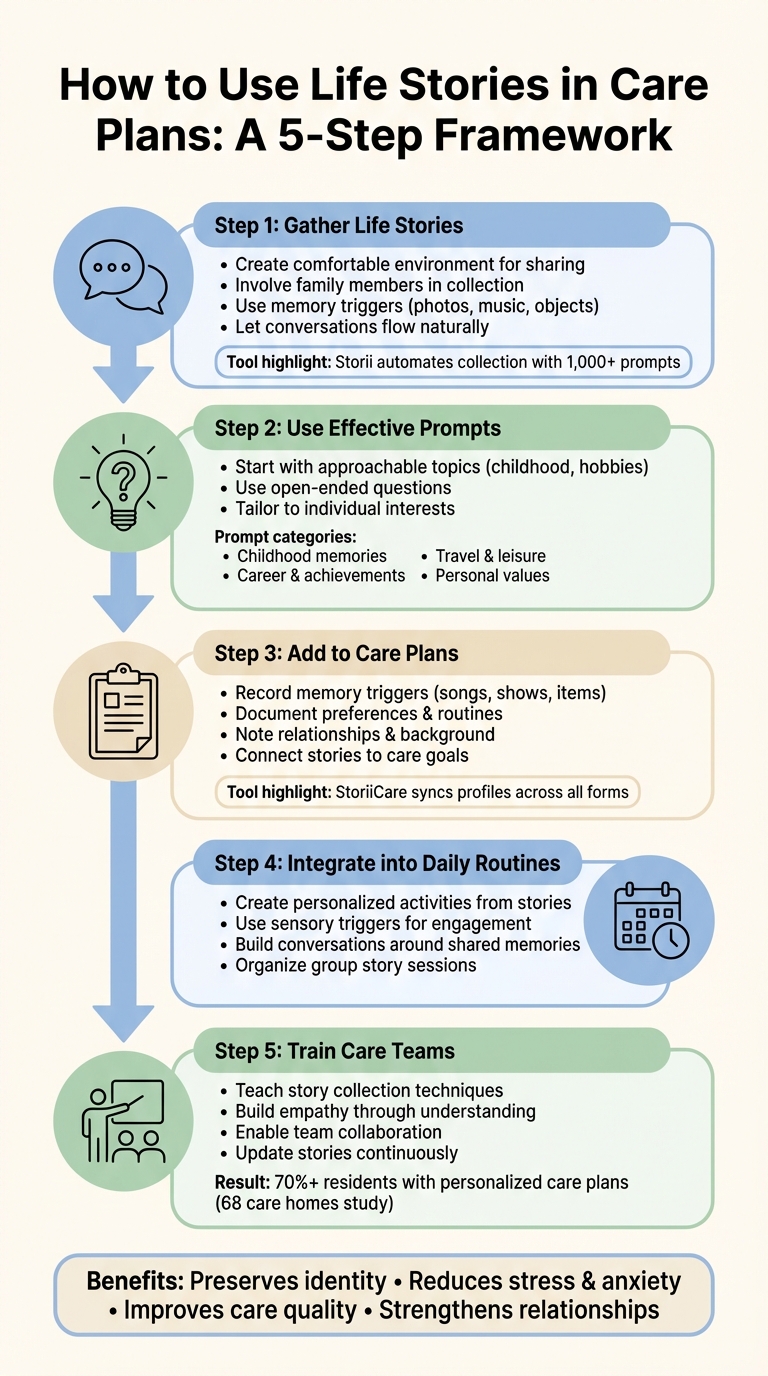
5-Step Process for Integrating Life Stories into Care Plans
Step 1: Gathering Life Stories from Loved Ones
Creating a Comfortable Environment for Sharing
The first step in collecting life stories is building trust. Before diving into deep or personal topics, focus on forming a genuine connection. Start with light, easy-to-recall details like favorite childhood pets, hobbies, or the homes they grew up in - topics that feel safe and familiar to share. Avoid pushing sensitive subjects unless the individual brings them up on their own.
Let conversations flow naturally, taking breaks as needed to avoid overwhelming anyone. Tools like family photos, music, or memory boxes can be especially helpful for sparking memories, particularly for those in later stages of dementia.
"At all times, the story told belongs to the person and not anybody else. The accuracy of the story is not the most important aspect. It's what and how they want to remember." - Engaging Activities
Involving Family Members in Story Collection
Family members can bring richness and depth to the storytelling process. If someone struggles to recall details, a relative might help jog their memory or provide additional context. To keep the session organized, assign roles - one person could manage recording equipment while another takes notes, allowing the main interviewer to stay fully engaged.
Interestingly, studies show that kids who know their family's history are often more resilient. Including younger family members can bridge generational divides and make the process even more enjoyable. Before starting, it’s a good idea to consult family members who know the individual well to identify any topics that might be sensitive or best avoided.
Now, let’s explore how technology can make this process even simpler.
Using Storii to Simplify Story Collection
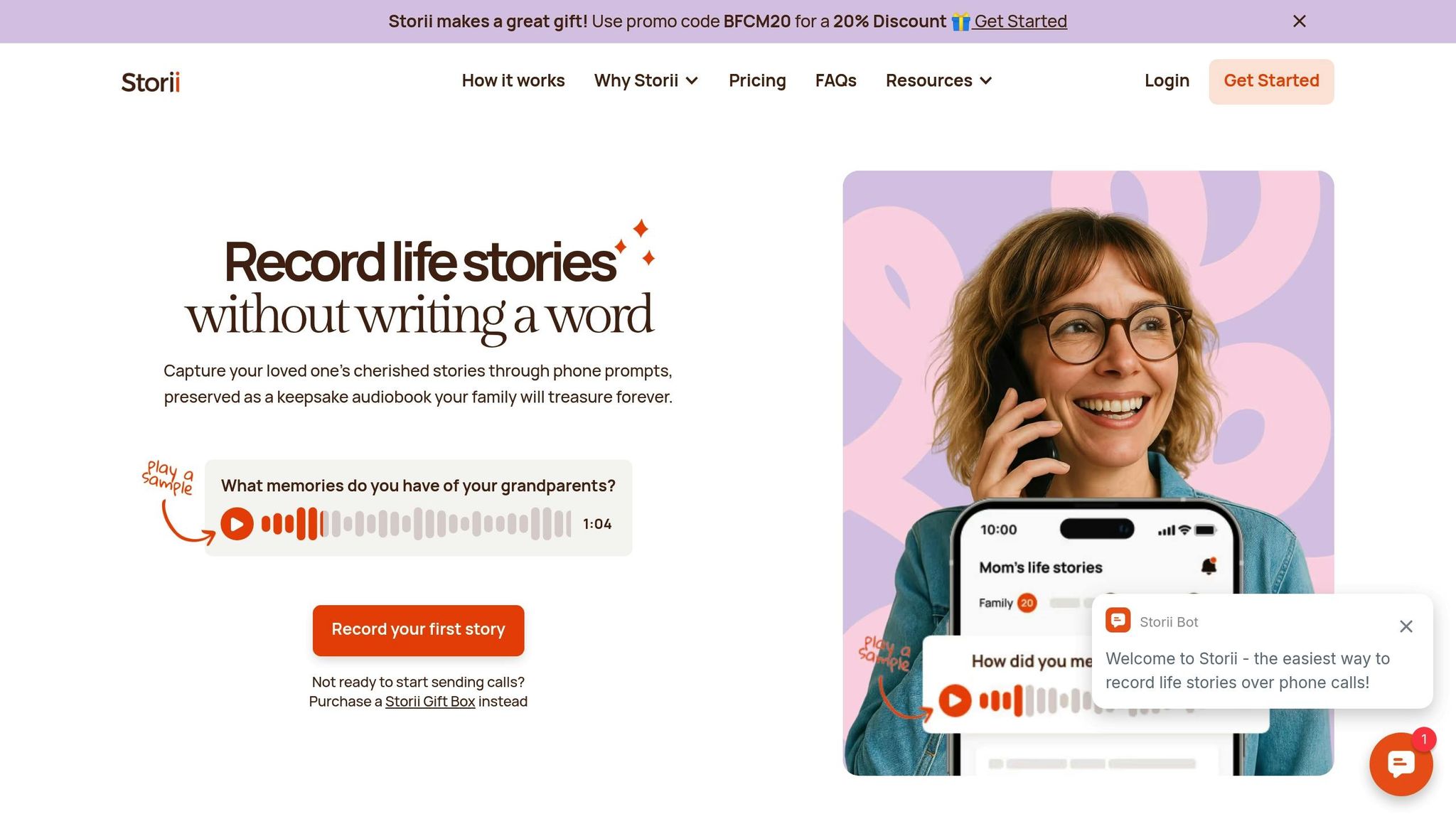
Storii offers a hassle-free way to gather life stories through automated phone calls. The platform schedules calls three times a week, asking life story questions directly over a standard landline or mobile phone - no internet or smartphone required. Each response is automatically recorded, transcribed, and stored securely in an online profile that family members can access.
With a library of over 1,000 pre-written questions, Storii ensures the conversation stays engaging and relevant. You can also customize questions to reflect the individual’s unique experiences. Once collected, the stories can be shared via email, links, or even downloaded as PDF books or audiobooks. This simple yet effective approach allows families to preserve cherished memories without any technical hurdles.
"The chance to hear his stories, recorded in his own voice, will be treasured by generations in our family. It's so simple and so easy, yet so powerful." - Tom Vander Well
Step 2: Using Prompts to Guide Story Conversations
Choosing the Right Prompts
The prompts you choose can make or break a conversation. Thoughtfully selected questions can turn a simple chat into a meaningful exchange. Start with approachable topics - think childhood pets, favorite hobbies, or where someone grew up. These lighter subjects help establish trust and ease the person into sharing more personal stories.
It’s also important to tailor prompts to the individual. For example, you might ask a gardening enthusiast about their favorite plants or someone who loves teaching about memorable classroom moments. The key is to ignite enthusiasm rather than sticking to a rigid list of questions.
Open-ended questions like “Tell me about your working life” are particularly effective. They allow the conversation to flow naturally, creating a space for storytelling. Once the foundation is set, you can explore more specific types of prompts.
Examples of Effective Story Prompts
Prompts can be grouped into categories to explore different aspects of a person’s life. For instance, childhood prompts often bring out vivid memories. Questions like “What pets did you have growing up?” or “What is your first memory?” can lead to emotionally rich stories.
Career and achievement prompts are great for uncovering values and accomplishments. Ask questions like “What are you proudest of?” or “Tell me about your working life.” These help reveal what brought purpose and meaning to someone’s days. For travel and leisure, you might ask, “What was your favorite vacation?” or “What hobbies did you enjoy the most?” These questions often spark lively and engaging memories.
Prompts about personal values dig deeper into what truly matters to someone. Questions like “What life lessons have been most important to you?” or “Who has had the biggest influence on your life?” can reveal heartfelt reflections. Research shows that open-ended prompts are especially effective in fostering deeper connections.
"Life stories increased empathy, deepened relationships with patients, and led participants to feel more satisfied in their role as providers."
– Jane Qu, Lead Author,
How Storii's Prompt Library Works
Storii simplifies the process of gathering life stories with a library of over 1,000 pre-written prompts covering every stage of life. The platform automatically reaches out to your loved one three times a week with a life story question - no scheduling or effort on your part. Each response is recorded, transcribed, and securely saved, making it easy for family members to access these cherished memories anytime.
You can also personalize the experience by queuing specific questions from the library or creating custom prompts that reflect the individual’s unique experiences. The system works seamlessly with any landline or mobile phone, ensuring accessibility even for those without smartphones or internet access.
"I have learned so much about my mom's childhood and what life was like before she had kids. I would highly recommend this for anybody wanting to connect with family."
– Clayton Boeyink
Step 3: Adding Life Stories to Care Plans
Recording Key Details in Care Plans
After gathering life stories, the next step is to document these details in care plans to guide daily care. This goes beyond addressing medical needs - it’s about capturing personal details that make care more meaningful, like biographical highlights and memory triggers.
Start by noting memory triggers - things like favorite songs, beloved TV shows, or cherished items that spark positive memories. These details can help caregivers spark engaging conversations or provide comfort during tough times. For example, if someone worked night shifts in the past, documenting this can explain their late-night alertness and help caregivers respond with empathy.
Add details about their relationships, preferred foods, grooming routines, and activities they enjoy - or prefer to avoid. Include information about their background, religious practices, and any special occasions they hold dear, like anniversaries or holidays. For sensitive topics, such as traumatic experiences, create a separate section so staff can recognize any behavioral changes linked to past events.
These notes are essential for crafting care goals that reflect each person’s life story.
Connecting Life Stories to Care Goals
With these detailed records in hand, you can set care goals that align with what truly matters to each individual. Knowing someone’s work history, hobbies, and values allows you to design activities that bring them joy and purpose. This transforms care plans from routine checklists into personalized guides that celebrate their identity.
"A person-centered approach to care requires practitioners to learn more about an individual's life story, in order to seek meaning and understanding of the older person's life experiences and attitude."
– Teresa Wills & Mary Rose Day, University College Cork
For instance, if someone was a teacher, you might incorporate opportunities for them to teach or mentor. If they love gardening, include time for outdoor activities or caring for plants. This approach ensures care plans are shaped around what gives their life meaning.
Using StoriiCare for Care Plan Integration
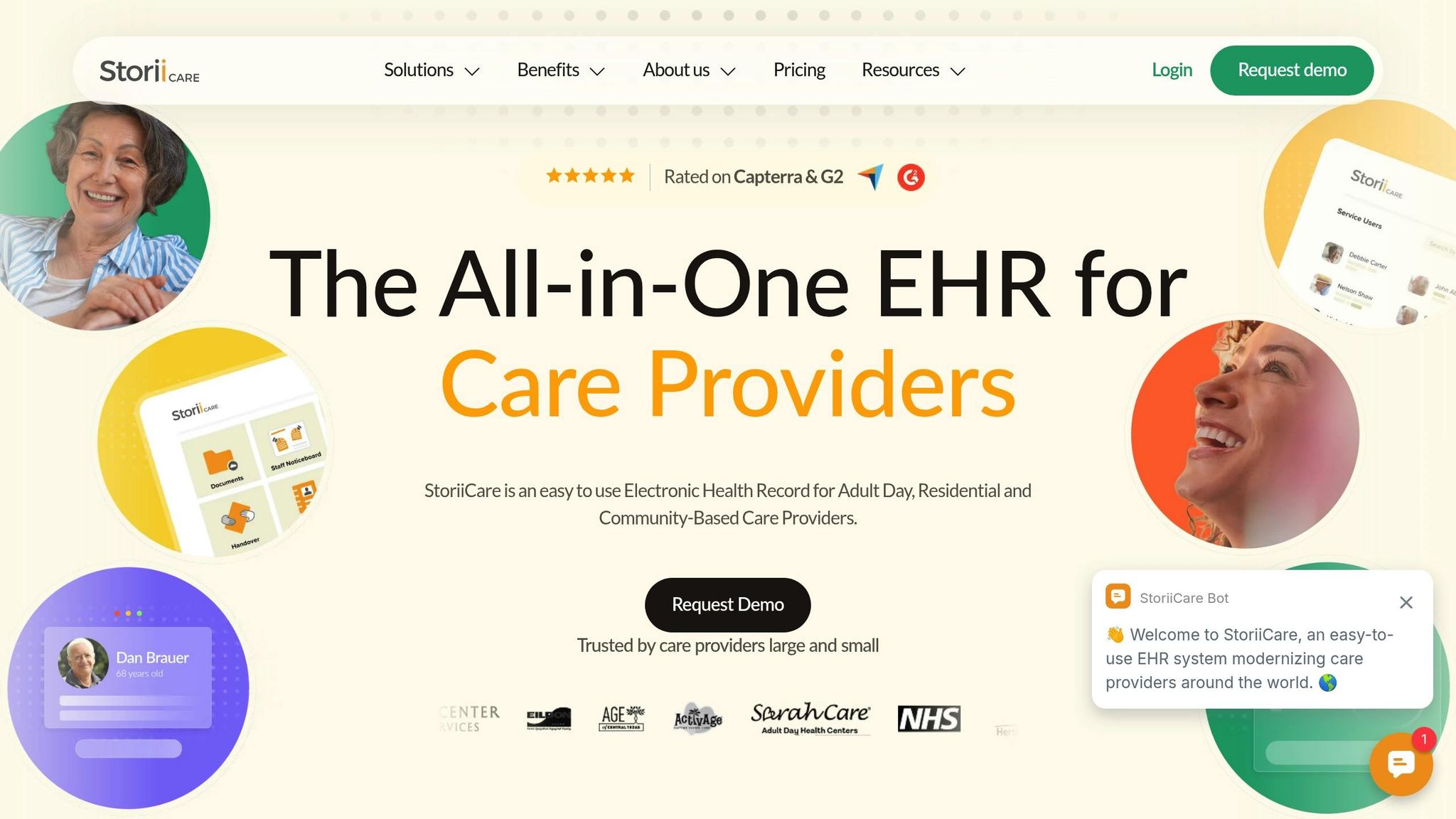
Once life stories and care goals are documented, StoriiCare makes integrating this information into digital care plans seamless. Its Life Story Profiles feature securely stores recordings, photos, and transcripts in a digital database. These profiles automatically sync across forms using Linked Properties, ensuring that details like preferred names, allergies, and personal preferences stay consistent throughout all documentation.
StoriiCare also includes tools like custom form builders with drag-and-drop functionality, letting you create assessments that combine life story elements with clinical data. You can even attach photos of meaningful objects to enhance each profile. The platform’s plans vary: the Activity Pro plan offers limited Life Story Profiles, Care Pro provides advanced care planning tools, and the Enterprise plan supports unlimited profiles for providers with multiple locations.
Step 4: Using Stories in Daily Care Routines
Creating Activities Based on Life Stories
Incorporating life stories into care plans isn't just about documenting someone's past - it’s about bringing those stories to life in daily activities. By focusing on shareable details like hobbies, favorite pets, former jobs, or cherished vacation spots, caregivers can create meaningful, personalized experiences. For instance, if someone used to be a teacher, you could invite them to share their knowledge in small group settings. If gardening was their passion, spending time outdoors or adding plants to their environment can provide comfort and engagement.
Sensory triggers, such as old photographs, music from their youth, or familiar scents, are particularly effective for individuals with cognitive challenges. Tailor these triggers to the person’s cognitive abilities: early-stage individuals might enjoy exploring life stories through interactive tools like touch screens, while those in later stages may connect better with physical objects from their past. Incorporating these elements into daily routines not only enriches the experience but also fosters emotional connections.
These activities don’t just fill time - they create moments for meaningful conversations and connections.
Building Stronger Bonds Through Storytelling
When daily routines are inspired by personal stories, they naturally lead to deeper relationships. Life stories give caregivers a treasure trove of conversation starters that go beyond surface-level topics. Open-ended prompts like “Tell me about…” encourage relaxed, flowing conversations. For example, if someone’s care plan mentions a vacation in Greece, asking, “Tell me about your holiday in Greece,” invites them to share memories without the pressure of recalling exact details.
"Through HCPs' [healthcare professionals] active use of the LS, the person 'behind' the dementia disease can be seen and heard, and PCC [person-centered care] can be supported."
– Helén Dellkvist, Department of Health,
Understanding someone’s work history can also provide valuable context for their current behaviors. Social Care Wales shared a story about a resident who had worked night shifts for years. When staff realized this, they stopped treating the resident’s 3 AM wakefulness as a problem and instead saw it as a long-standing routine. This small shift replaced frustration with empathy.
Organizing Group Story Sessions
While one-on-one storytelling is impactful, group sessions can take the experience even further. These gatherings help residents find common ground and form friendships. When people from the same generation share stories about childhood, wartime, or family life, they often discover surprising connections. Beth Sanders, Founder and CEO of LifeBio, explains, “New neighbors become much closer friends when they realize what they have in common in a group where they have a chance to write or talk with other people from their generation”.
To spark conversations, focus on relatable topics like hobbies or favorite vacations. Everyday visuals - such as photos of gardens or vintage household items - can serve as prompts. Importantly, these sessions should involve everyone, from direct care staff to volunteers, to make the conversations feel natural and inclusive.
"A culture of listening and story sharing can promote a caring environment for residents in a continuing care setting."
– Heliker
Group storytelling also combats feelings of isolation. It gives residents a chance to share their identities and feel heard, which is especially important during transitions into care facilities. Research shows that these sessions foster a sense of continuity and belonging. Making these gatherings a regular part of the routine allows new stories to surface, creating an ongoing cycle of connection and discovery.
sbb-itb-ce27d7a
Step 5: Training Care Teams to Use Life Stories
Teaching Story Collection and Documentation
Train your care team to gather life stories using open-ended prompts like "Tell me about...". This approach keeps conversations relaxed and avoids making them feel like memory tests. Interactive workshops have shown great success - one program across 68 care homes led to over 70% of residents completing personalized scrapbooks. These scrapbooks are now used by care teams to tailor daily routines. This type of training lays the groundwork for stronger emotional connections and consistent documentation practices among staff.
It’s important to stress that life story work is an ongoing process. As new details come to light, the stories should be updated. Teach your team to document these stories in multiple formats, whether through physical books or digital profiles. Most importantly, involve the individual as much as possible during the process. This ensures the stories reflect their unique personality and preferences.
Building Empathy Through Life Stories
Effective training doesn’t just improve documentation - it also deepens understanding of residents' lives. A March 2019 study led by Jane Qu at Boston University explored this with family medicine residents and a nurse practitioner. They used written life stories for 14 nursing home patients over two months. The results were striking. These stories became "conversation-starters" and provided essential context for end-of-life and care planning discussions. The outcome? A noticeable increase in empathy and stronger connections between providers and nonverbal patients.
"Life stories increased empathy, deepened relationships with patients, and led participants to feel more satisfied in their role as providers."
– Jane Qu, BA, Department of Family Medicine, Boston University School of Medicine
The more caregivers understand a person’s past, the better they can interpret current behaviors. Encourage your team to look for these meaningful connections. They’re the key to seeing the individual beyond their diagnosis and delivering care that feels personal.
Using StoriiCare for Team Collaboration
Once life stories are collected and documented, a centralized digital platform can take team collaboration to the next level. StoriiCare offers a digital profile where life stories, photos, videos, and transcriptions are stored. This ensures every team member has access to the same information, even remotely. The platform also simplifies the process by automatically calling individuals to record their stories and providing transcriptions. This reduces the workload for your staff while ensuring accurate, firsthand accounts are available.
When introducing StoriiCare to your team, highlight the platform’s library of pre-set questions. These ensure that all staff members gather consistent information. Stories can be shared through email or links, making transitions between care settings seamless. When a resident moves or new professionals step in, their history and preferences remain easily accessible. This standardized system helps teams connect current behaviors to past experiences, such as previous jobs or hobbies.
"A record of experiences, likes and dislikes is very useful when someone is moving between care settings or when different professionals are involved in a person's care."
–
Devising a Comprehensive Care Plan for Your Loved One With Dementia | LiveTalk | Being Patient
Benefits of Using Life Stories in Care Plans
Building on the methods for collecting and integrating life stories mentioned earlier, the benefits of incorporating these narratives go far beyond the surface. They significantly enhance care quality while fostering emotional well-being.
Better Emotional and Mental Health
Life stories help preserve a person’s sense of identity, even when cognitive decline makes self-expression difficult. A systematic review revealed that creating a life storybook can improve cognition, mood, and communication for individuals with mild to moderate dementia. Reflecting on familiar memories has also been shown to reduce stress, anxiety, and agitation.
Sharing these stories creates meaningful connections between individuals, their families, and caregivers, helping to combat loneliness. Research highlights that life story work leads to immediate positive effects on quality of life and autobiographical memory. When caregivers understand a person’s history, they can better interpret behaviors as reflections of past routines rather than problems to address.
More Personalized Care
Understanding someone’s background enables caregivers to tailor their care to individual needs. For example, in 2013, The Orders of St John Care Trust launched the "All About Me" project across 68 care homes. One care home in Wiltshire discovered that a male resident resisted personal care because his wife had always prepared his clothes and shower for him. Once staff replicated this routine, he was able to shower independently and without distress. Similarly, in Gloucestershire, staff learned that a female resident who became unsettled at night had previously worked evening shifts in a pub. Allowing her to "help" with washing up after tea calmed her nighttime behavior.
Despite the clear benefits of such personalized care, a survey revealed a gap: while 98.7% of relatives knew their loved one’s habits and preferences, around 30% had never been asked to provide this information in writing for care purposes. Life stories help bridge this gap, transforming personal details into care strategies that honor lifelong habits and preferences.
These personalized strategies also strengthen the relationships between families and caregivers.
Stronger Family and Caregiver Relationships
Life stories reshape relationships by encouraging everyone to see the person beyond their diagnosis. Research shows that incorporating life stories into care helps healthcare providers feel more connected to patients and fosters empathy, especially with nonverbal residents. These stories also serve as conversation-starters and provide critical context for end-of-life discussions and care planning.
"Life stories incorporated into physician practice may help health care providers feel more connected to their patients and ultimately more satisfied in the care of nursing home patients."
– Jane Qu, Lead Author, Boston University School of Medicine
For families, participating in the creation of life stories offers a meaningful way to contribute to their loved one’s care. It allows them to reconnect with the person behind the illness and builds trust when they see caregivers incorporating these personal details into daily routines.
Conclusion: Preserving Life Stories for the Future
Key Takeaways
Life stories bring a personal touch to care plans, turning them into tailored guides that celebrate individuality. The five steps outlined - gathering stories, using prompts, weaving them into care plans, incorporating them into daily routines, and training care teams - work together to build stronger relationships between individuals, families, and caregivers. By understanding someone's past, caregivers can create routines that reflect what truly matters to that person, easing distress and improving communication. These insights naturally translate into practical tools for keeping cherished memories alive.
How Storii Supports Memory Preservation
Storii makes capturing and preserving memories easier than ever. With features like automated calls, an extensive prompt library, and secure, shareable recordings, the platform turns memories into meaningful care resources. Families and care teams can securely share and access these stories, ensuring everyone involved has the information needed for compassionate, personalized care. Whether you're creating a digital profile for a hospital visit or a printed book for everyday use, Storii ensures these legacies are preserved for future generations.
Start Preserving Memories Today
With these steps and Storii’s support, there’s no better time to start recording life stories than now - while your loved one can actively participate and share their wishes. These stories become invaluable over time, offering conversation starters, emotional comfort, and even behavioral guidance during challenging moments. As Marilyn Hartman, Admissions Director at English Rose, puts it:
"Through the use of the life story, we can bring dignity and purpose to their day".
Start with one memory, and watch how it strengthens connections and enhances care.
FAQs
How do life stories benefit dementia care?
Life stories are a powerful tool in dementia care, making it more personal and impactful. By preserving a person’s sense of identity, these stories help caregivers gain a deeper understanding of their history, preferences, and interests. This understanding creates opportunities for meaningful interactions, eases anxiety, and builds stronger emotional connections with both family members and care staff.
When integrated into care plans, life stories allow for routines and activities tailored to the individual’s specific needs. Revisiting these memories regularly can also have therapeutic benefits, boosting mood and supporting cognitive function. Platforms like Storii simplify the process of capturing, organizing, and sharing these stories, ensuring they’re readily available for caregivers and loved ones. This helps maintain consistent and compassionate care.
What are some good prompts to help gather life stories for care plans?
Effective prompts for collecting life stories are those that invite open-ended responses and encourage thoughtful reflection. These kinds of questions create a relaxed atmosphere, making it easier for individuals to share their experiences. Here are some examples:
What makes these prompts so effective is that they focus on storytelling rather than short, factual answers. This approach leads to deeper, more personal narratives. For those looking for even more inspiration, platforms like Storii offer a variety of life story prompts tailored to individual preferences, making it simple to weave meaningful stories into care plans.
How can Storii help incorporate life stories into care plans?
Storii makes it easier to weave personal life stories into care plans by providing tools to collect, organize, and share individual histories. With features like automated phone interviews, individuals can answer prompts, and their responses are recorded, transcribed, and stored digitally. These profiles can be further enriched with photos, videos, and audio files, creating a detailed and easily accessible resource.
Caregivers can tap into these profiles to tailor daily routines, plan activities, or improve interactions based on someone’s unique preferences and life experiences. These stories can also be securely shared with care teams and family members, ensuring everyone involved has the same insights to deliver personalized, meaningful care. By turning life stories into practical tools, Storii helps create care plans that truly reflect the individual.
Related Blog Posts
- How Life Story Sharing Strengthens Family Bonds
- How to Personalize Story Prompts for Seniors
- How Storytelling Strengthens Caregiver Relationships
- Measuring Impact of Life Story Work in Elderly Care
{"@context":"https://schema.org","@type":"FAQPage","mainEntity":[{"@type":"Question","name":"How do life stories benefit dementia care?","acceptedAnswer":{"@type":"Answer","text":"<p>Life stories are a powerful tool in dementia care, making it more personal and impactful. By preserving a person’s sense of identity, these stories help caregivers gain a deeper understanding of their history, preferences, and interests. This understanding creates opportunities for meaningful interactions, eases anxiety, and builds stronger emotional connections with both family members and care staff.</p> <p>When integrated into care plans, life stories allow for routines and activities tailored to the individual’s specific needs. Revisiting these memories regularly can also have therapeutic benefits, boosting mood and supporting cognitive function. Platforms like <strong>Storii</strong> simplify the process of capturing, organizing, and sharing these stories, ensuring they’re readily available for caregivers and loved ones. This helps maintain consistent and compassionate care.</p>"}},{"@type":"Question","name":"What are some good prompts to help gather life stories for care plans?","acceptedAnswer":{"@type":"Answer","text":"<p>Effective prompts for collecting life stories are those that invite open-ended responses and encourage thoughtful reflection. These kinds of questions create a relaxed atmosphere, making it easier for individuals to share their experiences. Here are some examples:</p> <ul> <li><strong>Childhood memories:</strong> Ask questions like, <em>"What were your favorite family traditions growing up?"</em> or <em>"Did you have any pets as a child?"</em> These spark fond recollections and allow for warm, nostalgic storytelling.</li> <li><strong>School and early years:</strong> Questions such as, <em>"Who was a teacher or friend that made a big impact on you?"</em> or <em>"What’s a memory from school that really stands out?"</em> can help uncover formative experiences.</li> <li><strong>Work and adult life:</strong> Try prompts like, <em>"What was your first job, and what did you enjoy most about it?"</em> or <em>"Can you share a career accomplishment that you’re especially proud of?"</em> These encourage people to reflect on their growth and achievements.</li> <li><strong>Hobbies and passions:</strong> Inspire sharing with questions like, <em>"What activities or hobbies have brought you the most joy?"</em> or <em>"Is there a book, song, or sport that holds special meaning for you?"</em> These allow individuals to talk about what truly brings them happiness.</li> </ul> <p>What makes these prompts so effective is that they focus on storytelling rather than short, factual answers. This approach leads to deeper, more personal narratives. For those looking for even more inspiration, platforms like Storii offer a variety of life story prompts tailored to individual preferences, making it simple to weave meaningful stories into care plans.</p>"}},{"@type":"Question","name":"How can Storii help incorporate life stories into care plans?","acceptedAnswer":{"@type":"Answer","text":"<p>Storii makes it easier to weave personal life stories into care plans by providing tools to collect, organize, and share individual histories. With features like automated phone interviews, individuals can answer prompts, and their responses are recorded, transcribed, and stored digitally. These profiles can be further enriched with photos, videos, and audio files, creating a detailed and easily accessible resource.</p> <p>Caregivers can tap into these profiles to tailor daily routines, plan activities, or improve interactions based on someone’s unique preferences and life experiences. These stories can also be securely shared with care teams and family members, ensuring everyone involved has the same insights to deliver personalized, meaningful care. By turning life stories into practical tools, Storii helps create care plans that truly reflect the individual.</p>"}}]}

Storii Gift Box
Best for special occasions such as Mothers Day, Fathers Day, Birthdays and the Holidays.

