
.png)
Telling your life story can be rewarding, but it comes with challenges, especially when deciding how much to share about others. Here's how to balance honesty with respect for privacy:
- Focus on Your Story: Share your experiences and emotions instead of revealing private details about others.
- Identify Sensitive Content: Avoid disclosing third-party secrets, legal issues, or personal struggles without consent.
- Seek Permission: Always get clear consent before sharing someone else's story, especially if it involves private or painful details.
- Edit for Privacy: Use pseudonyms, general terms, or remove identifying details for sensitive topics.
- Use Secure Sharing Tools: Platforms like Storii allow you to share stories privately, with control over who accesses them.

5 Steps to Balance Privacy and Honesty When Sharing Life Stories
Identifying Sensitive Content Before Sharing
How to Recognize Sensitive Content
Before sharing your story or memories, it’s important to identify content that could be considered sensitive. This ensures your narrative remains true to your experience while respecting others' privacy. Personal vulnerabilities - such as failures, arrests, or betrayals - are deeply private and don’t need full disclosure. Similarly, third-party secrets - like someone else’s struggles with addiction, financial issues, or relationship problems - are especially delicate, particularly if their loved ones could be affected.
Legally sensitive material also requires caution. Libel, invasion of privacy, or using harmful descriptors like "cheap" or "violent" can lead to legal trouble. Topics like childhood abuse, sexual misconduct, or workplace conflicts are especially tricky. These may need anonymization or pseudonyms to protect identities and avoid legal risks.
A helpful tool is the "Three-Question Test" for sharing someone else’s story:
- Is this my story to tell?
- Are my motives about providing clarity or seeking revenge?
- Who might be hurt by sharing this?
Author Sunny Jane Morton sums it up well:
"If it didn't significantly affect your life, it doesn't really belong in your life story".
Stay focused on your own experiences and growth. Avoid veering into unnecessary details about others' actions or mistakes, which Morton refers to as straying into the "gutter". Once you’ve identified sensitive aspects, the next step is to categorize your memories by their type and significance.
Classifying Memories by Type
Not all memories require the same level of detail, and classifying them can help you decide how much to share. Factual memories - like dates, actions, or specific events - may include sensitive details that need careful handling. On the other hand, emotional memories, which highlight your feelings and personal growth, are generally safer and often more engaging. For collective memories that involve others, it’s best to focus on your own perspective and avoid exposing private details about others.
When deciding what to include, consider the significance of the event. If a memory didn’t play a major role in shaping your life, it probably doesn’t belong in your story. For instance, you could say, "After the divorce, I moved to be near family", which acknowledges the event without revealing unnecessary private details. This method allows you to share honestly while maintaining boundaries and respecting privacy.
sbb-itb-ce27d7a
Respecting Privacy Through Consent
Getting Permission from Others
When it comes to sharing someone else's story, it's not just about being courteous - it’s about honoring their ownership and avoiding potential harm. Before sharing, ask yourself: Does this story primarily belong to someone else? Could it reveal private information? Might it cause distress to living family members? These questions help ensure you approach the situation thoughtfully.
Writer Kate Marple highlights the importance of offering more nuanced options when seeking consent. She explains that "granular consent" allows individuals to decide how and where their stories are shared. For instance, someone might feel fine including a memory in a private family book but may not want it posted on social media. Before recording, have a clear conversation about where the story will appear, how permanent it will be online, whether identities will be protected, and any potential safety concerns. As Marple wisely notes:
"Telling a story about your life can be an empowering experience if you are in control of what is shared and how."
Once you’ve secured clear and informed consent, the next step is ensuring those shared memories remain safe.
Protecting Stories with Secure Sharing
After recording someone’s story, it’s essential to manage how it’s shared. Platforms like Storii allow you to share stories privately with family members through secure channels, keeping sensitive details protected.
To avoid legal complications, use signed consent forms. If someone prefers more anonymity, consider using pseudonyms or omitting identifying photos and details. For especially delicate content, you might even wait to share until any risks to relationships have passed. Ultimately, make sure everyone involved fully understands the extent of what’s being shared and who will have access to it.
HOPE: A New Acronym for Ethical Storytelling | Whitney Reynolds | TEDxWrigleyville
Telling Honest Stories Without Full Disclosure
Once you’ve secured permissions and categorized sensitive content, the next step is crafting a story that’s truthful without revealing too much. Balancing emotional depth with privacy ensures your story feels genuine while respecting the people involved.
Focusing on Emotional Truth Over Facts
The key to a compelling narrative lies in sharing the emotional essence of your experience - your feelings, the stakes, and the impact it had on you. Bestselling memoirist Susy Flory explains:
"The Truth 'Contract' is a way to build trust with the reader by sticking to facts and being honest about one's motives and emotional stakes. It's about shaping the story in a way that is emotionally resonant and true to the writer's experience."
This means you don’t need to include every detail to maintain authenticity. As Sunny Jane Morton suggests, sometimes a brief mention and the outcome are enough. For instance, you might say, “After my divorce, I moved to Seattle and started over,” which conveys the emotional journey without delving into unnecessary specifics.
Removing or Changing Identifying Details
To protect privacy while staying true to your story’s emotional core, consider altering identifying details. This might include changing names, genders, physical traits, ethnicities, or professions. One Lit Place advises:
"If they can see themselves in any of your 'characters,' you haven't been thorough."
Another technique is telescoping - combining several similar events into a single scene. This approach simplifies the narrative while concealing exact dates or locations. Instead of naming individuals, use broader terms like “a relative,” “a colleague,” or “someone I once knew.” When recreating dialogue, focus on the emotions behind the words rather than quoting verbatim. These strategies allow you to tell your story honestly while safeguarding the identities of those involved.
Using Technology for Secure Story Preservation
With the foundation of thoughtful curation and consent, technology now provides a safe and straightforward way to preserve personal stories. These tools not only make recording life narratives easier but also ensure privacy by giving you control over who can access the recordings and how much information is shared.
Recording Stories Privately with Storii
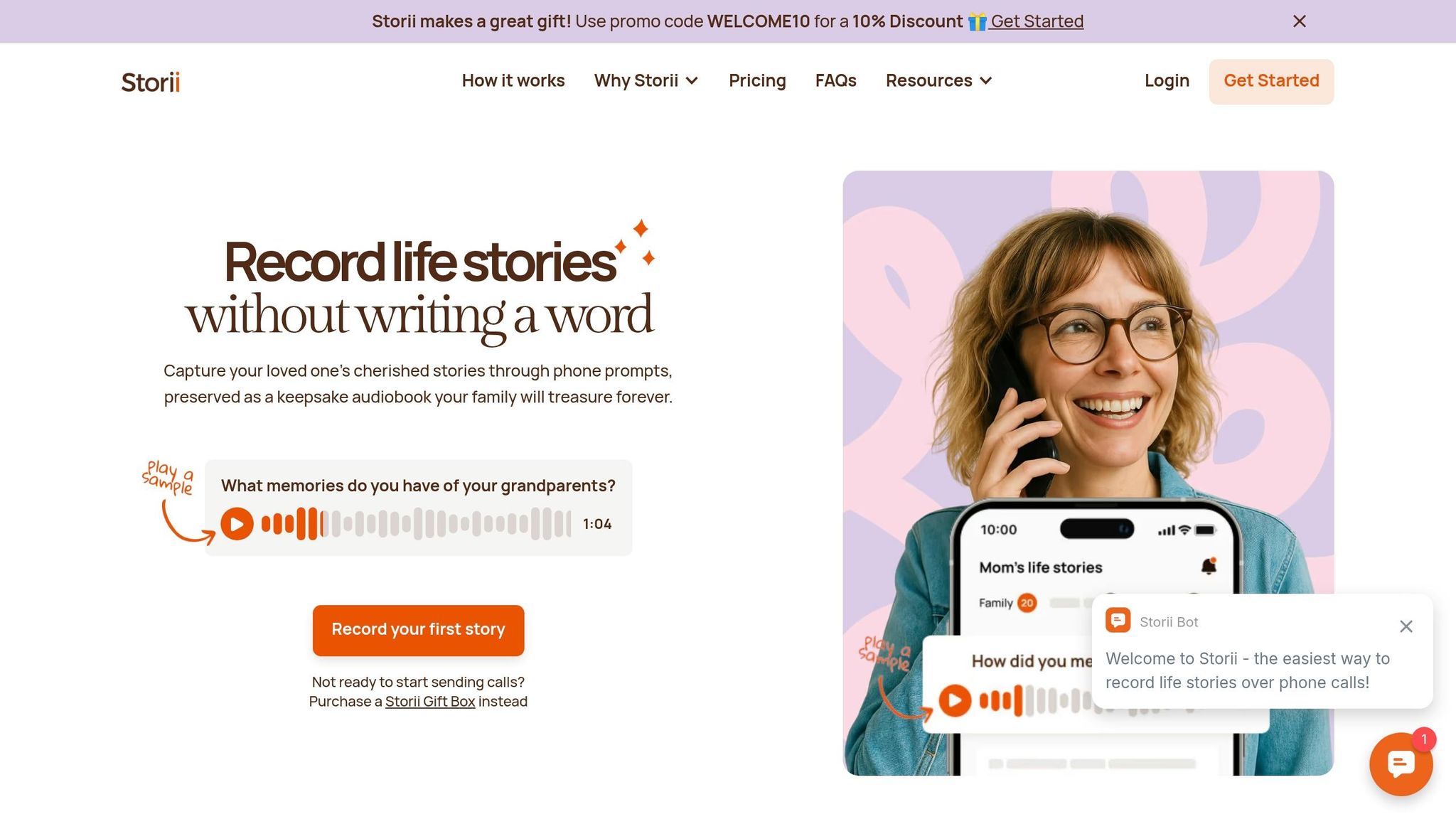
Storii offers a unique way to record and preserve memories through scheduled phone calls. This service allows loved ones to share their stories without needing internet access or a smartphone. Using a library of over 1,000 prompts, Storii can schedule up to three calls per week, and it automatically transcribes the recordings for you.
To ensure security, Storii encrypts all recordings and uses HTTPS for safe access. You decide who gets to listen, as recordings are shared only through private links sent via email or SMS to selected family members.
LifeStories.com emphasizes their commitment to privacy:
"We will never make a story public without your express permission. We do not post stories to any social media platforms."
For those worried about digital security, Storii also provides the option to download recordings as audiobooks or transcribed eBook PDFs. This feature allows families to keep offline backups, avoiding reliance on cloud storage. Reflecting on his experience with Storii, Tom Vander Well shared:
"The chance to hear his stories, recorded in his own voice, will be treasured by generations in our family. It's so simple and so easy, yet so powerful."
This secure setup ensures a personalized and private storytelling experience.
Creating Custom Questions for Privacy
Storii’s library of prompts is extensive, but the platform also allows you to create custom questions to tailor the storytelling process while respecting privacy. This flexibility helps guide conversations and ensures that only comfortable topics are discussed during recording sessions.
For instance, instead of asking, "Tell me about your first marriage", you could ask, "What did you learn during difficult times in your twenties?" This approach captures meaningful insights and personal growth while avoiding sensitive or private details about others. Additionally, you can regularly review and adjust access permissions for shared stories, ensuring they align with changing family dynamics.
Reviewing and Editing Before Sharing
The true challenge of balancing privacy with honesty comes into play during the review and editing phase. This step allows you to catch any sensitive details you might have overlooked, ensure the emotional essence of your story remains intact, and protect everyone involved before sharing it with your family. The goal here is to refine your narrative, safeguarding private details without losing the emotional depth of your story.
Editing to Protect Privacy
When reviewing your recordings or transcripts, consider using a two-step process. In the first step, focus on identifying any names, locations, or events that could reveal private matters. In the second step, work on preserving the emotional essence of your story while carefully removing or altering those sensitive elements.
For example, replace specific names with general terms like "a close friend" or "a family member." Instead of naming exact locations, use broader descriptions - swap "Boston, MA" for "our hometown" or "a city on the East Coast." When recounting traumatic events, focus on the emotions rather than the specifics. For instance, instead of saying, "My sister Jane betrayed me by sharing my secret in 1995 at our family reunion in Chicago", you could say, "A family member once shared something private during a gathering, teaching me about trust."
To stay consistent, create a privacy editing checklist. This might include scanning for names and identifiers of living people, avoiding potentially embarrassing revelations, verifying consent for shared stories, assessing the emotional impact on listeners, and ensuring the core message remains intact after edits. Keeping a record of your edits can also help maintain accountability. This careful editing process ensures your story is honest while respecting personal privacy.
Getting Family Feedback
Bringing family members into the review process helps build consensus and allows for collaborative refinement before sharing. Share anonymized drafts through tools like Storii's links or comment-only Google Docs to involve family without giving them full editing rights. Ask specific questions such as, "Does this represent you fairly?" or "Are there any details you'd prefer to have removed?" Set a one-week timeline for feedback to keep the process efficient.
This approach is similar to how peer review functions in research - gathering diverse perspectives can add valuable context and reduce the risk of misinterpretation or harm. To keep things organized, assign clear roles: you retain responsibility for the final story, while family members provide input. This clarity avoids confusion and ensures everyone understands their role. By working together, you can ensure your story remains authentic while being considerate of everyone involved.
Conclusion
Finding the right balance between privacy and honesty starts with setting clear boundaries and understanding what truly matters to you. As Sunny Jane Morton, author and genealogist, wisely puts it:
"You don't need to tell everything - but everything you tell should be true".
This quote highlights the heart of ethical storytelling: while you’re not required to disclose every detail, the parts you do share should be truthful and genuine. Following this principle helps you make thoughtful decisions about what to include in your narrative.
Keep the focus on your own experiences rather than others' actions. Before you begin documenting or sharing your story, decide which topics are off-limits and think about the legacy you want to leave behind. By staying true to ethical storytelling practices, you can protect your integrity while respecting the privacy of others. Tools like Storii offer a secure way to record your memories, allowing you to share selectively with loved ones and safeguard sensitive details.
FAQs
How do I tell the truth without naming people?
To balance sharing the truth with respecting privacy, you can use pseudonyms or modify names. This simple step helps protect individuals from potential discomfort, harm, or legal complications while keeping the core of your story intact. By altering names, you maintain honesty and discretion, ensuring your narrative respects others' privacy without losing its authenticity.
When should I get permission before sharing a story?
Sharing a story that involves personal or sensitive details about others? Always get their permission first. This is especially crucial if the story touches on their struggles, relationships, or other private matters. By seeking their explicit consent, you not only respect their privacy but also avoid potential misunderstandings or conflicts.
What should I edit out before I share my life story?
Before telling your life story, it’s important to leave out details that could compromise privacy or cause harm. This includes information like personal secrets, legal troubles, or challenging relationships that might hurt others or expose private matters. By carefully editing these parts, you can share your story honestly while still respecting boundaries and protecting privacy.
Related Blog Posts

Storii Gift Box
Best for special occasions such as Mothers Day, Fathers Day, Birthdays and the Holidays.

