
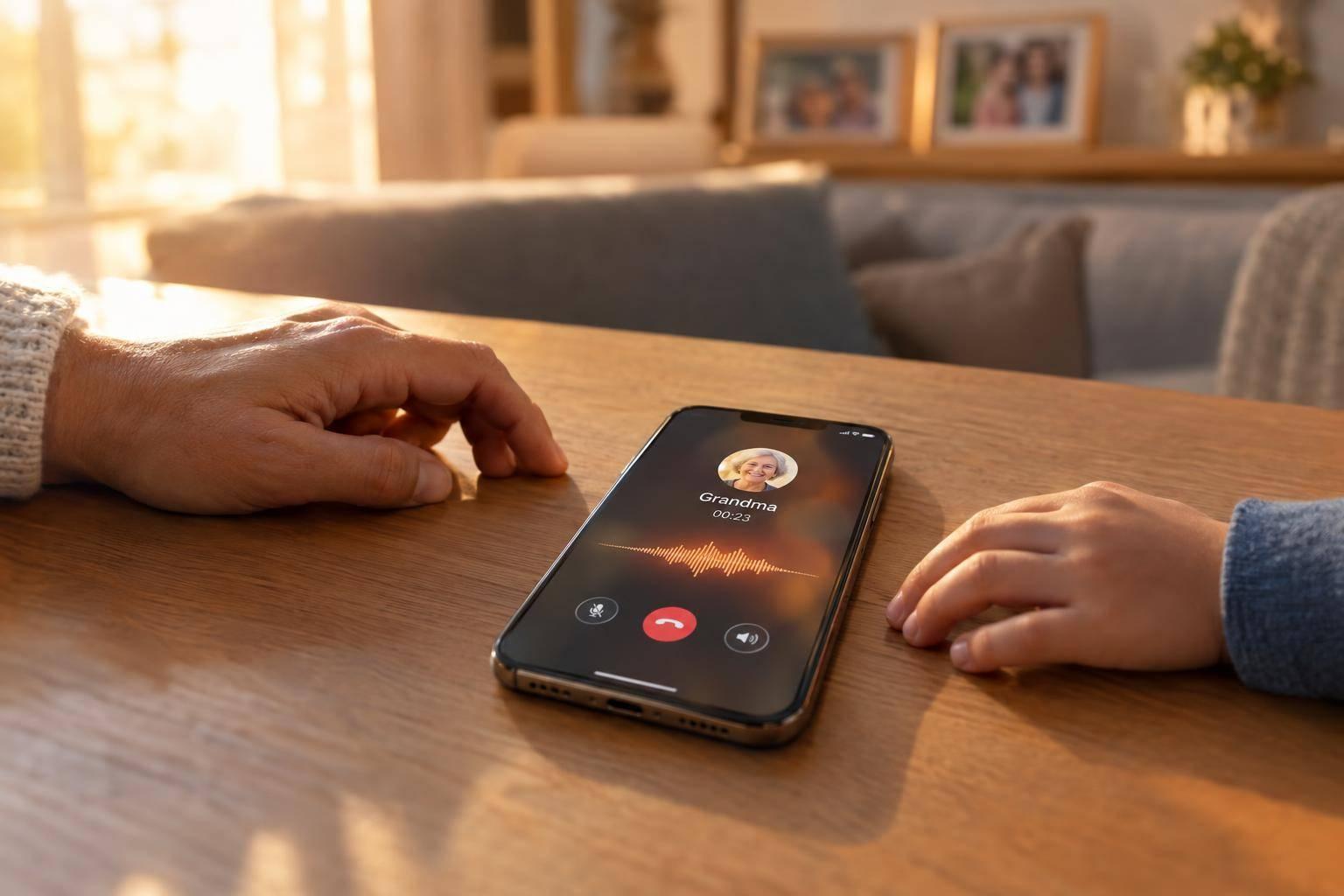
I don’t want to look back and wish I’d asked one more question. You may know your parent’s voice by heart - but how much do you know about the childhood, choices, and small moments behind it? Knowing how to record your parents' life story ensures these memories aren't lost.
One question can be enough to start. A 5–15-minute call gives you time to listen without making it feel like homework. With permission to record, those moments can become stories your children hear in the voice you love.
In this guide, I’ll show you how to make story calls part of family life, bring siblings and grandchildren into the conversation, and keep recordings easy to revisit. <u>The goal isn’t a perfect family history. It’s another reason to connect.</u>

How to Record and Share Family Stories
Quick Guide: How to conduct an oral history interview with a family member
sbb-itb-ce27d7a
Make Time for Regular Story Calls
After the first call, aim for 5–15 minutes weekly or every other week. Treat that schedule as a target, not a rule. If someone is tired or busy, reschedule. Recorded stories should sit alongside ordinary calls and visits - not replace them. Once the routine feels easy, agree on recording rules before your next call.
Choose Call Times and Agree on Privacy
Pick a quiet time when your relative feels alert, and specify the time zone. Mute notifications and test that both voices can be heard. Announce the recording, then state who’s speaking, the date, and the purpose.
Agree on where you’ll store the recording, who can listen or forward it, and whether the storyteller can request edits or deletion. Recording laws vary by state, so check the rules for every location involved. Get everyone’s explicit agreement before recording each call.
Ask About Childhood, Family Customs, and Life Lessons
Let the topics change from call to call rather than working through a fixed questionnaire. Start with:
“What would you like your grandchildren to know about your childhood?”
On later calls, ask about family customs, relationships, parenting, difficult decisions, or hopes for grandchildren. Keep a bank of questions for seniors nearby for times when you need another prompt.
Ask one question at a time, then leave several seconds for an answer. Follow up on one detail with:
“What happened next?”
Then move on. If a memory becomes painful, offer to change the subject or stop. Before ending the call, ask what your relative would like to discuss next time.
Compare Ways to Record Family Stories
Choose the format your relative enjoys most. Phone recording can make things easier for relatives who like talking but feel less comfortable with video platforms or complex apps. Still, some tools won’t record both voices. Test recording and sharing features before relying on them, and share only what the storyteller has approved.
| Format | Internet needs | Voice recording | Scheduling flexibility | Sharing options |
|---|---|---|---|---|
| Recorded phone call - familiar, with no camera needed | Often low or none, depending on the service | Yes, if the device or service supports recording both sides | High; useful across distance and time zones | Audio can be shared with approved relatives or stored privately |
| In-person conversation - allows natural eye contact | None unless recording or backup uses an online service | Yes, with a phone or recorder | Lower; participants must be in the same place | Audio or transcripts can be shared with approved relatives |
| Video conversation - adds facial expressions, but cameras may feel uncomfortable | Usually requires a stable internet connection | Depends on the platform | High across distance, but requires suitable devices and internet access | Video, audio, or transcripts can be shared with approved relatives |
Use a format your family will return to. As the routine starts to feel natural, share approved stories with siblings and grandchildren.
Bring Siblings and Grandchildren Into the Conversation
After the recording, give siblings and grandchildren time to listen when it suits them. Then bring their reactions into the next call.
Share Approved Stories With a Short Description
Send one approved story by email, text, or link to only the relatives you choose. Add a one-line note naming the topic so they know what it’s about. They can listen to the audio or read the transcript later.
Invite Questions and Family Responses
Start with familiar topics: school days, childhood games, holidays, or advice for now. Storii’s question library and custom prompts and meaningful family conversation starters can help guide the next call.
Invite siblings to add related memories and grandchildren to send follow-up questions. Keep responses optional so no one feels pressured to join in. Let what they share help shape the next conversation.
Keep Family Stories Easy to Find and Revisit
A story shouldn’t be hard to find after the call ends. Keep it within reach so siblings and grandchildren can return to it between conversations.
Label and Back Up Recordings
Label each recording by topic or life stage - childhood, family customs, or advice - and add its link to the label or notes. Save a copy outside the main app, too.
Share only with approved relatives. Storii lets you download audio and PDF transcripts. Keep both, along with the original recording.
Compare Audio and Written Story Formats
Transcripts let family members search, print, or save notes. But keep the original audio: text makes a story easier to search, while the recording preserves the voice behind it.
These saved stories can also become a ready-made family gift.
Give Story Recording as a Gift With Storii
Saved stories can become a gift that invites even more family memories.
Storii makes a personal birthday, Mother’s Day, Father’s Day, or Christmas gift for a parent or grandparent who enjoys sharing stories. Present it as a way for the family to hear their stories, not as a memoir assignment. Older relatives can take part without learning new tech.
Use Storii Without a Smartphone
Storii’s automated calls work with a landline or cell phone. The storyteller doesn’t need a smartphone or app.
Guided prompts, custom questions, transcripts, and AI-drafted story rewrites help families revisit memories together. The storyteller should review any wording before it’s shared.
Add Personal Questions to the Gift
A few questions tied to the occasion can bring shared family memories into the conversation:
“How did you celebrate birthdays as a child?”
“What do you remember about becoming a parent?”
“Which family tradition would you most like your grandchildren to continue?”
Ask siblings and grandchildren to suggest prompts, then begin with a short list.
Have one relative manage the account and set call times. Keep the recipient in control: let them choose who hears approved stories, which stories stay private, and whether they’re comfortable with rewrites. They should also decide when to skip a question, change topics, or pause the calls. After the first call, check whether they want to continue.
Conclusion: Start With One Question and One Shared Story
A story matters most when someone responds to it. This week, make one short call and ask questions about childhood memories, family traditions, or life lessons. Settle into a weekly or biweekly rhythm that works for you both. Ask separately for permission to record the conversation and to share it with a specific relative.
Send one approved story to a sibling or grandchild. Include a short description and invite them to ask a follow-up question. Label the recording with the storyteller’s name, topic, and date so it’s easy to find again. Relatives can listen and reply whenever their schedules allow.
If a personalized gift would help keep the routine going, consider Storii. The service can help preserve the stories. Your listening, replies, and follow-up questions give family members a way to connect through them.
FAQs
How can I help a shy parent open up?
Start with lighthearted, open-ended questions about childhood memories, favorite pastimes, or family traditions. Give them room to tell a story rather than answer yes or no. As they settle into the conversation, gently move toward life lessons or major decisions.
Storii’s automated phone prompts offer a gentle way to share stories without the pressure of a live, face-to-face interview. When you talk together, listen closely, let them set the pace, and ask specific follow-up questions about the details they mention.
How can young grandkids connect with recorded stories?
Young grandkids can help shape the conversation by suggesting questions about family memories or inside jokes that matter to them. Listening to recordings and sharing their reactions can also help them feel close, even when they live far apart.
Families can listen together and use the recordings to spark conversations, giving grandkids a personal way to learn about their family’s history and customs.
How can siblings share recording responsibilities?
Siblings can share recording duties without making things complicated. One might vote on life story prompts or suggest a weekly question. Another can listen to the recordings and share their reactions.
With shared access to Storii, relatives can add questions or memories. A sibling who lives nearby can handle the technical setup, while others manage prompts and pass the recorded stories along to the family.
Related Blog Posts

Storii Gift Box
Best for special occasions such as Mothers Day, Fathers Day, Birthdays and the Holidays.

