
.png)
There are questions we always mean to ask. We tell ourselves there’s more time - one more visit, one more call, one more holiday dinner. Then one day, we realize how much we never asked.
I think that’s what makes family stories matter so much. They don’t just help us remember people we love. They help us understand where we come from, what shaped our family, and what we may lose if those stories are never recorded.
In this article, I’ll walk through what the research says in plain English: how storytelling links generations, how it shapes identity and closeness, and why recording stories now can spare a lot of regret later.
Family stories do more than fill silence. They pass down struggle, humor, love, and the lessons people learned the hard way. Research links them with a stronger sense of self, closer family ties, and better emotional health in children and teens. In one Emory study, kids who knew more about their family history showed higher self-esteem, better emotional health, and more resilience after hard times.
That same process matters for older adults too. When parents and grandparents share memories, it can ease loneliness and help them make sense of their own life story. And for younger listeners, these conversations can build empathy. One study found that students who took part in weekly memory interviews came away with a deeper understanding of older people’s lives - not just the facts, but the feelings behind them.
I also see a clear pattern in the research: waiting is what puts these stories at risk. Older adults often return to a small group of core memories - often around 10 stories, with about 87% of repeated stories coming from their teens and twenties. That means regular, guided conversations work better than vague plans to “get to it someday.”
What helps most is asking open questions that go past dates and names. Questions about love, hardship, work, turning points, and what someone was thinking at the time tend to bring out the stories that stay with a family. That’s usually where the meaning lives.
If you want a simple way to do this, Storii turns that habit into something easy to keep. It uses scheduled phone calls and 1,000+ life story prompts, with no app, no internet, and no smartphone needed. After each call, the story is transcribed and saved, and families can download it as an audiobook or PDF. At $99/year, or $119 for the gift box, it’s a simple way to keep voices and memories from being lost.
The big takeaway is simple: don’t wait for the perfect time. Start with one question, one phone call, one story. That’s often all it takes to keep something from disappearing.
Stories That Connect: Bridging Generations with Meaningful Conversations
sbb-itb-ce27d7a
What Research Says About Storytelling and Family Bonds Across Generations

Why Family Storytelling Matters: Key Research Stats
Research points to something many families feel instinctively: stories passed down across generations help shape identity, strengthen family ties, and build empathy. They carry values, identity, and family memory forward. And they don’t just help the people listening. They help the people telling them too.
Family stories shape identity and a sense of belonging
Su Yeong Kim, Ph.D., Professor of Human Development and Family Sciences, says it clearly:
"Family stories serve as anchors. They remind younger generations of where they come from - the struggles, the sacrifices, the hopes. This helps foster a stable sense of self and sense of belonging."
That idea shows up in the research as well. Family storytelling has been linked to a stronger sense of identity and a deeper feeling of belonging. Studies also connect it with stronger cultural identity and better protection against school-related and mental health problems. Teens who know more about their parents’ or grandparents’ lives also tend to show stronger identity formation and closer family connection.
Reminiscence can benefit older adults
This doesn’t flow in just one direction. Older adults gain something from storytelling too. Sharing life stories can be a way to leave a legacy. It passes on more than memory; it passes on what those memories mean inside a family.
Research suggests that when older adults have room to talk about their life experiences, reminiscence can support a stronger sense of self and ease loneliness.
As N. M. Weststrate observed:
"Grandparents primarily used storytelling for social purposes (i.e., to reminiscence, build intimacy, and to entertain their grandchildren), but they also quite frequently used storytelling to teach and transmit wisdom."
That mix matters. A story can make a grandchild laugh, bring two people closer, and quietly hand over a life lesson all at once.
Sharing stories builds empathy between age groups
Younger listeners are shaped by this process too. In one intergenerational study, students joined weekly guided memory interviews during a school term. Over time, their views shifted. Instead of making broad judgments about the past, they developed more empathetic insight into individual lives.
Professor Penny Van Bergen explained what sets this kind of storytelling apart:
"Oral histories differ in that they are personal, engender empathy, and enable the listener to connect in a way not otherwise possible."
That’s the heart of it. Oral histories feel personal in a way plain facts often don’t. They help listeners understand not just what happened, but what it felt like to live through it. And that human connection is a big part of why oral history can help keep families close across time.
How Storytelling Preserves Family Heritage in American Homes
Family stories do more than bring people closer. They keep memory alive. In many American homes, shaped by migration, military service, and life-changing events, those stories pass down identity, values, and history from one generation to the next.
Stories carry traditions, values, and lived history forward
This matters even more in homes where language, customs, and life experience don’t always move together. Families are a major source of cultural knowledge, collective memory, and narrative identity - embedded in cultural settings that favor some values over others.
In immigrant and multigenerational households, storytelling helps children hold onto family heritage while also making sense of American identity. Shared stories and rituals can bridge the acculturation gap and support cultural awareness across generations. Some stories center on independence and resilience. Others focus on relationships and community. Both give younger family members a clearer sense of who they are and where they come from.
Heritage fades when stories are not recorded
When family history isn’t told, younger generations can lose part of their sense of belonging and their link to their roots. Research also suggests they may feel less control over their lives and show less resilience when hardship hits.
One Emory study found that children who knew more about their family history had stronger self-esteem, better emotional health, and more resilience after trauma. When elders die without recording their stories, that knowledge can vanish with them. Recording family stories helps keep migration journeys, military service, and other lived experiences available to future generations. That’s why it matters to save these stories while elders are still here to tell them.
Why Regular, Guided Storytelling Works Better Than Waiting
Knowing that stories matter isn't enough. Families need an easy way to save them before "we'll do it later" turns into we never got around to it.
A lot of families plan to record an older relative's stories someday. But research points to a better path: regular conversations, not long delays. Older adults often come back to a small group of core stories - usually around 10, many from their teens and twenties. That means steady, repeated conversations give those identity-shaping memories a better chance of being kept.
That also means the prompt matters.
Use open-ended prompts drawn from life story research
Without a prompt, most conversations skim the surface. You get dates, names, and a rough outline, but not much of the inner life. Guided prompts help move a story past the bare facts and into what the person thought, felt, feared, or hoped in that moment. Research shows that open-ended questions can bring out not just what happened, but what someone was thinking and feeling at the time.
Focus prompts on parts of life that tend to carry meaning:
Start with the stories they already tell most often. Those are often the ones that matter most to how they see themselves. Prompts about turning points - and about how someone got through a hard event - are especially useful, since they are tied to higher self-esteem and life satisfaction for the teller.
Phone-based storytelling improves access for older adults
How you do this matters too, especially with older adults. Phone calls can make regular storytelling much easier because they don't depend on internet access or a smartphone.
That's a small detail, but it removes a big barrier. A simple phone call is often all it takes to keep the habit going.
Recordings and transcripts create lasting family records
When you record and transcribe family stories, you preserve them with far more accuracy for future generations. Regular conversations then become more than a nice routine - they become a family archive that lasts.
A Simple Way to Put This Research Into Practice With Storii
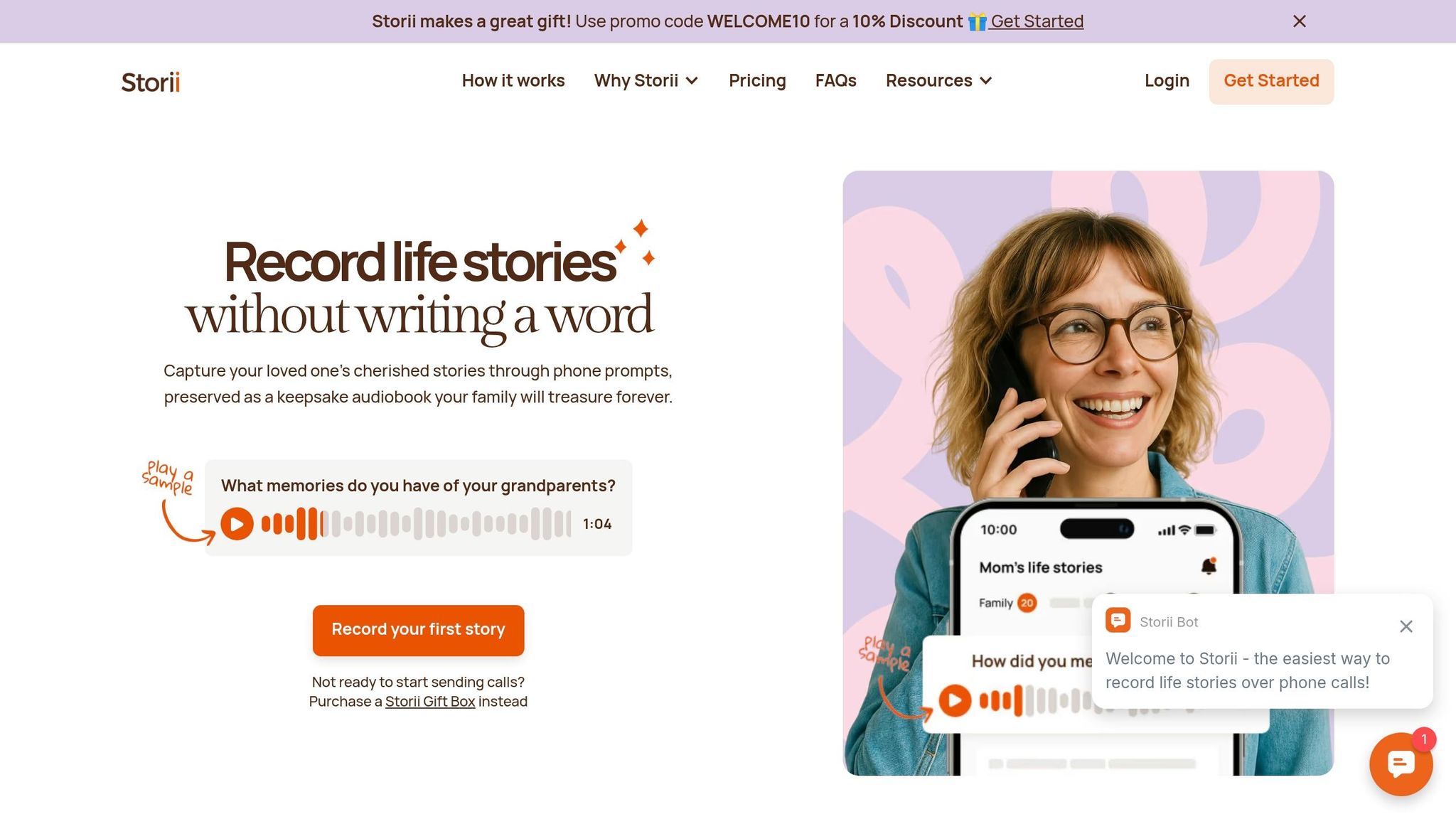
Storii takes that research and turns it into something simple: guided phone calls that help record and keep family stories.
How Storii supports storytelling across generations
Storii uses scheduled phone calls and 1,000+ life story prompts to help older adults talk through their memories. The prompts go past surface-level facts. They’re meant to draw out the feelings, values, lessons, and meaning behind each story.
Research shows that most people carry a core set of around 10 stories they come back to again and again when sharing their biggest life lessons. It also shows that about 87% of the stories older parents repeat come from their teens and twenties - the years when identity and values often take shape. Storii’s prompts are built to reach those early memories, not just the easiest stories to tell.
Through guided phone calls, Storii helps families keep voices, family customs, and lived history. One call might seem small in the moment, but regular calls can build a family record that lasts.
Why Storii works well as a gift for parents and grandparents
One reason Storii works so well is that it keeps things simple. There’s no app to download and no internet or smartphone required - just a phone call. For many older adults, that removes a big hurdle. They may not want to learn new tech, but they’re more than comfortable picking up the phone.
After each call, Storii automatically transcribes the conversation. Families can then download the recordings as audiobooks or PDFs and share them securely by email, text, or private link.
For adult children, Storii is a practical gift that also means something. It offers an Annual Plan at $99/year, along with a Gift Box option at $119 that arrives as a physical gift box. That gives families a simple way to save stories before they slip away - and to keep sharing them for years.
Conclusion: Record Family Stories Before They Are Gone
The best time to record family stories is now.
Research shows that storytelling strengthens family bonds and helps keep lived history in the family. But those stories don’t stick around on their own. They have to be recorded on purpose. Stories don’t preserve themselves.
The message is simple: stories matter most when they’re recorded before they disappear.
You don’t need to record everything. You just need to start with what matters most. For most families, that means a small set of core stories told in their own words, while those memories are still clear. What counts is doing it bit by bit, before those details fade.
For families ready to act, a simple routine can remove the biggest hurdle. Storii makes that easier with guided phone calls and automatic transcription. Begin recording now so the next generation can hear these voices, not just read about them.
FAQs
Why do family stories matter so much?
Family stories do more than fill quiet moments at the dinner table. They link one generation to the next, helping families understand where they came from and what they’ve lived through together.
For younger family members, those stories can shape identity. They offer a sense of belonging and show that hard times were faced before - and survived. That kind of perspective can build empathy and resilience in a way facts alone often can’t.
For older adults, sharing those memories can bring a strong sense of purpose. It reminds them that their life experience matters, and that the stories they carry still have a place in the family. In the process, those conversations often pull people closer.
Research suggests that children who know their family history often have higher self-esteem and less anxiety.
What should I ask to get meaningful stories?
Ask casual, open-ended questions instead of stiff interview prompts or yes-or-no questions. You want a conversation, not an interrogation. A good place to start is with everyday life: what their neighborhood felt like when they were a kid, which games they played after school, or what family routines shaped their week.
Begin with easy, familiar topics like family traditions, favorite meals, or childhood games. Once the conversation starts to flow, you can ease into deeper subjects. Storii can help with prompts that draw out rich, detailed stories.
How can I start recording stories with an older relative?
Start somewhere easy and familiar. A quiet living room, the kitchen table, the back porch after dinner - anywhere that feels relaxed is better than turning it into a stiff interview.
Pick a relative who carries a lot of family history, then keep each session short. About 15 to 20 minutes is usually enough. That gives you time to get into the story without leaving them tired or overwhelmed.
Ask open-ended, specific questions, and give them room to answer in their own way. Then slow down and listen. Often, the best stories show up in the pause after the first answer.
If recording feels like a hassle, Storii can make it much easier. It uses automated phone calls, question prompts, and transcription to help save stories, which is especially helpful for relatives who aren't very comfortable with newer tech.
Related Blog Posts
- 10 Gift Ideas for Sharing Family Stories
- How Life Story Sharing Strengthens Family Bonds
- How Grandparents' Stories Strengthen Family Ties
- Questions to Spark Generational Storytelling
{"@context":"https://schema.org","@type":"FAQPage","mainEntity":[{"@type":"Question","name":"Why do family stories matter so much?","acceptedAnswer":{"@type":"Answer","text":"<p>Family stories do more than fill quiet moments at the dinner table. They link one generation to the next, helping families understand where they came from and what they’ve lived through together.</p> <p>For younger family members, those stories can shape identity. They offer a sense of belonging and show that hard times were faced before - and survived. That kind of perspective can build empathy and resilience in a way facts alone often can’t.</p> <p>For older adults, sharing those memories can bring a strong sense of purpose. It reminds them that their life experience matters, and that the stories they carry still have a place in the family. In the process, those conversations often pull people closer.</p> <p>Research suggests that children who know their family history often have higher self-esteem and less anxiety.</p>"}},{"@type":"Question","name":"What should I ask to get meaningful stories?","acceptedAnswer":{"@type":"Answer","text":"<p>Ask casual, open-ended questions instead of stiff interview prompts or yes-or-no questions. You want a conversation, not an interrogation. A good place to start is with everyday life: what their neighborhood felt like when they were a kid, which games they played after school, or what family routines shaped their week.</p> <p>Begin with easy, familiar topics like family traditions, favorite meals, or childhood games. Once the conversation starts to flow, you can ease into deeper subjects. Storii can help with prompts that draw out rich, detailed stories.</p>"}},{"@type":"Question","name":"How can I start recording stories with an older relative?","acceptedAnswer":{"@type":"Answer","text":"<p>Start somewhere easy and familiar. A quiet living room, the kitchen table, the back porch after dinner - anywhere that feels relaxed is better than turning it into a stiff interview.</p> <p>Pick a relative who carries a lot of family history, then keep each session short. <strong>About 15 to 20 minutes</strong> is usually enough. That gives you time to get into the story without leaving them tired or overwhelmed.</p> <p>Ask open-ended, specific questions, and give them room to answer in their own way. Then slow down and listen. Often, the best stories show up in the pause after the first answer.</p> <p>If recording feels like a hassle, <strong>Storii</strong> can make it much easier. It uses automated phone calls, question prompts, and transcription to help save stories, which is especially helpful for relatives who aren't very comfortable with newer tech.</p>"}}]}

Storii Gift Box
Best for special occasions such as Mothers Day, Fathers Day, Birthdays and the Holidays.

