
.png)
Big life changes can shake your identity, stress your family, and trap you in negative thought loops. Guided storytelling helps by giving you a simple way to name what changed, process grief, and reconnect your past, present, and next chapter.
If I had to sum up the article in plain English, it’s this:
- Life transitions like retirement, grief, divorce, caregiving, relocation, and health changes often bring stress, isolation, and loss of purpose.
- Guided storytelling uses short prompts to help you talk or write through one part of your story at a time.
- This can help with emotional regulation, family communication, and a steadier sense of self.
- It works best when prompts are specific, repeatable, and easy to use.
- It can be done alone, with family, or through phone-based tools like Storii.
A few points stand out. Research tied to expressive writing and narrative therapy suggests that putting hard experiences into words can reduce emotional strain and help people process change. And when families share stories without interrupting or correcting, they often understand each other better.
What I like here is the focus on simple use: one prompt, one memory, one honest response. Not a memoir. Not polished writing. Just a way to move from shock to meaning.
At its core, this article shows how guided storytelling can help you:
- name the loss
- keep your life story connected
- stay in touch with other people during hard seasons
That’s the heart of it. The rest is about how to do it in a way that feels safe, steady, and easy to return to.
The Main Problems People Face During Major Life Changes
Stress, Grief, and Loss of Identity
When a major role ends, it can rattle your sense of self. Retirement is a clear example. Losing the structure of work can feel disorienting instead of freeing.
The same thing can happen after a serious health diagnosis or another major change. What disappears is not just a routine. It can also be a source of meaning. And when that part of life falls away, self-doubt often moves in. Many people start pulling back from others at the exact moment they need support most.
Negative Thought Loops and Withdrawal
Major transitions can also set off repeating negative thoughts. A layoff, for example, can start to feel like proof of failure. That kind of all-or-nothing thinking can push people into withdrawal.
Once someone feels trapped in a story that makes life seem smaller, reaching out gets harder. Pulling back can feel safer. Depression can follow, which often cuts down physical activity and social connection. That makes the cycle tougher to break. And those private thought loops don't always stay private. They often spill into family conversations.
Family Communication Breakdowns
Big life changes rarely affect just one person. They move through the whole family. The same event might bring relief to one person and grief to another. If there isn't a shared way to record and share family stories, misunderstandings start to build.
Some people stay quiet because they worry that honest conversations will stir up old conflicts. Others struggle to put their fears and needs into words at all. That gap between what people feel and what they can say is often where guided storytelling can help.
sbb-itb-ce27d7a
The Secret to Mastering Life's Biggest Transitions | Bruce Feiler | TED
How Guided Storytelling Reduces Emotional Strain
When life changes all at once, guided storytelling can turn a messy, hard-to-name experience into something you can follow. That matters most when the change brings grief, uncertainty, or a shaken sense of self. Instead of staying stuck in shock, people get a way to pause, look back, and start making sense of what happened.
Building a Clearer Picture of What Changed
One of the biggest upsides of guided storytelling is that it helps restore a sense of continuity. Prompts that move through different stages of life link the past to the present, so the change feels less like a total break and more like part of a longer life story.
That can help with a painful question many people ask after a major shift: "Who am I after this change?" Guided reflection doesn't erase what happened. It reminds you that your past, your present, and what comes next still belong to the same story.
Reframing Pain Without Dismissing It
When events start to feel more connected, they often feel a little less overpowering. Guided storytelling does not deny pain. It helps people put words to what was lost, what changed, and what may still be gained, without pushing fake optimism.
Narrative psychology distinguishes between a story of damage and a story of growth. Moving between those two story types can show steady, balanced processing. That pattern is linked to better well-being than personality traits or demographics alone.
Supporting Emotional Regulation and Resilience
Structure can calm things down. When emotions feel too big to sort out, shaping them into a story can ease shame by separating the problem from the person. It also makes the experience feel less threatening and more open to reflection.
Storytelling can bring back proof you may have lost sight of: times you adjusted, times you kept going, times life was hard and you still made it through. That can interrupt the cycle of self-doubt and withdrawal. It gives people a way to face the transition in front of them without losing sight of the strength they’ve shown before.
From there, the next step is finding reflective life story prompts and a format that make reflection simple to return to.
Practical Ways to Use Guided Storytelling During Transitions
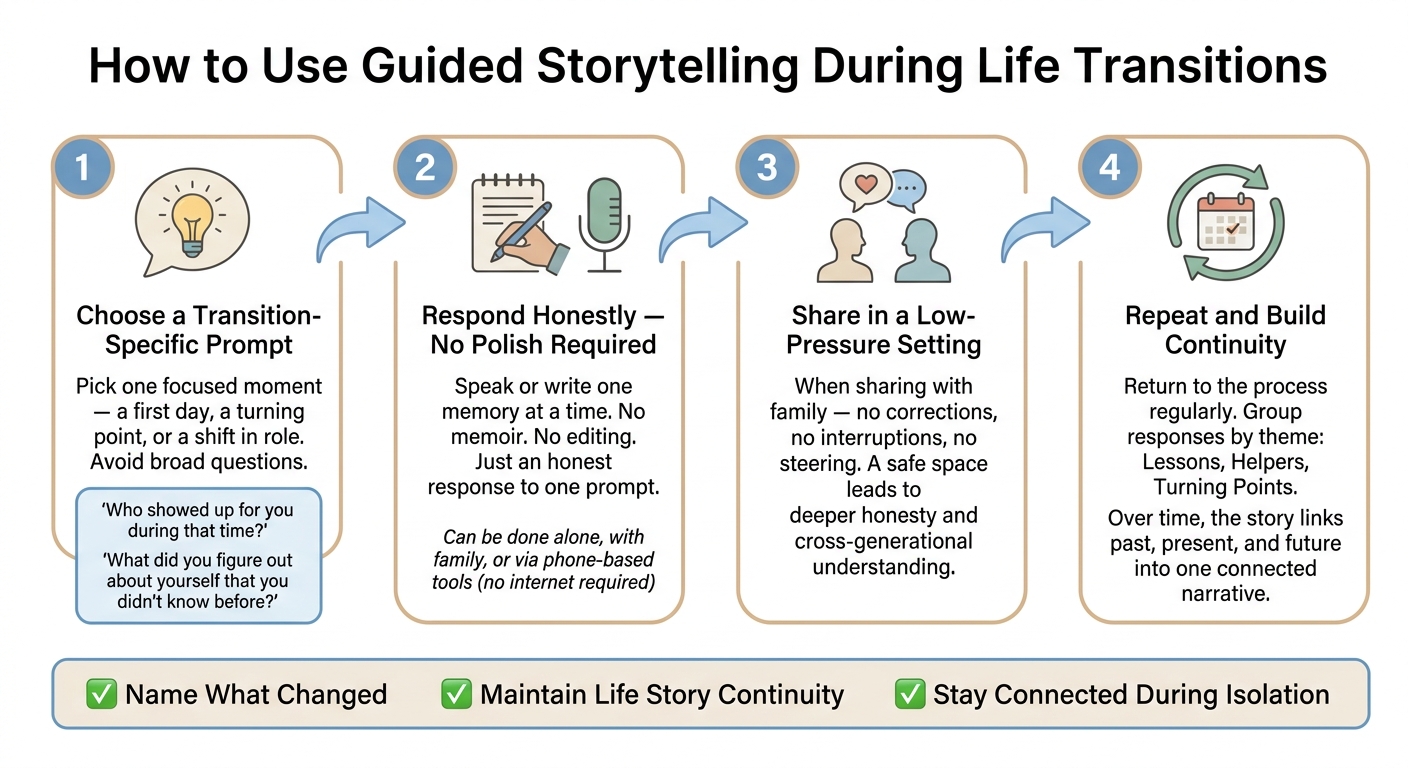
How Guided Storytelling Eases Life Transitions: A Step-by-Step Guide
Keep the format simple and easy to repeat. Start with one prompt, then use a structure people can come back to without much effort.
Use Transition-Specific Prompts and Strengths-Based Questions
Broad prompts can feel like too much. Narrow themes tend to work better. A prompt tied to one moment, like a first day, a turning point, or a shift in role, gives the mind something clear to focus on.
Strengths-based questions work well here too. Instead of asking, "How did the change affect you?", try:
- "Who showed up for you during that time?"
- "What did you figure out about yourself that you didn't know before?"
These questions don't skip the hard parts. They just steer the reflection toward what stayed steady, not only what broke down. It also helps to group responses by theme, such as lessons, helpers, and turning points.
Once the story feels clear, sharing it tends to feel easier.
Make Storytelling a Shared Family Practice
When family members listen, they get context. They get a better sense of what a transition felt like, and that can build patience and understanding across generations.
Keep the setting low-pressure. No corrections. No interruptions. No steering. When people feel safe, they tend to speak more openly. That kind of honesty helps build deeper understanding across generations.
That same simple setup also makes phone-based storytelling easier to stick with.
Use Phone-Based Storytelling for Consistency and Access
Easy access makes habits more likely to last. For people who want a simple option, phone-based storytelling skips apps and logins.
Storii uses automated phone calls with prompts, then transcribes the responses automatically. No internet or smartphone is required - just a landline or cell phone. Families can share stories securely, and recordings can be downloaded as audiobooks or PDFs.
Where Guided Storytelling Works Best and What to Keep in Mind
Best Uses: Aging, Retirement, Grief, and Relocation
Guided storytelling tends to help most when a life change shakes up identity, daily routine, or family roles. These moments can also disrupt a person’s sense of belonging, which is exactly why this kind of storytelling can be so useful.
After a career ends, storytelling can help someone see that their experience still matters. In grief and loss, it gives people a clear way to process what happened and put words around it. It can also help during aging and health changes, especially for people who want to save their stories for children, grandchildren, or future generations by following a few tips for sharing your life story. Relocation brings its own kind of upheaval, and guided storytelling can help people move through that shift with more purpose and clarity.
Across all of these transitions, the pattern is similar: storytelling helps turn disruption into something a person can name, understand, and share.
Benefits and Practical Considerations at a Glance
Guided storytelling helps people do three hard but important things:
- name what changed
- keep a sense of continuity in their life story
- stay connected to other people during isolating transitions
Those three things get at the heart of why major transitions can feel so hard.
That said, it helps to go in with open eyes. The process can bring up painful memories, old regrets, unresolved tension, or hard periods that were never fully worked through. That doesn’t mean people should avoid it. It just means some stories may be easier to tell with a trusted listener present, and in some cases, support from a trained professional may help.
Privacy matters too. Family members can hear the exact same story and walk away with very different reactions. Tools like Storii speak to that concern directly. Stories are shared securely, people can control who gets access, and recordings can be saved as audiobooks or PDFs.
Conclusion: Turning Change Into a Story You Can Carry Forward
The point isn’t just reflection. The deeper value of guided storytelling is that it can give people a steadier way to move through change.
For anyone who wants a repeatable format, Storii makes guided storytelling simple to start and simple to keep up with. It offers automated phone calls, 1,000+ prompts, and doesn’t require internet access or a smartphone. That means the stories people record can support resilience in the moment and help families stay connected for years to come.
FAQs
How is guided storytelling different from journaling?
Guided storytelling gives reflection a clearer shape. Journaling is often solitary and wide open. Guided storytelling, by contrast, uses prompts to focus your attention on specific life stages, themes, or milestones.
It can also ease decision fatigue and help turn memories into narratives that mean something. In some cases, it includes support such as automated calls that encourage reflection, connection, emotional clarity, and legacy-building.
What if a prompt brings up painful memories?
Move at your own pace and put your well-being first. Share only what feels okay, and begin with the stories you’re ready to tell.
If a memory feels too intense, it’s okay to pause. The goal is to help you feel in control, not flooded, and you can change how much detail you share so the experience stays supportive and easier to handle.
How often should I use guided storytelling during a transition?
Guided storytelling works best when it feels natural, not forced. One simple way to use it is to make it part of your day. You might look back on what happened, talk through a good moment, or put positive experiences into words. Small habits like that can make the practice feel more personal and easier to stick with.
If you use Storii, you can schedule up to three calls per week at times that work for you. You’re in control of the pace, so you can adjust how often you do it and how much you share based on your comfort level. And if you need space, it’s fine to pause and take breaks.
Related Blog Posts

Storii Gift Box
Best for special occasions such as Mothers Day, Fathers Day, Birthdays and the Holidays.

