
.png)
Most family stories are lost within three generations, so I’d start recording your family's stories now. This guide gives me a simple way to do that with 94 questions I can ask parents, grandparents, and other relatives in short, low-pressure talks.
Here’s the core idea:
The article is built around these 4 groups of questions:
A few points stand out:
If I want a simple system, I can use these questions one talk at a time and keep the answers in recordings, transcripts, notes, or photos.
Topic
What it covers
Question count
Childhood and growing up
Home, school, friends, early memories
18
Family and traditions
Holidays, recipes, heirlooms, family habits
24
Work and life lessons
Jobs, money, setbacks, advice
20
Everyday life and favorites
Routines, meals, music, hobbies, daily life
22
In short: this article is a plain, step-by-step set of prompts I can use to help family members tell stories before those memories fade.
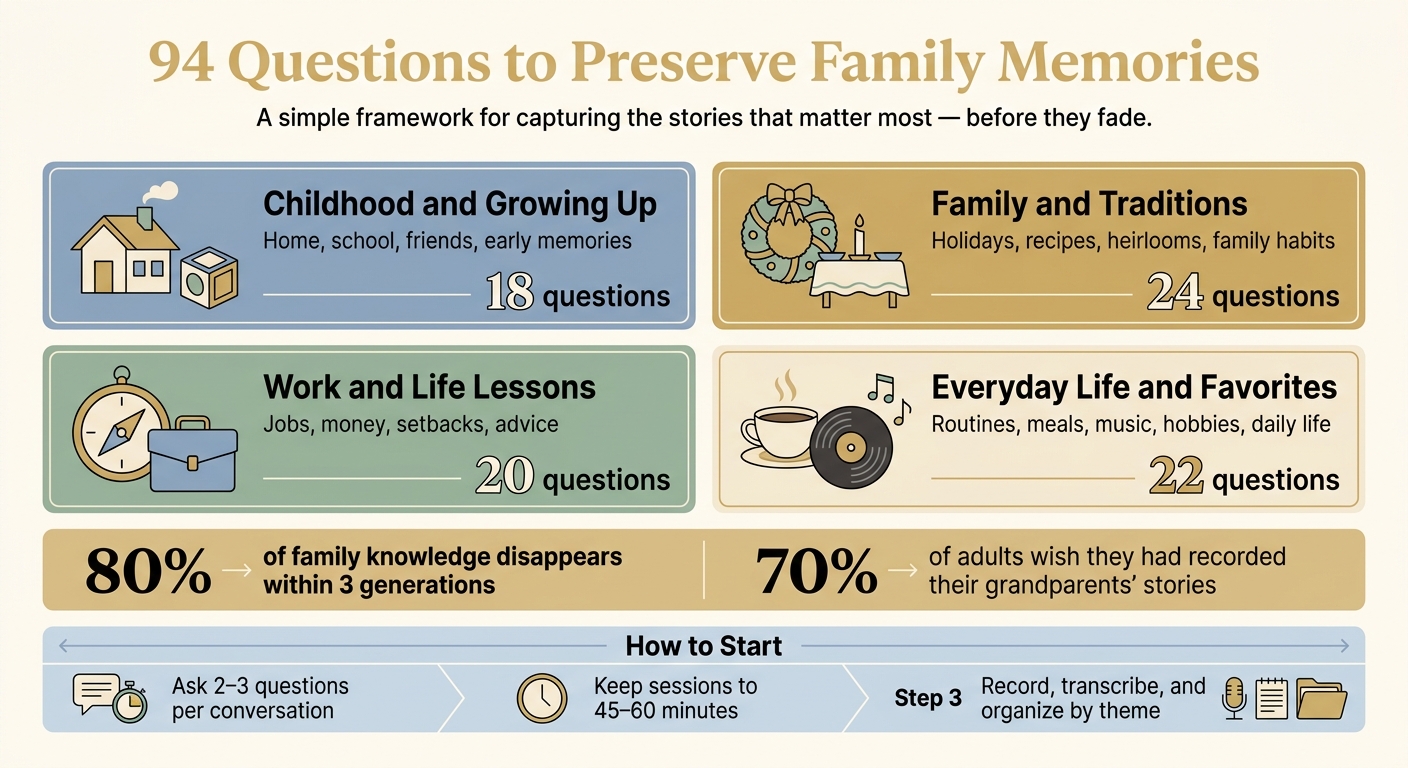
94 Questions to Preserve Family Memories: 4 Key Categories
AWESOME TIPS for Interviewing Family Members
sbb-itb-ce27d7a
How to Use These Questions With Your Family
Set an easy, relaxed tone before you begin. The way you ask matters just as much as the question itself. A simple opener works well: "I'd love to hear what your life was like before I came along."
Start light, then go deeper. Begin with sensory details, like what the kitchen smelled like when they were growing up or what sounds they remember from the neighborhood. Then, if the moment feels right, move into harder topics like struggles or lessons life taught them. If a question feels too personal, skip it. No pressure. The point is connection, not interrogation. Sharing these shared stories can build empathy and strengthen bonds between generations.
Short conversations usually work better than long ones. Aim for 2–3 questions per conversation. If you plan a sit-down storytelling session, keep it to 45–60 minutes so no one gets tired and the mood stays good. A lot of the best stories show up on their own anyway - while looking through old photos, doing dishes, or driving somewhere together.
Always ask before you record. Most people are fine with it, but asking first builds trust. If you want to save the stories afterward, Storii can call a standard phone line, record responses, and transcribe them automatically.
1. Childhood and Growing Up
Childhood is often where the first family stories slip away.
Once the conversation feels easy, these prompts can help bring back early memories with more color and detail.
They focus on the homes, schools, and daily habits that shaped a person’s early years. The trick is to ask for one clear detail, not a huge life summary. Go for the smell of the kitchen, the view from a bedroom window, or what happened right after school. Sensory prompts tend to work much better than broad questions when you want vivid memories.
Here are 18 questions to get started:
If they say "I don't remember", make the question smaller. Ask about one toy, one neighbor, or one room. Tiny details often open the door to the story.
2. Family and Traditions
Family traditions hold some of the deepest stories a family has. They often show up around holidays, meals, and big life moments. And over time, they can shift, fade, or turn into something new as the family changes. Once you move past childhood memories, this is where the conversation starts to get at the rituals that made home feel like home.
The easiest way to bring these memories back is to ask who kept a tradition going, what it looked like, and why it meant so much. That last part matters. You’re not just asking what happened. You’re asking what gave it weight. A photo album, handwritten recipe card, or old heirloom can help spark details that might not come up otherwise.
Here are 24 questions to explore family traditions:
3. Work and Life Lessons
After family traditions, work stories help show how those same values played out in day-to-day life.
Work stories turn family values into something you can see: habits, risk-taking, grit, and the way people handled pressure. These prompts aren't just about jobs. They're about what people carried with them from one stage of life to the next. A good place to start is the first job, then follow the thread from there. Go from early work memories into the harder chapters. If someone pauses, let the silence sit for a moment. That's often when the memory comes back.
Here are 22 questions to dig into work and life lessons:
4. Everyday Life and Favorites
Work and career stories tell you what someone did. Everyday life tells you who they were. This is where family history starts to feel lived-in: the smell in the kitchen, the view from a bedroom window, the same Saturday routine week after week.
Everyday Details
The small stuff often sticks the longest. A certain soup on the stove. A screen door slamming. The sound of the local news at 6:00 p.m. These ordinary details can bring back the strongest family memories.
Sensory prompts help people get there. Smells, sounds, routines, and little habits often open the door to stories that might stay buried with broader questions. If you're looking for more ways to encourage these conversations, check out these tips for helping seniors share life memories. They also make stories easier to tell, because people can picture the scene instead of trying to sum up a whole period of life at once.
Use these questions to ask seniors for life stories to bring out the everyday details that make family stories feel real.
Here are 22 questions to explore everyday life and favorites:
Organizing, Recording, and Sharing Family Stories
Organize stories as you collect them so they stay easy to find later. That one habit can turn a pile of answers into a family archive.
A simple way to do this is to group stories by theme: Childhood and Growing Up, Family and Traditions, Work and Life Lessons, and Everyday Life and Favorites. Keep recordings, transcripts, photos, and notes together in one place. If you use the same four themes as the question list, each story is much easier to sort when you come back to it.
It also helps to stick to one file naming format, like YYYY-MM-DD_Theme_SubjectName. Small detail, big payoff. When files are named the same way every time, searching for a story is a lot less of a headache.
A spreadsheet can help too. Use it to track each question, who answered it, and the date. You can also use a family history timeline planner to visualize these milestones. That gives you a clear record of who answered what, and when.
Keep sessions short and regular. Pacing matters. Fewer prompts in one sitting often lead to deeper, more detailed answers.
Storii can record, transcribe, and help families download and share stories in one place. That makes family stories easier to save, revisit, and share.
Conclusion
Use these questions one conversation at a time. A quiet morning or a long drive is enough. Little talks stack up, and over time they become a family record you can keep.
Most family knowledge disappears within three generations if it isn’t preserved. That’s why it helps to start now, before those stories fade.
If you want a simple way to keep everything in one place, Storii records and transcribes life stories through automated phone calls, with no internet or smartphone required. Families can download recordings as audiobooks or PDFs and share them with loved ones. The result is a story your family can hear, read, and keep.
A voice holds tone, laughter, and emotion in a way notes can’t. That’s often the difference between facts on a page and a family story that stays with people.
FAQs
How do I start if a relative is hesitant to talk?
Frame it as an invitation, not an assignment. That small shift changes the whole feel of the conversation. Let them know why their story matters to you. Say you want to hear it because you care, not because you’re trying to check a box.
Pick easy, relaxed moments too. A chat over coffee or a quiet car ride often works better than sitting down for a big, formal talk.
Start simple. Sensory prompts can open the door without making things feel heavy:
Keep the conversation short and let them set the pace. If they want to keep going, great. If not, leave room for next time. You can also use Storii prompts to help the exchange feel natural and low-pressure, more like a conversation than an interview.
What’s the best way to organize family stories?
Group family stories in a way that makes them easier to follow and easier to remember. A simple way to do that is to sort them by time period, like by decade, or by themes such as family traditions, childhood memories, or big life challenges.
You can also organize stories by life stage:
That approach often brings out small but meaningful details that help show what shaped your family’s identity.
To make the process less overwhelming, use structured prompts or a tool like Storii. It also helps to record stories across several short sessions instead of trying to do everything in one sitting.
Should I record conversations or just take notes?
Recording conversations is one of the best ways to preserve family memories. Notes can help, but audio or video holds onto the tone, emotion, and one-of-a-kind voice of your loved ones in a way written summaries just can't.
If you want to keep the process simple, Storii can automate recordings with scheduled phone calls and guided prompts. A basic voice recorder works too. The main thing is making sure those stories are saved.
Related Blog Posts
- 10 Life Story Prompts for Meaningful Family Conversations
- Questions to Spark Generational Storytelling
- Questions to Ask During Family Gatherings
- Questions to Ask Grandparents About Their Lives
{"@context":"https://schema.org","@type":"FAQPage","mainEntity":[{"@type":"Question","name":"How do I start if a relative is hesitant to talk?","acceptedAnswer":{"@type":"Answer","text":"<p>Frame it as an invitation, not an assignment. That small shift changes the whole feel of the conversation. Let them know why their story matters to you. Say you want to hear it because you care, not because you’re trying to check a box.</p> <p>Pick easy, relaxed moments too. A chat over coffee or a quiet car ride often works better than sitting down for a big, formal talk.</p> <p>Start simple. Sensory prompts can open the door without making things feel heavy:</p> <ul> <li>What did your childhood home smell like?</li> <li>What sounds do you remember from your neighborhood?</li> <li>What did the kitchen look like when you were little?</li> </ul> <p>Keep the conversation short and let them set the pace. If they want to keep going, great. If not, leave room for next time. You can also use Storii prompts to help the exchange feel natural and low-pressure, more like a conversation than an interview.</p>"}},{"@type":"Question","name":"What’s the best way to organize family stories?","acceptedAnswer":{"@type":"Answer","text":"<p>Group family stories in a way that makes them easier to follow and easier to remember. A simple way to do that is to sort them by time period, like by decade, or by themes such as family traditions, childhood memories, or big life challenges.</p> <p>You can also organize stories by life stage:</p> <ul> <li>Childhood</li> <li>Adulthood</li> <li>Parenting</li> </ul> <p>That approach often brings out small but meaningful details that help show what shaped your family’s identity.</p> <p>To make the process less overwhelming, use structured prompts or a tool like Storii. It also helps to record stories across several short sessions instead of trying to do everything in one sitting.</p>"}},{"@type":"Question","name":"Should I record conversations or just take notes?","acceptedAnswer":{"@type":"Answer","text":"<p>Recording conversations is one of the best ways to preserve family memories. Notes can help, but audio or video holds onto the tone, emotion, and one-of-a-kind voice of your loved ones in a way written summaries just can't.</p> <p>If you want to keep the process simple, Storii can automate recordings with scheduled phone calls and guided prompts. A basic voice recorder works too. The main thing is making sure those stories are saved.</p>"}}]}

Storii Gift Box
Best for special occasions such as Mothers Day, Fathers Day, Birthdays and the Holidays.

