

I don’t want to realize too late that I never asked what my parents loved doing before I came along. You might know that feeling - the wish to hear more than the stories you already know by heart.
A favorite record. A fishing spot. A collection tucked away in a drawer. I think these small details deserve a place in our family stories, too. These 50 hobby questions give you a place to start, without making a simple conversation feel like an interview.
I’d start with one question, then let the story lead. <u>You don’t have to ask everything today.</u> If you're ready to begin, here is a guide on how to record your parents' life story. Just make room for something you haven’t heard before.
Let Your Parent Lead the Conversation
Before you call, choose three to five hobby prompts that match your parent’s interests and comfort level. Leave out topics that don’t fit their life. Start with a simple question about childhood or a hobby they still enjoy.
Leave room for pauses. Wait several quiet seconds before speaking, and resist finishing their sentences. They may be gathering a memory, deciding what to share, or just needing a little more time.
Ask one short follow-up, then let them finish. Jot down names or places you’d like to revisit later. If they wander into stories about friendships or family routines, follow along - those detours can become meaningful memories to record.
Skip any question that brings discomfort or confusion. Don’t test their memory or correct small details. If their answers get shorter, they seem distracted, or they grow tired, offer to stop and talk another day. Their comfort matters more than getting to another topic. Use the questions below as starting points, and let their answers guide the conversation. These prompts can help you find out things you didn't know about your parents.
sbb-itb-ce27d7a
1. What hobbies did you enjoy most as a child?
Start With the Hobby They Loved Most
Ask about their favorite childhood hobby: what made it special, who joined in, and where they spent time doing it. If the answer comes quickly, keep the conversation going by asking how they spent their afternoons after school or their weekends.
2. What did you usually do for fun after school?
Turn a Routine Into a Story
Let your parent walk you through a typical afternoon in their own words. What time did they have to be home? Do any meaningful family conversations or afternoons stand out? If they mention a friend, game, or place, ask a little more about it. These family history interview questions can help you dig deeper.
3. What hobbies did you pick up as a teenager?
Find Out What Drew Them In
The teen years bring more freedom to try things. Understanding these experiences helps record stories with generational context. Ask whether their hobby was new or grew from a childhood interest. What drew them in - the chance to be independent, make friends, express themselves, compete, or unwind? Ask how they got started and which memories stand out.
4. What pastime helped you relax after a long day?
Get to Know Their Wind-Down Routine
Ask how they unwound after work or chores, what helped them relax, and where they usually spent that time. Listen for the small details - the sounds around them, the setting, who joined them, or the tools they used. This is a great way to record family stories for future generations.
5. Which hobby has stayed with you the longest?
Follow a Hobby Across Decades
Find out what kept them coming back to this hobby over the years. You can even create custom questions to dig deeper into their specific interests. Ask them to share one memory that shows why it still matters.
6. What activity could you spend hours doing?
What Made Time Fly
If your parent has stuck with a hobby for years, ask what keeps them coming back. Invite them to describe a time they lost track of the clock - when hours slipped by - and what they enjoyed most.
Ask about the tools or materials they used, where they spent that time, and who joined them. What was it about the activity that held their attention? These interview questions for grandparents can help you uncover even more about their pastimes.
7. What did you enjoy about doing hobbies alone or with others?
Quiet Time or Good Company
After talking about what kept a hobby interesting, ask whether your parent preferred doing it alone or with others. What mattered most: quiet, independence, companionship, or a mix?
As you record your family's stories, During your call, use this follow-up prompt:
“Has what you enjoy alone or with others changed over time?”
Their answer can lead to stories about how work, parenting, or retirement changed what they wanted from a hobby - and help strengthen family bonds by preserving memories of the friends and family who shared it.
8. What hobby did you share with friends or siblings?
The People Behind the Pastime
If they shared a hobby, ask who joined them and where they spent time together. Then ask:
What memory do you remember most from doing it together?
Give them time to finish before asking what each person did. Names, places, and roles help preserve the memory of the people, not just the pastime.
9. How did your hobbies change after you became a parent?
How Parenting Affected Hobbies
Parenthood can change how you spend your free time. Ask which hobbies they put on hold, which fit into family life, and which stayed the same. Did any become activities they shared with the children? Did they return to others later?
Ask for one specific memory: roughly what year it was, how old the children were, and how they felt about the change.
10. What hobby would you still like to try?
Talk About a Hobby They’d Like to Try
Ask what draws them to it, where the interest began, and what’s kept them from starting. Give them time during the call to tell the story.
Then ask what might make it easier to give it a go. Keep the pressure off - sharing a dream doesn’t mean they have to act on it right away.
11. What did you collect when you were young?
Turn a Collection Into a Story
A childhood collection can hold more than objects. It can bring back the people, places, and small adventures behind each piece.
If your parent collected something, ask how it started, where they found new pieces, and who they traded with. Do they still have any tucked away? Focus on the memories, not what the collection might be worth, as sharing life stories can strengthen family bonds.
12. What was your first collection?
Start With the First Item
If they’ve already shared how the collection began, go a little deeper. Ask about the item that started it all. Using questions about hobbies to record family stories can help you uncover these hidden details. Pause, then ask:
Do you remember what the first item was?
If “first” feels unclear, ask them to describe the earliest collection they remember.
13. How did your collection begin?
Why the Collection Kept Growing
Ask what kept them coming back for another piece. Find out when the collection began, how old they were, and where they lived. Where did they find new additions, and who helped them along the way?
14. What was your favorite item in your collection?
Ask what made it stand out.
Once you’ve talked about how the collection started, ask which item they loved most. Was it the story behind it, how it looked or felt, or the person it reminded them of? If they no longer have it, ask where it went and why it still means something to them. This is a great way to begin recording your family's stories.
15. Who helped you add to your collection?
After talking about their favorite item, ask who gave them their first piece or helped them build the rest of the collection.
Invite them to share how that person helped:
Giving gifts, shopping together, or trading items.
Then ask about one outing or exchange. Who was there, where did it happen, and when?
16. What do you remember about trading collection items with friends?
If they traded with friends, ask about a swap that still sticks with them. Who was it with? What did they give, and what did they get in return? Ask what made that trade memorable and how they felt afterward.
17. Where did you keep your collection?
Ask where they kept their collection and why they chose that spot. What did the space look like? Who was allowed to handle the items? These details can tell you whether the collection was on display or tucked away for protection. The place they chose can say as much as the items themselves.
18. What made your collection special to you?
Once you’ve covered the practical details, turn to the meaning behind the collection. Ask who or what it reminded them of and why it still matters to them. Focus on the memories, not the price tag.
19. Which items from your collection do you still have?
Ask your parent which pieces they still have. This is a great way to transition into more meaningful questions to ask your mother or father about their life. Invite them to pick one and describe it: where it came from, why they kept it, and where it is now.
20. What collection would you start today?
After talking about past collections, ask your parent meaningful questions about their life and what they’d start collecting today - and why it matters to them now. Give them time to picture that first item. Then ask what makes it meaningful and where they’d look for it.
21. What clubs or organizations did you belong to?
After hobbies and collections, ask about the groups that shaped your parent’s social life, from school activities and hobby groups to neighborhood gatherings. Ask for the group’s name and where it met, then how they joined. If you’re talking on the phone, pause to let them share those event-based life story recordings before moving on.
22. What did you enjoy about being part of a club?
Once they name a club, ask what they loved most - the friends, teamwork, trips, performances, or feeling that they belonged. Then ask them to share one gathering that stayed with them and why it mattered.
23. What school or community group stands out in your memory?
Start with the place and the people. If the group’s name is hard to remember, ask where it met, who regularly attended, and roughly what years they were involved. Exact dates aren’t needed.
24. What volunteer activities did you do with a club?
If they volunteered through a club, ask what they did and who joined them. Was it a regular commitment? Give them time to share a memory that’s stayed with them. Sharing these life stories builds intergenerational bonds and preserves your family legacy.
25. What kind of music did you enjoy growing up?
Ask your parent to name a genre, artist, or song they loved growing up, or try these questions to ask your dad. Where did they hear it - at home, at school dances, on the radio, or with friends? Ask what memory comes back when they hear it now.
26. Who introduced you to your favorite music?
If your parent mentioned a song, artist, or genre in the last question, ask who first shared it with them. How did they pass it along with generational context? What did that person mean to your parent? And did your parent later share the music with someone else?
27. What memories do you have of playing an instrument or singing?
If they sang or played an instrument, ask about one moment they remember well. Where were they? Who was listening? How did they feel? Singing at home, school, church, or with friends counts, too.
If they’re comfortable, invite them to hum a tune or describe the sound. There are many reasons to audio record life stories like these to preserve the unique tone of their voice. Give the story room to unfold before asking about dates, and keep these life story interview tips in mind to keep the conversation flowing.
28. How did music fit into family celebrations?
If music was part of family gatherings, ask your parent to take you back to one celebration - a birthday, holiday memories, or another family get-together. Who was there? Who chose the music? What did everyone listen to, sing, or dance to? Ask whether it happened every year.
Save the song title and people’s names with the recording so listeners can connect the music to the people who made it part of family life.
29. What crafts or creative activities did you enjoy?
If your parent liked making things by hand, shift from music to the crafts they enjoyed.
Sewing, knitting, painting, woodworking, or pottery.
Ask what they made and who taught them. What tools did they use? Do they still have any finished pieces?
30. Who taught you a creative skill?
Focus on the person behind the lesson. Ask your parent what their teacher was like and how that person reacted when your parent made mistakes. Did learning together bring them closer? Give your parent time to pause and remember what that person meant to them.
31. What sports did you play as a child?
Next, turn to the sports and games your parent loved growing up. Ask what they played, when and where they played, and who joined them. Then ask which memory has stayed with them most.
32. What did you enjoy about playing or watching sports?
Once they’ve shared which sports they played, ask whether they preferred playing, watching, or both. Was it the skill, the teamwork, or the thrill of sharing those moments with others? Then give them time to describe the feeling in their own words.
33. Which sport did you enjoy most?
If they mentioned several sports, ask which was their favorite and why. Find out how they got into it, then invite them to share a memory that has stayed with them.
34. What do you remember about a team you played on?
If they played on a team, start with the basics: the team’s name, the sport, their age or grade, and their position or role. Then ask about a teammate or coach who’s stayed in their memory.
From there, talk about practices, team rituals, travel, and friendships. What came easily, and what was hard? Ask which moment comes to mind first.
35. Who was your favorite athlete or sports team?
If they played sports, move from memories of playing to watching. What drew them to that athlete or team? What did they respect most about them? Ask who they watched games with, which game-day rituals they remember, and the game they still talk about. Local teams count, too - the memory matters more than the fame.
36. What is your favorite sports memory?
After talking about favorite teams and athletes, ask about one sports memory that has stayed with them - whether they were playing, coaching, or watching. Give them a moment, then ask where they were, who was with them, what happened, and what stands out most.
37. What did you enjoy doing outdoors?
Shift from sports to the everyday things they loved doing outside. Ask them to share a favorite memory: you can even use childhood memory question prompts to dig deeper. where they were, who was with them, and which season they liked best. If you’re talking on the phone, mention a familiar place to help bring the memory back.
38. What outdoor activity did you do with your family?
Once they’ve shared what they enjoyed outdoors, settle into one memory of time spent together as a family.
This could be a family walk, backyard game, fishing trip, camping outing, gardening day, or park visit.
Ask where they went, who joined them, and what everyone did. Was it a regular outing or something they only did once? Help bring the day back by asking what they saw, heard, smelled, or felt.
39. What outdoor place did you love visiting?
Ask about an outdoor place tied to those memories, and consider ways to preserve family memories like these. What made it special? Talk about what they did there, whether they’ve been back, and how the place has changed.
40. How have your favorite physical activities changed over time?
Build on the conversation about outdoor pastimes by asking how their favorite physical activities fit into daily life - as a child, as a parent, and now. Invite them to share a memory: what they did, when, and who joined them. Talk about how those activities changed with their time, health, or interests, then move on to their typical weekend routine.
41. What did a typical weekend look like growing up?
Once you’ve talked about how activities changed over time, ask your parent to walk you through a typical weekend - from Saturday morning to Sunday night. How did the two days differ? Which part did they look forward to most?
If you’re talking on the phone, give them time to pause and piece together those days. This is a great way to record your parents' life story and preserve these memories.
42. How did you spend Saturday mornings?
Ask your parent to walk you through a typical Saturday morning growing up. Who was there, and what came next? Maybe it was breakfast, chores, errands, cartoons, sports, or a trip around the neighborhood.
43. What did your family usually do on Sundays?
After talking about Saturday mornings, turn to Sundays. Ask which routine they loved most and who was there to share it. Then invite them to describe one Sunday that stayed with them — or explore other top questions to ask seniors for life stories - and what made it stand out.
44. What weekend activity did you regularly enjoy with friends?
Shift from family routines to weekends with friends. Who came along? Where did they go, how did they get there, and how often did they meet up?
Write down friends’ names and nicknames. Ask whether your parent still keeps in touch with anyone from the group, then invite them to share one memory from those weekends.
45. What hobbies did you enjoy during vacations?
Shift from weekend routines to hobbies they returned to on trips, school breaks, or staycations. Focus on the activity, not the destination. Ask how they made time for it during the trip or break, then invite them to share what they saw, heard, or felt.
46. What seasonal pastime did you look forward to?
Move from everyday routines to the hobbies they saved for certain seasons by asking for one memory of a seasonal pastime - such as summer swimming, fall leaf collecting, winter sledding, spring gardening, or holiday traditions - why they looked forward to it, who introduced it, and whether anyone in the family still does it.
47. What activity brought your family together?
Some family memories start with something simple: an activity everyone returned to, time after time. Move from your parent’s individual hobbies to the routines the family shared. Ask which activity brought everyone together and what they remember most.
Invite them to tell you about one particular occasion. Who took the lead? How did each person join in, including relatives who took part in different ways? Ask what made that time together matter.
48. What hobby did you share with a spouse, partner, or close friend?
Move from family routines to something your parent enjoyed with one person. Let them choose the relationship, then ask how they started the hobby together, how it brought them closer, and what they learned about each other along the way.
If you’re recording by phone, include the person’s name, where they shared the hobby, and roughly when it began.
49. What hobby did you share with your children?
Ask your parent to pick one hobby they shared with their children. Give them time to recall a favorite memory, tradition, or lesson from it. Then ask what they loved most about spending that time together. This is a wonderful way to preserve family history for future generations.
50. Which hobby-related memory would you most like our family to remember?
After talking about hobbies your parent shared with others, ask them to choose one story they’d like the family to keep and pass down. What made that moment special? Write down who was there, where it happened, and roughly when. You can even compile these stories into memory books for future generations.
Recording Your Parent's Hobby Stories by Phone
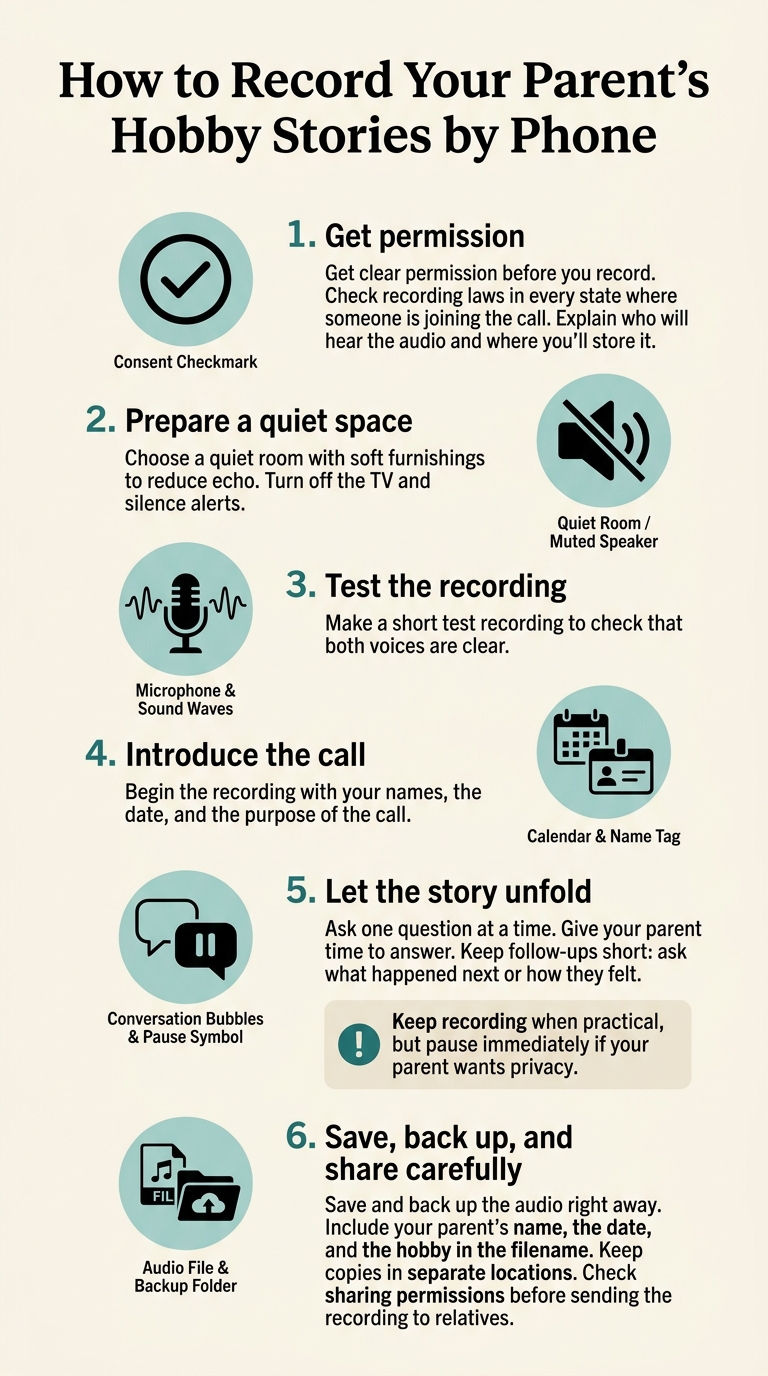
How to Record Your Parent’s Hobby Stories by Phone
A little setup lets you focus on your parent’s stories rather than the recording process. Get clear permission before you record, and check the recording laws in every state where someone is joining the call. Explain who will hear the audio and where you’ll store it.
Choose a quiet room with soft furnishings to reduce echo. Turn off the TV, silence alerts, and make a short test recording to check that both voices are clear. Begin the recording with your names, the date, and the purpose of the call.
Ask one question at a time, then give your parent time to answer. Keep follow-ups short: ask what happened next or how they felt. Leave the recording running when practical, but pause immediately if your parent wants privacy.
Save and back up the audio right away. Include your parent’s name, the date, and the hobby in the filename, and keep copies in separate locations. Check sharing permissions before sending the recording to relatives.
Use the hobby prompts above to keep the conversation going. Storii offers life-story phone calls and transcription, with up to three calls per week and 1,000+ questions on paid plans.
Keep the Stories Going
After each call, think about the memories behind the hobby - the friendships, family traditions, and turning points. The activity is a starting point. The people and feelings tied to it often matter most.
Pick just one or two questions for your next call. One good story is enough. There’s no need to work through every question; give the conversation room to wander.
Save the others for another day - music one week, collections the next. When you’re ready, Storii can help you grabar la historia de vida de tus padres y preservar sus recuerdos.
FAQs
What if my parent says they never had hobbies?
Don’t push back. Use gentle, open-ended prompts and let them decide what counts as a hobby:
“What did you do for fun in your spare time?”
“What interests kept you busy when you weren’t working?”
Then help them recall a specific moment:
“Can you describe a typical Saturday morning doing that?”
If their answer is still vague, follow up with:
“What was that like for you?”
“What happened next?”
How can I encourage stories beyond one-word answers?
Ask specific, open-ended questions that give your parent room to share memories and feelings:
“What inspired you to start gardening?”
“Can you describe a morning in your garden that stands out?”
Let their answers guide you. Follow up with:
“What happened next?”
“How did that make you feel?”
Prepare a few questions suited to your parent beforehand, but keep the call relaxed. Give them space to share as much as they want.
What if a hobby brings up painful memories?
Don’t press for details. Help your parent feel at ease, acknowledge that some memories may be hard to talk about, and let them set the pace. If they hesitate, gently shift toward a happier, related memory.
Keep your wording gentle and free of judgment. Ask open-ended follow-up questions that respect their feelings, and pause or change the subject if they seem uncomfortable.
Related Blog Posts

Storii Gift Box
Best for special occasions such as Mothers Day, Fathers Day, Birthdays and the Holidays.

