
There are questions we always mean to ask. We tell ourselves there’s more time - one more visit, one more call, one more holiday dinner. Then one day, it hits hard: I never asked.
I like this piece because it solves that problem in a simple way. Instead of one big, hard question about someone’s whole life, it gives you short prompts tied to key parts of life, so you can start now, keep calls easy, and come away with stories you might have missed.
Here’s the short version: this article gives you 72 phone-friendly prompts built for family story calls, split across 7 life stages. It also shows how to use them without turning a warm talk into an interview.
- Why this works: one memory is easier to answer than “tell me about your life”
- How to use it: ask 3 to 5 questions per call, or even just 1
- Where it goes: childhood, teen years, work, love, family, loss, and later life
- What matters most: let pauses happen, skip heavy topics if needed, and follow the story where it goes
A few points stand out to me:
- The advice is simple: send a question ahead of time if you can
- The tone stays gentle around grief and hard memories
- The focus stays on real conversation, not finishing a list
- The article keeps the tech in the background, which is smart for older relatives who prefer a normal phone call
What I’d take from it: you do not need a two-hour sit-down to save someone’s stories. A few short calls over weeks or months can add up to a personal record your family will care about later.
That matters more than most people think. In one 2023 AARP survey, about 77% of adults age 50 and older said it was important to pass along family stories and life lessons. But wanting to do it and starting are not the same thing. This kind of question list helps close that gap.
If you’ve been putting this off, this article gives you a place to begin - with one small question, one phone call, and one story at a time.
Ask specific family interview questions for awesome stories
sbb-itb-ce27d7a
How to Use Milestone Questions on Family Calls
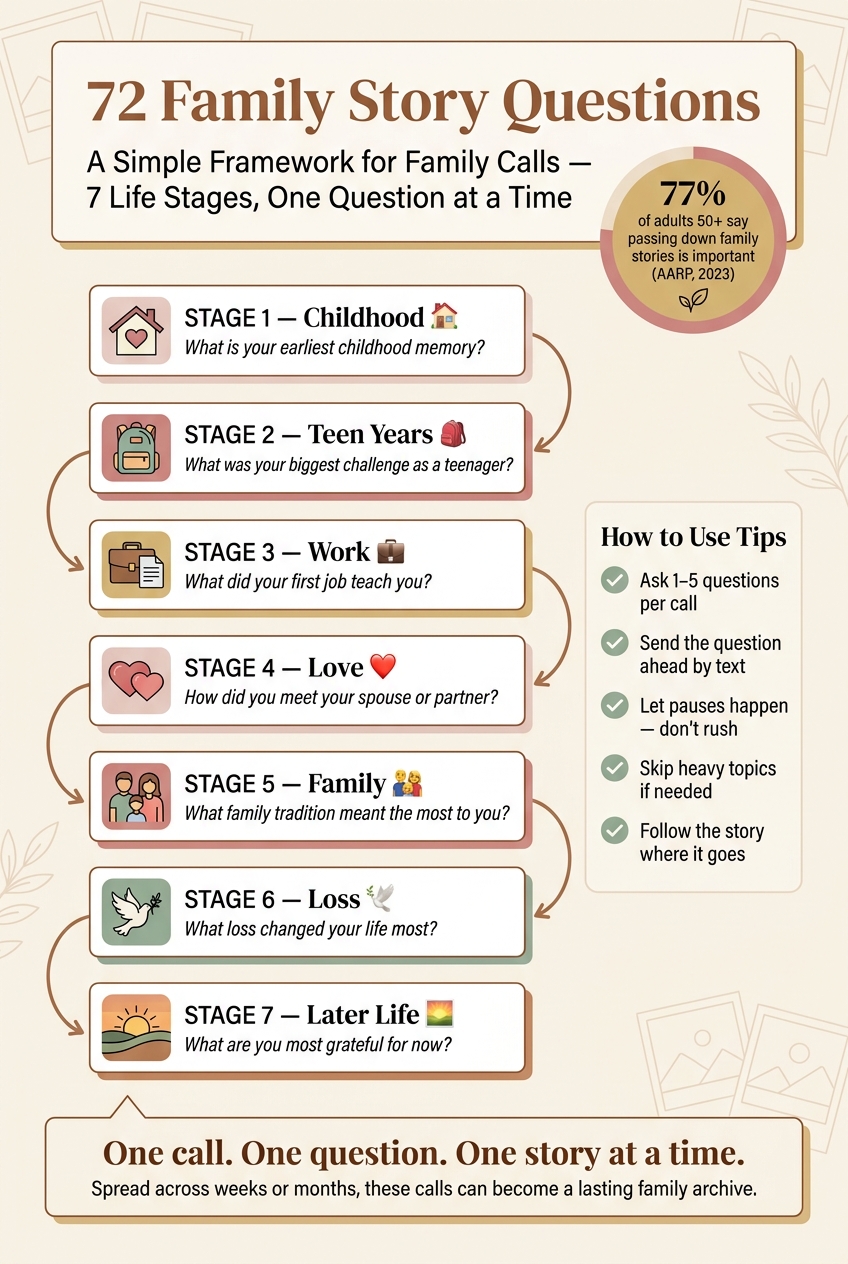
72 Family Story Questions: 7 Life Stages at a Glance
Use the questions below as conversation starters, not a checklist. Ask one question per call, then listen. If the story wanders into another memory, let it. That’s often where the good stuff shows up. If you want to ensure these memories are preserved, follow a guide to recording family stories to capture every detail.
Pauses matter here. If your relative goes quiet after a question, don’t rush in to fill the silence. Give them a moment. Sometimes people just need a little space to find the memory they want to share.
For parents and grandparents who like a simple phone call, this setup feels easy and natural. A regular call keeps the focus on the story instead of the tech.
It also helps to send the question ahead of time by text or in a shared list. That small step often leads to more detailed, more confident answers.
If a topic feels too heavy, skip it. Go with comfort and connection over trying to cover everything. Then ease into the questions below, one life stage at a time.
1. Childhood
What is your earliest childhood memory?
Start with one clear memory. Begin with those first moments at home, then move into the small things that shaped daily life.
A couple more childhood questions can help open things up:
- Who made your childhood home feel special?
- Which childhood tradition stands out most?
2. Teen Years
What was your biggest challenge as a teenager?
After childhood, the teen years are often where life starts to shift. This is usually when independence shows up for the first time, along with outside influence, growing pressure, and a few meaningful events that can change the path ahead.
Use these prompts to get past the surface and into the years between childhood and adulthood.
More teen-year prompts:
- Who influenced you most as a teen?
- What teenage moment changed your life?
Include teachers, coaches, and friends. Ask about high school and first jobs. If you're speaking with a grandfather, you might also try these questions to ask your grandpa. Those details may seem small at first, but they often lead to the stories that matter most.
3. Work
Work is often where life starts to feel more real. It’s the point where growing up turns into paying bills, showing up, and figuring out what kind of person you want to be.
What did your first job teach you? (See more questions to ask seniors for life stories)
Stories about work can say a lot. They show what mattered, what was hard, and which moments changed everything.
- Which job or career moment made you feel most proud?
- Who shaped your work ethic most?
Use these questions to draw out the moments that shaped a career. Go past the surface. Ask about the small, concrete details - the sounds of the workplace, the daily routine, the feeling of that first paycheck. That’s often where the story comes alive.
4. Love
Love questions get to the moments that changed everything.
Who someone fell for first. How they met the person they built a life with. The point when it stopped feeling casual and started to feel serious. Those are the stories that tend to stay with people.
You can ask things like:
- Who was your first love, and what do you remember most about them?
- How did you meet your spouse or partner?
- When did you know it was serious?
As Storii co-founder and CEO Cameron Graham says:
"It's one thing to know where your parents or grandparents are from, but being able to learn about specific moments in their lives in their own words will help you understand your traditions, heritage and what shapes your family."
Once they start talking, don’t rush past the details. Ask where they were, who was there, and what stood out. That’s often where the story comes alive. From there, you can move into the family milestones that came next.
5. Family
After love, family questions turn toward the people, habits, and little rituals that shaped everyday life.
What family tradition meant the most to you growing up?
Who in your family shaped you the most, and how?
When were you most proud of your family?
Some of the richest memories often come from the ordinary stuff: the gatherings, the inside jokes, the stories everyone knows by heart. If you want to go a bit deeper, these questions to build stronger bonds can help:
- What family event do you remember most clearly?
- What did your family do together that you still miss?
- Who taught you the most about being part of a family?
- What family story gets told over and over?
Storii lets you move questions around or add your own, so you can spend more time on family traditions and the moments that still matter most.
From there, the next questions shift into harder moments.
6. Loss
After family memories, ease into questions for life stories regarding the losses that left a mark. Go slowly here. Keep it gentle, and only ask what they want to share.
What loss changed your life most?
Use these only if they feel comfortable:
- Who helped you through a hard loss?
- What do you remember most about someone you miss?
7. Later Life
After loss, it helps to move softly into later life and the things that matter most now.
These last prompts are a gentle way to slow down and talk about reflection, gratitude, and legacy:
- What do you hope people remember about you?
- What's something you still want to do or try?
- What advice would you give your younger self?
- What brings you peace these days?
- What are you most grateful for now?
Tips for Better Story Recording
Use prompts that open the door to a story without making the call feel stiff or formal. The best ones are short, specific, and built around a single memory. That way, the other person doesn’t have to sort through a whole lifetime just to answer. Instead of asking, "Tell me about your career", try, "What was your first job?" When you record your parents' life story, these specific details make all the difference.
Once you’ve covered the main milestones, make the conversation more personal with prompts that fit your family. That’s often where the best stories show up. After the core questions, add follow-ups about military service, family traditions, or other memories that matter in your family.
Conclusion
Saving a family member's life story doesn't have to happen in one big sit-down. A few good questions on each call, spread over time, can turn into something lasting - a life story told in their own words. That's why the order matters. It keeps each call simple and lets the story unfold in a natural way.
Each call adds another piece to the family record. One call might cover a first job. Another might be about a first date. Another might focus on becoming a parent. On their own, these stories may seem small. Put together, they form a much larger picture. The more stories you save, the more complete that family record becomes. Over time, it can grow into a family archive that future generations can listen to and read.
If you want a simple way to keep those calls organized and recorded, Storii can help turn them into a lasting family record.
FAQs
How do I start if my relative is private?
Start by making the space feel easy and warm, like a chat that can go wherever the story leads. Listen with care. Stay curious. Let them open up in their own time.
With Storii, they can pick how many calls they get and when those calls happen. Recordings are private by default, so they stay in control of who gets to hear their stories.
What if a question brings up painful memories?
Don’t shy away from tough emotions when recording life stories. Some of the most honest and meaningful memories come out of grief, disappointment, or plain old confusion.
When you give those moments the same care you give the happy ones, you keep a fuller family history alive - not just the good parts, but the hard parts too.
Should I record the call or just take notes?
Do both if you can.
A recording keeps the storyteller’s voice, laughter, pauses, and feeling intact. Notes help you catch the facts - names, dates, places, and little details you’ll want to come back to later.
If you’d like a more hands-off option, Storii can automatically record and transcribe phone-based life story interviews.
Related Blog Posts

Storii Gift Box
Best for special occasions such as Mothers Day, Fathers Day, Birthdays and the Holidays.

